
Short Important Questions
- What are types of Gin? (1 Mark, 2018)
- Write down the gin flavoring agent. (1 Mark, 2025)
Long Important Questions
- List and explain different types of Gin. (5 Marks, 2023)
Introduction
The word “gin” is a shortened form of the older English word genever, related to French genièvre and Dutch jenever, all of which ultimately come from the Latin word juniperus, meaning juniper.
| Definition: Gin is a clear, un-aged spirit distilled primarily from grains such as barley, corn, or rye, whose distinctive flavor comes from juniper berries (Juniperus communis) along with other botanicals like coriander, citrus peels, cardamom, anise seeds, lavender, sarsapilla and various herbs and spices. |
Gin is typically bottled at the alcoholic strength of 37.5% to 40% ABV.
Unlike whiskey or brandy, gin is not aged, and its character depends entirely on the botanicals used during distillation. It is a versatile spirit, forming the base of many classic cocktails, and is sometimes described as “the spirit that works with almost anything.”
Manufacturing Process of Gin
- Making the Base Spirit
- Production starts with a very pure neutral spirit, usually made from a base of corn or molasses.
- A typical grain mix is 75% corn, 15% barley malt, and 10% other grains.
- The spirit is distilled twice: first in a patent (column) still, then in a pot still.
- After distillation, it is diluted with water to reach the right alcohol strength (usually 37.5%–40% ABV).
- Flavoring with Botanicals:
- The signature gin flavor comes from juniper berries plus other botanicals.
- Common botanicals include: coriander (always used), angelica, orris root, cassia bark, cinnamon, licorice, orange peel, lemon peel.
- Methods of Infusing Botanicals: #Important_for_exam
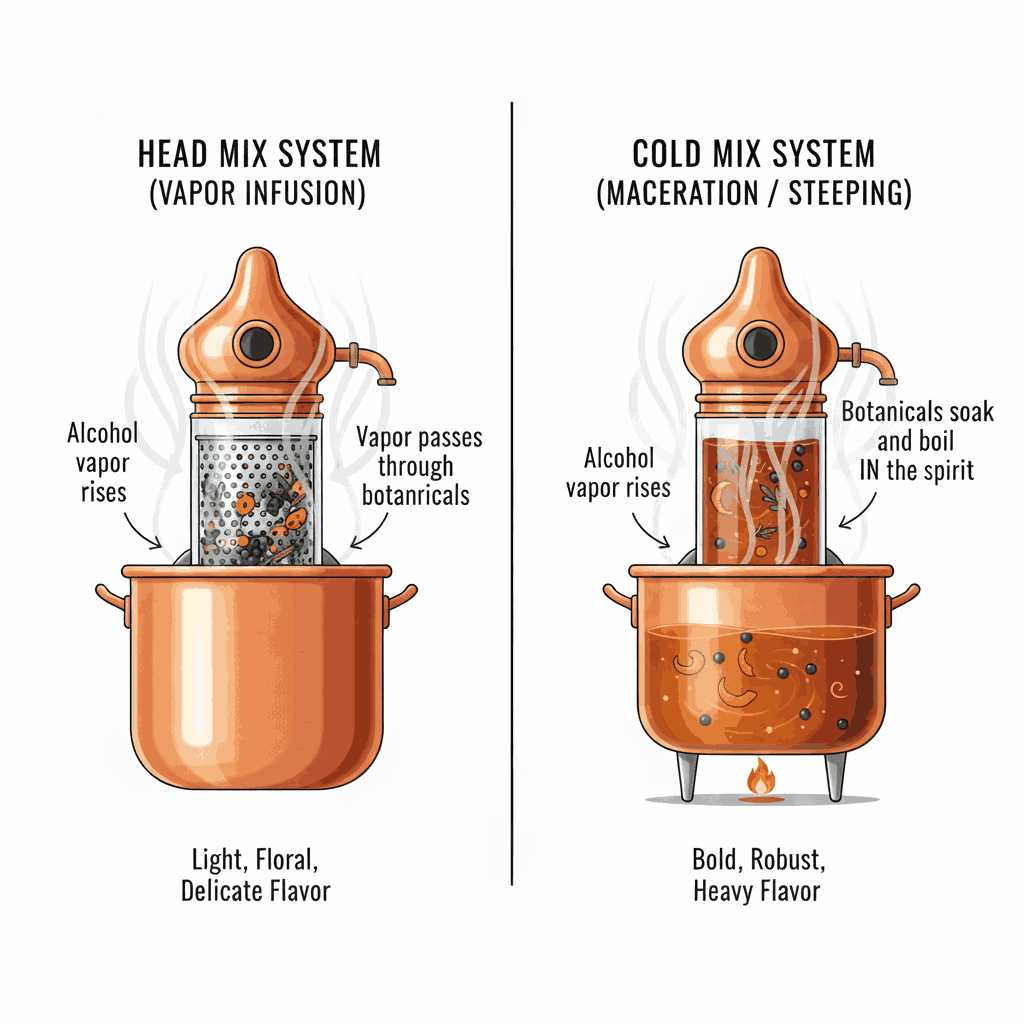
- Head Mix System (Vapor Infusion)
- The botanicals are placed in a basket or cage above the still.
- When the spirit is heated, alcohol vapours rise and pass through the botanicals.
- As the vapour passes through, it absorbs the flavours and aromas.
- This produces a lighter, smoother, and more delicate style of gin.
- Cold Mix System (Maceration)
In this method, the botanicals such as juniper berries, coriander, orange peel, angelica root, liquorice, cinnamon, and lemon peel are placed directly into the neutral spirit and allowed to soak for several hours or even days. During this time, the alcohol slowly extracts the natural oils, aromas, and flavours from the botanicals.
After soaking, this flavoured spirit is redistilled in a pot still. During distillation, the alcohol vapours carry the botanical flavours into the final spirit, while unwanted bitter compounds are left behind.
Because the botanicals are in direct contact with the spirit, cold mix gins have a deeper and more intense botanical character than vapour-infused gins.
This method produces a gin that is:- Full-bodied
- Bold and rich in flavour
- Strongly aromatic
- Head Mix System (Vapor Infusion)
- Final Steps:
- The gin is filtered to make it clear and pure.
- It is bottled immediately, as gin does not need aging.
Types of Gin
- London Dry Gin
This is the most popular and widely known style of gin. Despite the name, it does not have to be made in London. It is called “dry” because no artificial flavors or sugar are added after distillation. All the flavor must come from natural botanicals during distillation, especially juniper.
Characteristics:- Strong juniper flavor
- Dry and crisp (no sweetness)
- Clear and colourless
- Fresh and aromatic
- Smooth but sharp taste
Legal and Technical Rules:
- All flavors must be added during distillation
- No artificial flavors or colors are allowed
- Sugar content is extremely low (almost zero)
- Minimum alcohol strength: 37.5% ABV
- Old Tom Gin
Old Tom Gin is a slightly sweet style of gin that was very popular in the 18th and 19th centuries. It stands between the heavy, malty Genever and the dry style of London Dry Gin.
It was originally sweetened to make early, harsh spirits smoother and easier to drink. Although it was once mainly associated with England and Scotland, it is now produced in many countries.
Characteristics:- Slightly sweet in taste
- Softer and smoother than London Dry
- Richer mouthfeel
- Balanced juniper and sweetness
- Less sharp than dry gin
- Sweetened using sugar, syrup, or sometimes licorice
- Botanicals are distilled first, then sweetness is added
It was traditionally served in a Tom Collins glass and commonly used in classic cocktails.
- Plymouth Gin
It is a distinctive style of gin that is produced only in the city of Plymouth, England.
It was earlier protected as a special regional gin, and today it is mainly produced by one traditional distillery in Plymouth. Plymouth Gin is known for being smoother and slightly earthier than London Dry Gin.
Characteristics:- Slightly sweeter and softer than London Dry
- Earthy and rounded flavour
- Less sharp juniper taste
- Smooth and mellow finish
- Uses more root botanicals such as orris root and angelica root
- Genever Gin (Dutch / Holland Gin)
Genever is the original style of gin that comes from the Netherlands and Belgium. It is also known as Holland gin.
Unlike modern gin, Genever is made from malt wine (a fermented mash of grains like rye, corn, and wheat) and distilled in pot stills. Juniper and other botanicals are added for flavor. Some styles are aged in wooden barrels for 1 to 3 years, which gives a smoother and slightly woody character.
It is usually sipped neat (often chilled) rather than used in cocktails.
Characteristics:- Malty, slightly sweet and earthy
- Heavier and fuller-bodied than London Dry gin
- Less sharp juniper flavor
- Fruit gin
It is a gin that has been flavored with fruits after distillation. The fruit adds sweetness, color, and aroma to the spirit.
Fruits such as sloe berries, blackberries, raspberries, strawberries, or citrus peels are soaked in gin along with sugar. This gives the drink a fruity and slightly sweet taste.
The most famous fruit gin is Sloe Gin, made by infusing sloe berries (a type of wild plum) in gin. It is darker in color and sweeter than regular gin.
Fruit gins are usually drunk neat, over ice, or in cocktails rather than as a dry gin substitute.
Popular Brands
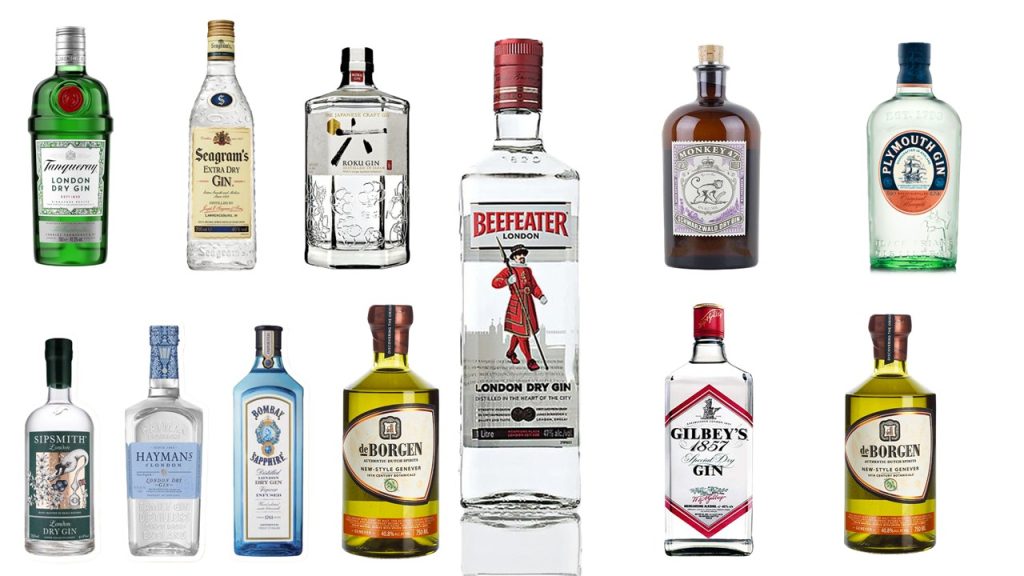
| Gordon’s (England) | Aviation Gin (USA) | Tanqueray (England) |
| Plymouth Gin (England) | Seagram’s Gin (USA) | De Kuyper (Netherlands) |
| Sipsmith (England) | Beefeater (England) | Bols Genever (Netherlands) |
| Monkey 47 (Germany) | Roku Gin (Japan) | Bombay Sapphire (England) |
| The Botanist (Scotland) | Hendrick’s (Scotland) | Four Pillars (Australia) |
Service of Gin
- Standard Measure: 30 ml
- Glassware: Hi-ball glass
- Accompaniments: Ice cubes, soda, or tonic water
- Garnish: Slice of lemon or lime
Gin is usually served chilled or over ice, allowing its botanical flavors to shine, especially in highball or classic cocktails like the Gin & Tonic.