
| Dear Students, If you find any question paper missing from any year, please contact us through our email address “bhmaims@gmail.com“ Also, if you have any pending past-year board question papers, kindly forward them to us so that we can update in our website. |
Food Science and Nutrition Year 2024 Question Paper
Pending
Food Science and Nutrition Year 2025 Question Paper (New Course)
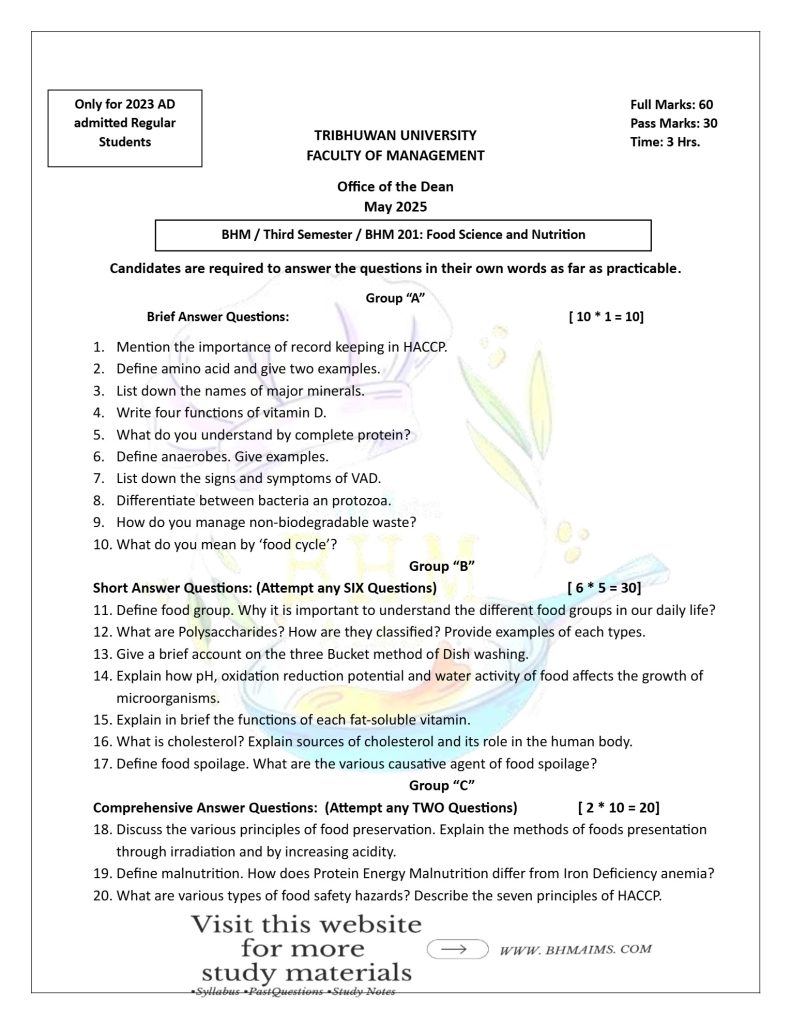
Food Science and Nutrition Year 2026 Question Paper (New Course)
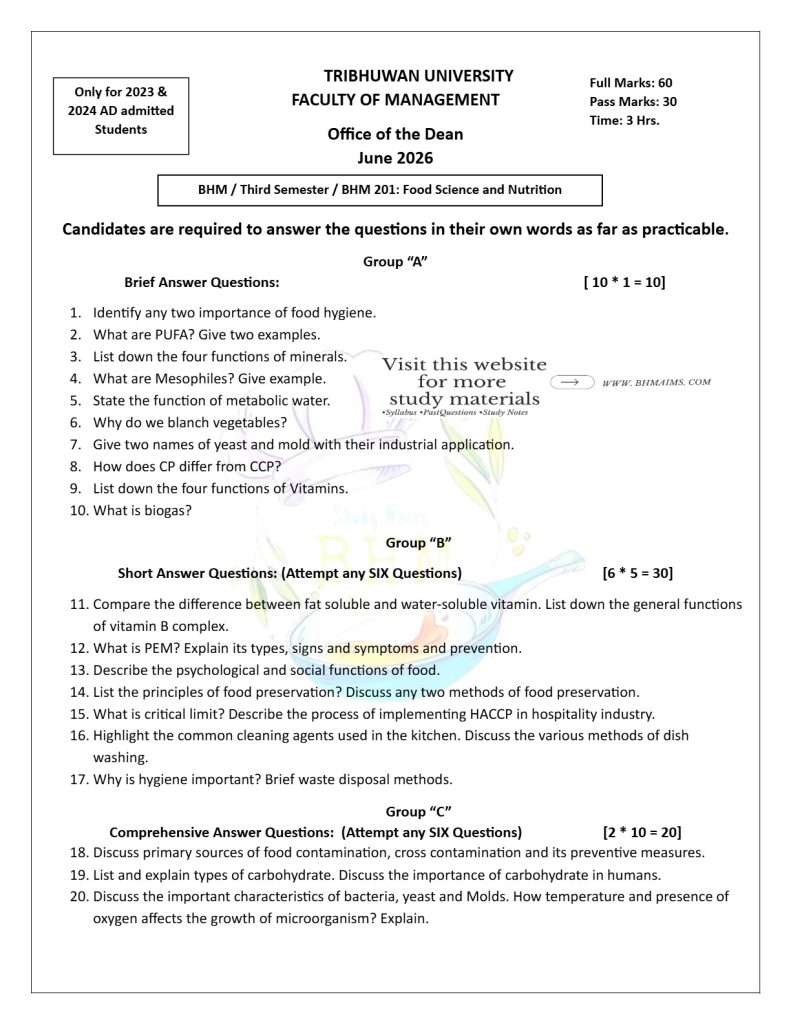
Food Science and Nutrition Year 2016 Question Paper (Old Course)
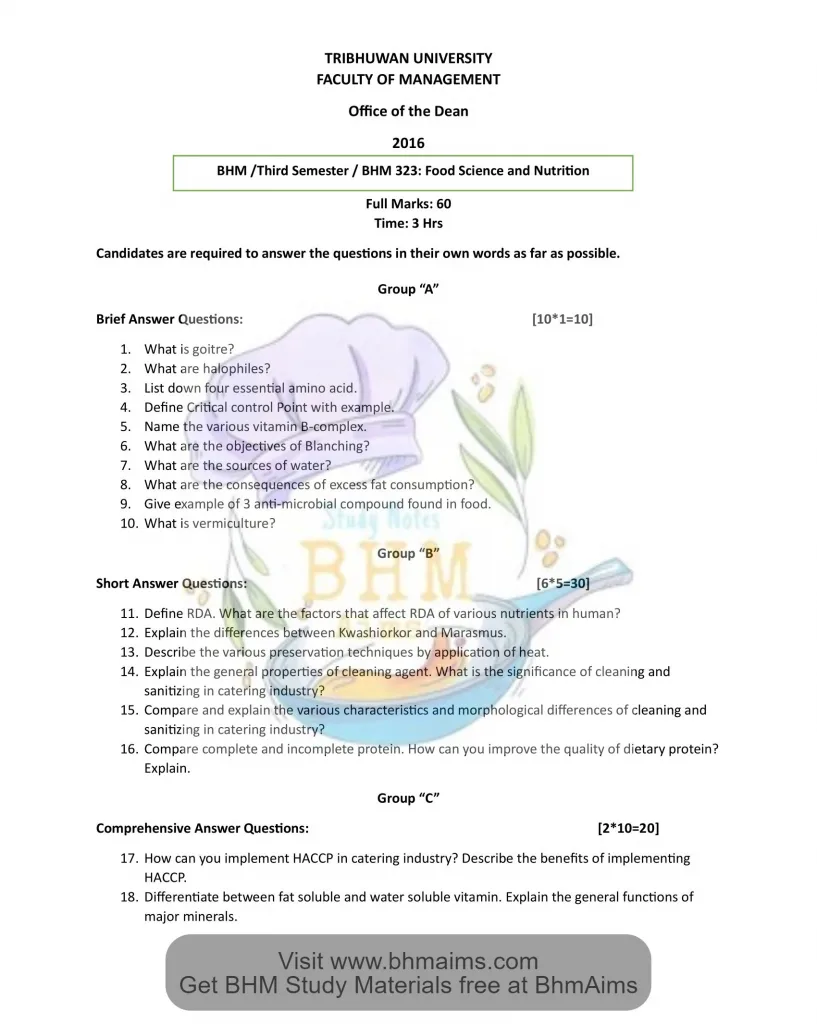
Food Science and Nutrition Year 2017 Question Paper (Old Course)
Food Science and Nutrition Year 2018 Question Paper (Old Course)
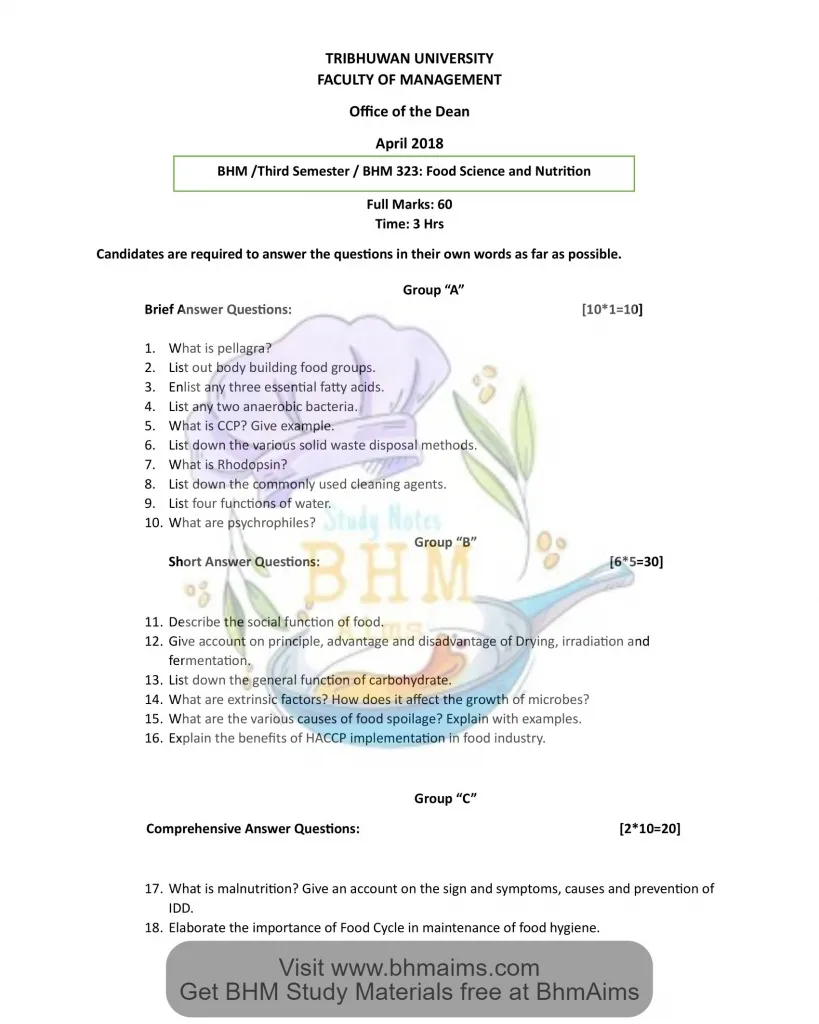
Food Science and Nutrition Year 2019 Question Paper (Old Course)
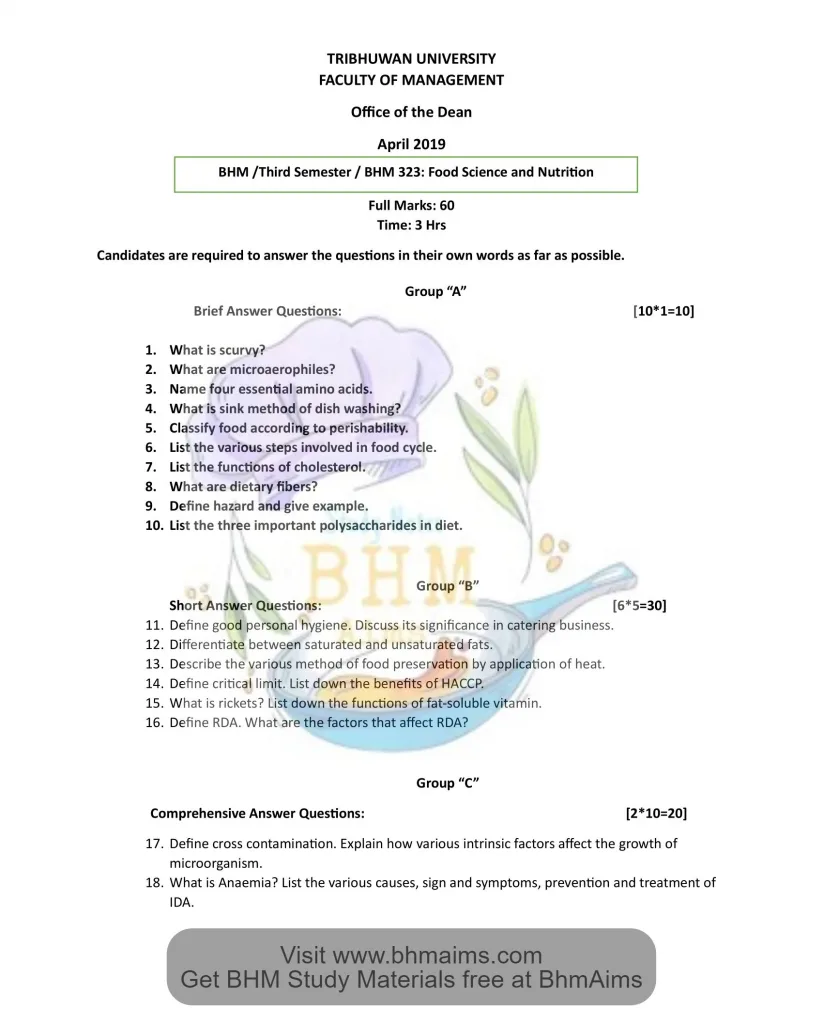
Food Science and Nutrition Year 2021 Question Paper (Old Course)
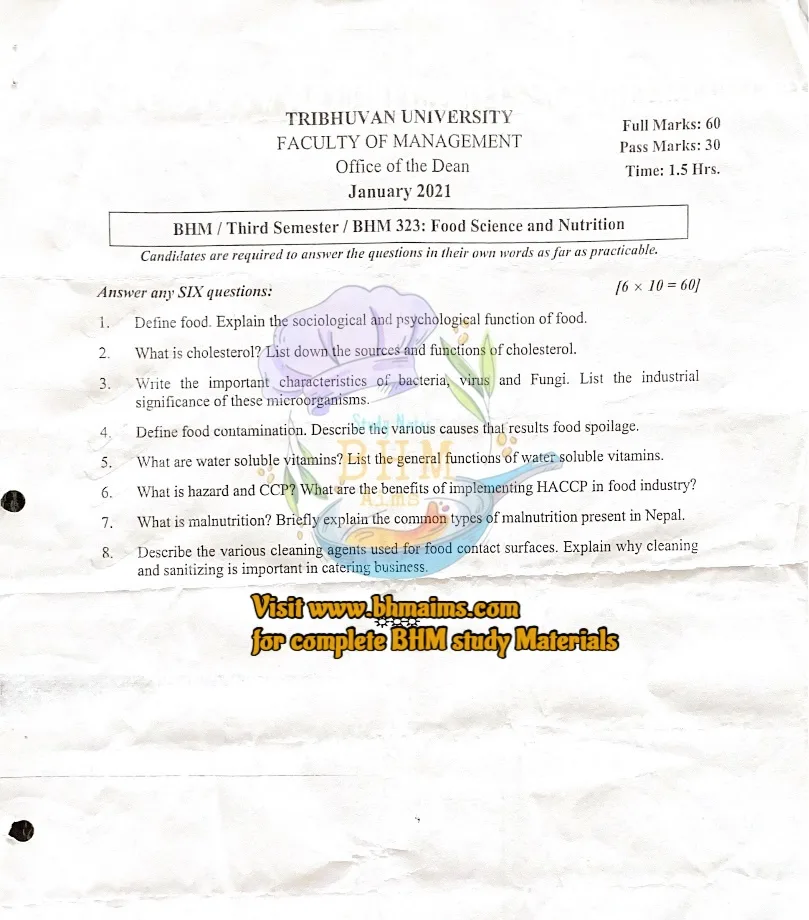
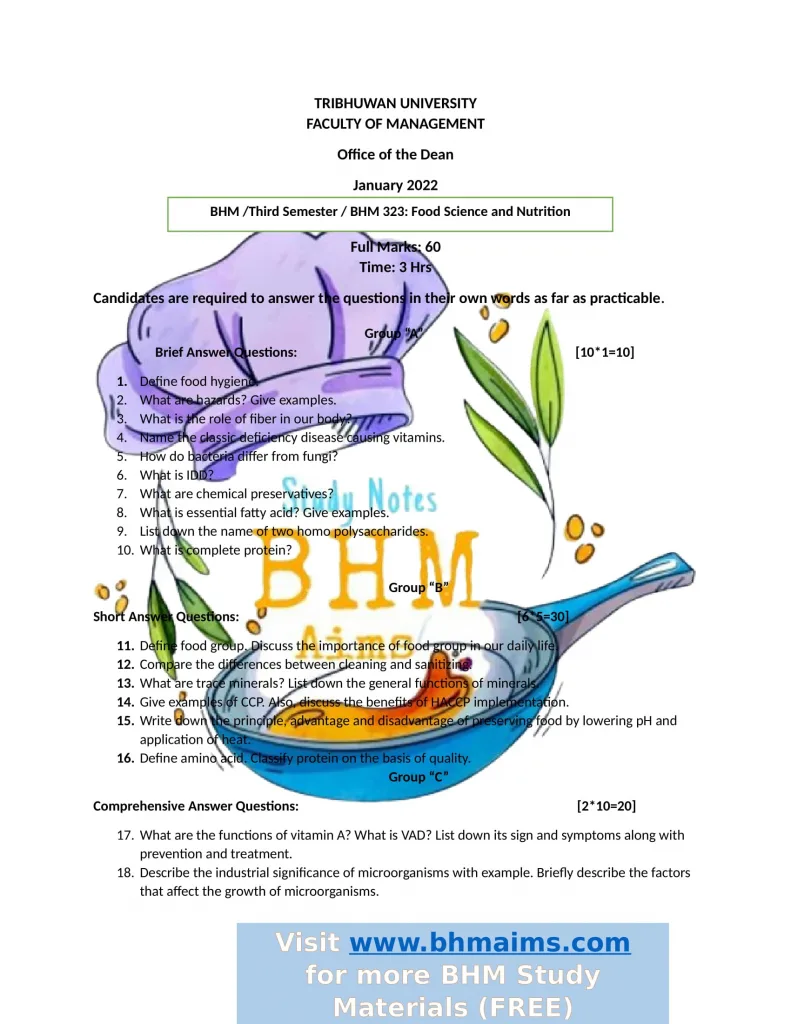
Food Science and Nutrition Year 2022 Question Paper (Old Course)
Food Science and Nutrition Year 2023 Question Paper (Old Course)
Year- 2025
- Mention the importance of record keeping in HACCP. (Unit 6: Food Safety Management Systems)
⟹ Record keeping is an essential part of the HACCP system because it provides written evidence that food safety procedures are being properly followed. Proper record keeping:- helps to monitor critical control points (CCPs) and ensures food safety limits are maintained.
- provides proof of compliance with food safety laws and regulations.
- helps in identifying problems and taking corrective actions quickly.
- supports traceability of food products in case of contamination or foodborne illness.
- improves quality control and consistency in food production.
- useful for training and auditing purposes in food establishments.
- Define amino acid and give two examples. (Unit 2: Nutrients and Nutrition)
⟹ Amino acids are the building blocks of proteins. They are organic compounds that contain both amino group (–NH₂) and carboxyl group (–COOH), and are essential for growth and repair of body tissues.
or
Amino acids are the basic units of proteins needed for body growth and repair.
Examples:- Lysine
- Methionine
- Isoleucine
- Valine
- Tryptophan
- Threonine
- List down the names of major minerals. (Unit 2: Nutrients and Nutrition)
⟹ The names of major minerals are:- Calcium
- Phosphorus
- Sodium
- Potassium
- Magnesium
- Chloride
- Write four functions of Vitamin D. (Unit 2: Nutrients and Nutrition)
⟹ The four functions of Vitamin D are:- Helps in absorption of calcium and phosphorus in the body
- Promotes strong bones and teeth formation
- Prevents diseases like rickets in children and osteomalacia in adults
- Maintains proper calcium and phosphorus balance in blood
- What do you understand by complete protein? (Unit 2: Nutrients and Nutrition)
⟹ A complete protein is a type of protein that contains all the 9 essential amino acids in sufficient amounts required by the human body for growth and repair.
Examples of sources are: egg, milk, meat, fish
| Extra Note: Most animal foods are complete proteins as they contain all essential amino acids, while most plant foods are incomplete but can become complete when combined with other foods. |
- Define anaerobes. Give examples. (Unit 3: Food Microbiology)
⟹ Anaerobes are microorganisms that grow and survive in the absence of oxygen. They do not require oxygen for their growth and may even be killed by its presence.
For examples:- Clostridium botulinum
- Clostridium tetani
- Clostridium perfringens
- Bacteroides fragilis
- Fusobacterium specie
- List down the signs and symptoms of VAD. (Unit 2: Nutrients and Nutrition)
⟹ VAD stands for “Vitamin A Deficiency”.
The signs and symptoms of VAD are:- Night blindness (difficulty seeing in dim light)
- Dryness of eyes (xerophthalmia)
- Bitot’s spots on the eye
- Dry, rough skin
- Increased risk of infections
- In severe cases, blindness
- Differentiate between bacteria and protozoa. (Unit 3: Food Microbiology)
⟹ Simply, you can also write: Bacteria are unicellular prokaryotic microorganisms without a true nucleus, while protozoa are unicellular eukaryotic organisms with a true nucleus and are generally larger and more complex.
| Basis | Bacteria | Protozoa |
|---|---|---|
| Nature | Unicellular microorganisms | Unicellular animal-like organisms |
| Cell Type | Prokaryotic (no true nucleus) | Eukaryotic (true nucleus present) |
| Size | Very small | Relatively larger than bacteria |
| Movement | Some move by flagella | Move by cilia, flagella, or pseudopodia |
| Nutrition | Autotrophic or heterotrophic | Mostly heterotrophic |
- How do you manage non-biodegradable waste? (Unit 7: Environmental Hygiene)
⟹ Non-biodegradble waste can be managed by:- Segregation at source: Separate non-biodegradable waste from biodegradable waste.
- Recycling: Reuse materials like plastic, glass, metal, and paper after processing.
- Proper disposal: Send waste to authorized landfill sites or waste management facilities.
- Reduce use: Minimize use of plastics and disposable materials.
- Reuse materials: Use items like containers, bottles, and bags multiple times
- What do you mean by ‘food cycle’? (Unit 5: Food Hygiene)
⟹ Food cycle refers to the complete process of food handling in a food establishment from receiving raw materials to serving the final prepared food to the consumer.
It includes stages such as receiving, storing, preparing, cooking, holding, and serving food, ensuring hygiene and safety at every step. - Define food group. Why is it important to understand the different food groups in our daily life? (Unit 1: Introduction to Food)
⟹ A food group is a classification of foods based on their nutritional value and similar nutrient content, such as cereals, pulses, fruits, vegetables, milk, meat, fats, and sugars.
It is important to understand the different food groups in our daily life because:- Helps in planning a balanced diet
- Ensures intake of all essential nutrients
- Helps in preventing malnutrition and deficiency diseases
- Improves health, growth, and immunity
- Supports healthy eating habits in daily life
- What are polysaccharides? How are they classified? Provide examples of each type. (Unit 2: Nutrients and Nutrition)
⟹ - Give a brief account on the three bucket method of dish washing. (Unit 5: Food Hygiene)
⟹ - Explain how pH, oxidation reduction potential and water activity of food affect the growth of microorganisms. (Unit 3: Food Microbiology)
⟹ - Explain in brief the functions of each fat-soluble vitamin. (Unit 2: Nutrients and Nutrition)
⟹ - What is cholesterol? Explain sources of cholesterol and its role in the human body. (Unit 2: Nutrients and Nutrition)
⟹ - Define food spoilage. What are the various causative agents of food spoilage? (Unit 4: Food Contamination and Spoilage)
⟹ - Discuss the various principles of food preservation. Explain the methods of food preservation through irradiation and by increasing acidity. (Unit 4: Food Contamination and Spoilage)
⟹ - Define malnutrition. How does Protein Energy Malnutrition differ from Iron deficiency anemia? (Unit 2: Nutrients and Nutrition)
⟹ - What are various types of food safety hazards? Describe the seven principles of HACCP. (Unit 6: Food Safety Management Systems)
⟹
Year- 2016
- What is goitre?
⟹ Goitre is a condition in which the thyroid gland becomes abnormally enlarged due to deficiency of iodine in the diet. - What are halophiles?
⟹ Halophiles are microorganisms that grow and survive in environments with high salt concentration. They are commonly found in salted foods like pickles, salted fish, and cured meats. - List down four essential amino acid.
⟹ Any four essential amino acids are:- Lysine
- Methionine
- Tryptophan
- Leucine
- Define Critical Point with example.
⟹ In HACCP (Hazard Analysis and Critical Control Point), a critical point is any step where control can be applied to prevent, eliminate, or reduce a food safety hazard to an acceptable level.
Example:- proper cooking temperature of meat
- Correct use of cleaning chemicals to avoid contamination of food
- Checking food to remove glass, metal, or plastic pieces before serving
- Name the various vitamin B- Complex.
⟹ The various Vitamin B-Complex are:- Vitamin B1 (Thiamine)
- Vitamin B2 (Riboflavin)
- Vitamin B3 (Niacin)
- Vitamin B5 (Pantothenic acid)
- Vitamin B6 (Pyridoxine)
- Vitamin B7 (Biotin)
- Vitamin B9 (Folic acid)
- Vitamin B12 (Cobalamin)
- What are the objectives of Blanching?
⟹ The objectives of blanching are to destroy microorganisms, inactivate enzymes, and preserve colour and texture. - What are the sources of water?
⟹ The sources of water are:- Surface water: Rivers, lakes, ponds, streams
- Groundwater: Wells, tube wells, springs
- Rainwater: Collected through rainwater harvesting
- Glacier and snow melt: Natural mountain sources
- What are the consequences of excess fat consumption?
⟹ The consequences of excess fat consumption are:- Leads to obesity (excess body weight)
- Increases risk of heart diseases (high cholesterol, blocked arteries)
- Causes high blood pressure (hypertension)
- May lead to diabetes (Type 2)
- Results in fatty liver disease
- Causes poor digestion and indigestion
- Increases risk of stroke and cardiovascular problems
- Give example of 3 anti-microbial compound found in food.
⟹ An example of 3 anti-micobial compound found in food are:- Allicin (found in garlic)
- Lysozyme (found in egg white)
- Lactoferrin (found in milk)
- Eugenol (found in cloves)
- Cinnamaldehyde (found in cinnamon)
- Curcumin (found in turmeric)
- Benzoic acid (found in cranberries and some fruits)
- Propionic acid
- What is vermiculture?
⟹ Vermiculture is the process of using earthworms to decompose organic waste and convert it into nutrient-rich compost (vermicompost). - Define RDA. What are the factors that affect RDA of various nutrients in human?
- Explain the differences between Kwashiorkor and Marasmus.
- Descirbe the various preservation techniques by application of heat.
- Explain the general properties of cleaning agent. What is the significance of cleaning and sanitizing in catering industry?
- Compare and explain the various characteristics and morphological differences of cleaning and sanitizing in catering industry?
- Compare complete and incomplete protein. How can you improve the quality of dietary protein? Explain.
- How can you implement HACCP in catering industry? Describe the benefits of implementing HACCP.
- Differentiate between fat soluble and water soluble vitamin. Explain the general functions of major minerals.
Year- 2017
- Name two bacteria that are pathogenic to humans.
⟹ Pathogenic means capable of causing disease. Pathogenic microorganisms are those that can cause illness or infection in humans, animals, or plants.
Any 2 bacteria that are pathogenic to humans are:- Salmonella typhi (causes typhoid)
- Escherichia coli (E. coli) – causes food poisoning
- Vibrio cholerae (causes cholera)
- Staphylococcus aureus (causes food poisoning and skin infections)
- Clostridium botulinum (causes botulism)
- List down the various fat- soluble vitamin.
⟹ The various fat-soluble vitamin are:- Vitamin A – Retinol
- Vitamin D – Calciferol
- Vitamin E – Tocopherol
- Vitamin K – Phylloquinone
- What is beriberi?
⟹ Beriberi is a disease caused by deficiency of Vitamin B1 (Thiamine), which affects the nervous system and cardiovascular system. It leads to leading to nerve and heart problems. - Define food safety.
⟹ Food safety refers to the handling, preparation, and storage of food in a way that prevents foodborne illnesses and ensures that food is safe for human consumption. - List down the various solid waste disposal methods.
⟹ The various solid waste disposal methods are:- Landfilling
- Incineration (burning)
- Composting
- Recycling
- Reusing
- Sanitary landfill method
- Vermiculture (vermicomposting)
- What are the functions of dietary fiber?
⟹ The functions of dietary fiber are:- Helps in proper digestion and prevents constipation
- Improves bowel movement
- Helps in controlling blood sugar level
- Reduces cholesterol level in blood
- Helps in weight management by increasing satiety (feeling of fullness)
- Prevents colon diseases
- List down the types of food borne hazards.
⟹ The types of food borne hazards are:- Biological hazards (bacteria, viruses, parasites, molds)
- Chemical hazards (cleaning agents, pesticides, food additives, toxins)
- Physical hazards (glass, metal, plastic, stones, hair)
- Allergenic hazards (nuts, milk, eggs, gluten, seafood)
- Name two anaerobic bacteria.
⟹ Any 2 anaerobic bacteria are:- Clostridium botulinum
- Clostridium tetani
- Clostridium perfringens
- Bacteroides fragilis
- Fusobacterium nucleatum
- What are the signs and symptoms of VAD?
⟹ Repeated question - Define RDA.
⟹ RDA (Recommended Dietary Allowance) is the average daily amount of nutrients required by a healthy person to meet normal nutritional needs and maintain good health. - Define food. Explain functions of food.
- Describee the role of pH and oxidation reduction potential in the growth of micro-organisms.
- Describe the process by which the body balances water.
- Define HACCP. What are the benefits of HACCP implementation in food industry?
- Differentiate between cleaning and sanitizing.
- Give an account on implementation of micro-organism in food industry.
- Explain the principle of food preservation. Give an account on preservation of food by application of low temperature and chemical preservatives.
- Differentiate between saturated and unsaturated fats. List down the functions of fat.
Year- 2018
- What is pellagra?
⟹ Pellagra is a deficiency disease caused by lack of Vitamin B3 (Niacin), characterized by dermatitis, diarrhea, and dementia. - List out body building food groups.
⟹ The list of body building food groups are:- Pulses and legumes
- Milk and milk products
- Eggs
- Meat and poultry
- Fish
- Nuts and oilseeds
- Enlist any three essential fatty acids.
⟹ Any three essential fatty acids are:- Linoleic acid (Omega-6)
- Alpha-linolenic acid (Omega-3)
- Arachidonic acid
- List any two anaerobic bacteria.
⟹ Repeated question - What is CCP? Give example.
⟹ CCP (Critical Control Point) is a point in food handling where control is necessary to prevent or reduce food safety hazards. Example: proper storage temperature in refrigeration. - List down the various solid waste disposal methods.
⟹ Repeated question - What is Rhodopsin?
⟹ Rhodopsin is a light-sensitive pigment found in the rod cells of the retina in the human eye. It helps in vision in dim light or at night.
It is formed from Vitamin A (retinol) and a protein called opsin. When light falls on rhodopsin, it breaks down and helps send visual signals to the brain. - List down the commonly used cleaning agents.
⟹ The commonly used cleaning agents are:- Detergents
- Soaps
- Abrasives (scouring powders)
- Degreasers
- Acid cleaners
- Alkali (caustic) cleaners
- Disinfectants and sanitizers
- List four functions of water.
⟹ The four functions of water are:- Helps in digestion and absorption of food
- Regulates body temperature
- Acts as a solvent and transport medium for nutrients in the body
- Helps in removal of waste products through urine and sweat
- What are psychrophiles?
⟹ Psychrophiles are microorganisms that grow and thrive at low temperatures, usually below 20°C, and can even grow in refrigerated conditions.
They are commonly found in cold environments such as refrigerators, ice, and cold water. - Describe the social function of food.
- Give account on principle, advantage and disadvantage of Drying, irradiation and fermentation.
- List down the general function of carbohydrate.
- What are extrinsic factors? How does it affect the growth of microbes?
- What are the various causes of food spoilage? Explain with examples.
- Explain the benefits of HACCP Implementation in food industry.
- What is malnutrition? Give an account on the sign and symptoms, causes and prevention of IDD.
- Elaborate the importance of Food Cycle in maintenance of food hygiene.
Year- 2019
- What is scurvy?
⟹ Scurvy is a deficiency disease caused by a lack of Vitamin C (ascorbic acid) in the diet. It leads to symptoms such as bleeding gums, weakness, joint pain, and poor wound healing. - What are microaerophiles?
⟹ Microaerophiles are microorganisms that require a small amount of oxygen to grow, but higher levels of oxygen can inhibit or damage them. They grow best in environments with low oxygen concentration. - Name four essential amino acids.
⟹ Repeated question - What is sink method of dish washing?
⟹ The sink method of dish washing is a manual cleaning process where dishes are washed, rinsed, and sanitized in separate sinks in a step-by-step manner. - Classify food according to perishability.
⟹ According to perishability, food can be classified as:- Perishable foods: Foods that spoil quickly within a short time. Examples: Milk, meat, fish, fruits, vegetables
- Semi-perishable foods: Foods that last for a moderate period under proper storage. Examples: Potatoes, onions, eggs, cheese
- Non-perishable foods: Foods that can be stored for a long time without spoiling easily. Examples: Rice, flour, sugar, pulses, dried foods
- List the various steps involved in food cycle.
⟹ The various steps involved in food cycle are:- Receiving of food
- Storing of food
- Preparation of food
- Cooking of food
- Holding/keeping food (hot or cold holding)
- Service/serving of food
- Leftover handling and disposal
- List the functions of cholesterol.
⟹ The functions of cholesterol are:- Helps in the formation of cell membranes
- Assists in the production of hormones (like sex hormones and adrenal hormones)
- Helps in the formation of bile acids for fat digestion
- Supports the production of Vitamin D in the body
- Necessary for proper brain and nerve function
- What are dietary fibers?
⟹ Dietary fibers are the indigestible parts of plant foods that cannot be digested by human enzymes but are important for proper digestion and bowel movement. They are also known as roughage. - Define hazard and give example.
⟹ A hazard is any biological, chemical, or physical agent that can cause potential harm to human health if not controlled. Example:- Biological hazard: Salmonella bacteria in contaminated food
- Chemical hazard: Pesticide residue in vegetables
- Physical hazard: Glass or metal pieces in food
- List the three important polysaccharides in diet.
⟹ The three important polysaccharides in diet are:- Starch
- Glycogen
- Cellulose
- Pectin
- Hemicellulose
- Inulin
- Define good personal hygiene. Discuss its significance in catering business.
- Differentiate between saturated and unsaturated fats.
- Describe the various method of food preservation by application of heat.
- Define critical limit. List down the benefits of HACCP.
- Whhat is rickets? List down the functions of fat-soluble vitamin.
- Define RDA. What are the factors that affect RDA?
- Define cross contamination. Explain how various intrinsic factors affect the growth of microorganism.
- What is Anaemia? List the various causes, sign and symptoms, prevention and treatment of IDA.
Year- 2021
- Define food. Explain the sociological and psychological function of food.
- What is cholesterol? List down the sources and functions of cholesterol.
- Write the important characteristics of bacteria, virus and fungi. List the industrial significance of these microorganisms.
- Define food contamination. Describe the various causes that results food spoilaage.
- What are water soluble vitamins? List the general functions of water soluble vitamins.
- What is hazard and CCP? What are the benefits of implementing HACCP in food industry?
- What is malnutrition? Briefly explain the common types of malnutrition present in Nepal.
- Describe the various cleaning agents used for food contact surfaces. Explain why cleaning and sanitizing is important in catering business.
Year- 2022
- Define food hygiene.
⟹ Food hygiene refers to all conditions and practices that help in keeping food safe and clean at every stage of handling, preparation, storage, and service to prevent contamination and foodborne diseases. - What are hazards? Give examples.
⟹ Repeated question - What is the role of fiber in our body?
⟹ The role of fiber in our body are:- Helps in proper digestion
- Prevents constipation by adding bulk to stool
- Improves bowel movement
- Helps in lowering cholesterol level
- Controls blood sugar level
- Helps in weight management (gives feeling of fullness)
- Supports healthy digestive system
- Name the classic deficiency disease causing vitamins.
⟹ The classic definciency disease causing vitamins are:- Vitamin A – Night blindness / Xerophthalmia
- Vitamin B1 (Thiamine) – Beriberi
- Vitamin B3 (Niacin) – Pellagra
- Vitamin C (Ascorbic acid) – Scurvy
- Vitamin D – Rickets / Osteomalacia
- How do bacteria differ from fungi?
⟹ Bacteria are unicellular prokaryotic organisms with peptidoglycan cell walls, while fungi are eukaryotic organisms with chitin cell walls and are mostly multicellular.
| Basis | Bacteria | Fungi |
|---|---|---|
| Cell Type | Prokaryotic (no true nucleus) | Eukaryotic (true nucleus present) |
| Structure | Unicellular | Mostly multicellular (yeast is unicellular) |
| Cell Wall | Peptidoglycan | Chitin |
| Nutrition | Autotrophic or heterotrophic | Heterotrophic (saprophytic/parasitic) |
| Reproduction | Binary fission | Spore formation / budding (yeast) |
- What is IDD?
⟹ IDD stands for Iodine Deficiency Disorder. It refers to a group of health problems caused due to lack of iodine in the diet, mainly affecting the thyroid gland.
It can lead to conditions like goitre, mental retardation, and growth problems, especially in children and pregnant women. - What are chemical preservatives?
⟹ Chemical preservatives are substances added to food in small amounts to prevent spoilage by inhibiting the growth of microorganisms and slowing down chemical changes. They help in increasing the shelf life of food products.
Examples: Sodium benzoate, Sulphur dioxide, Potassium metabisulphite andSodium nitrite - What is essential fatty acid? Give examples.
⟹ Essential fatty acids are fatty acids that cannot be synthesized by the human body and must be obtained through diet. They are important for growth, brain function, and overall health.
Example:- Linoleic acid (Omega-6)
- Alpha-linolenic acid (Omega-3)
- List down the name of two homo polysaccharides.
⟹ The name of two homo polysaccharides are:- Starch
- Glycogen
- What is complete protein?
⟹ Repeated question - Define food group. Discuss the importance of food group in our daily life.
- Compare the differences between cleaning and sanitizing.
- What are trace minerals? List down the general functions of minerals.
- Give examples of CCP. Also, discuss the benefits of HACCP implementation.
- Write down the principle, advantage and disadvantage of preserving food by lowering pH and application of heat.
- Define amino acid. Classify protein on the basis of quality.
- What are the functions of vitamin A? What is VAD? List down its sign and symptoms along with prevention and treatment.
- Describe the industrial significance of micro organisms with example. Briefly describe the factors that affect the growth of micro organisms.
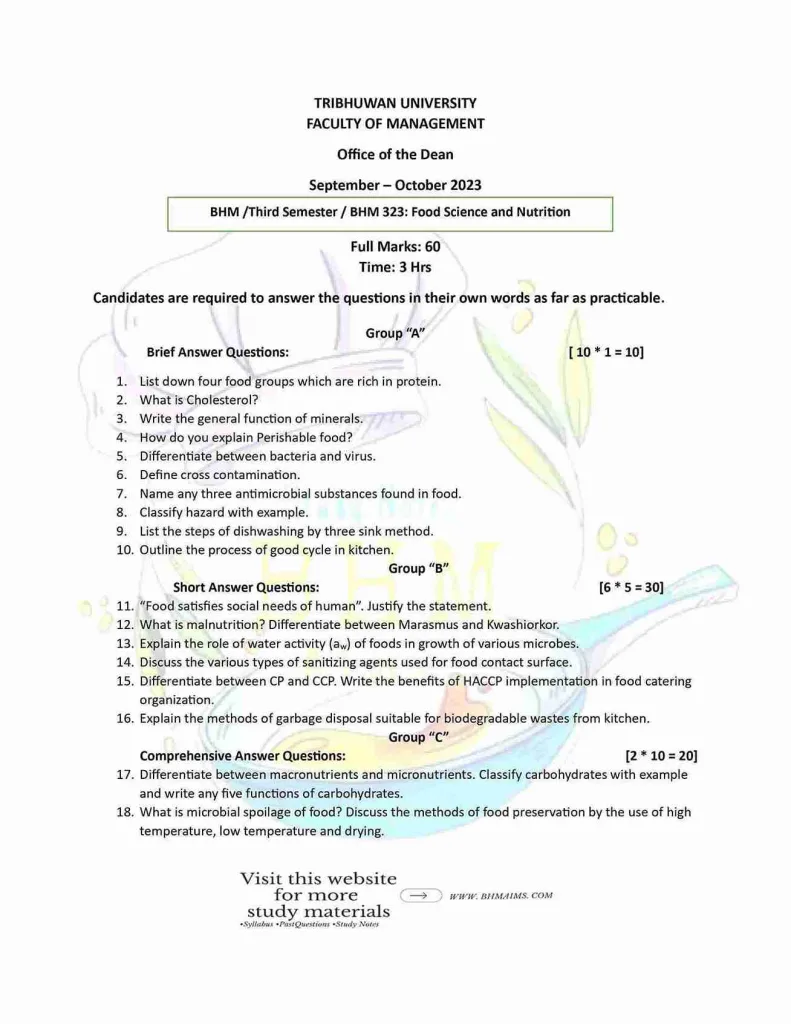
Year- 2023
- List down four food groups which are rich in protein.
⟹ Any four food groups which are rich in protein are:- Pulses and legumes
- Milk and milk products
- Eggs
- Meat and poultry
- What is Cholesterol?
⟹ Cholesterol is a waxy, fat-like substance found in the body and in animal-based foods. It is needed for normal body functions but excess levels can be harmful. - Write the general function of minerals.
⟹ The general function of minerals are:- Help in formation of bones and teeth
- Maintain fluid balance in the body
- Support nerve function and muscle contraction
- Help in blood formation (hemoglobin formation)
- Act as co-factors for enzymes in body metabolism
- Maintain acid-base balance in the body
- How do you explain Perishable food?
⟹ Perishable foods are foods that spoil or decay quickly within a short period of time if not properly stored or preserved. They contain high moisture and are easily affected by microorganisms. Example: Fish, fruits, vegetables, milk - Differentiate between bacteria and virus.
⟹ Bacteria are living single-celled organisms that can reproduce independently, while viruses are non-living outside a host and need a host cell to multiply.
| Basis | Bacteria | Virus |
|---|---|---|
| Nature | Living single-celled organisms | Non-living outside host cell |
| Size | Larger than viruses | Very small (much smaller than bacteria) |
| Structure | Have cell structure (cell wall, cytoplasm) | No cellular structure |
| Reproduction | Multiply by binary fission | Need a host cell to reproduce |
| Treatment | Can be treated with antibiotics | Antibiotics do not work |
- Define cross contamination.
⟹ Cross contamination is the transfer of harmful microorganisms or contaminants from one food item, surface, or equipment to another, leading to food spoilage or foodborne illness. - Name any three antimicrobial substances found in food.
⟹ Repeated question - Classify hazard with example.
⟹ Here below is the classification of hazard with example:- Biological Hazard:
Harmful microorganisms that cause foodborne illness. Example: Salmonella in contaminated food, E. coli in raw meat. - Chemical Hazard:
Harmful chemicals that contaminate food. Example: Pesticide residues on vegetables, cleaning chemicals in food. - Physical Hazard:
Foreign objects present in food. Example: Glass pieces, metal shards, hair in food. - Allergenic Hazard:
Foods that cause allergic reactions in sensitive people. Example: Nuts, milk, eggs, seafood.
- Biological Hazard:
- List the steps of dishwashing by three sink method.
⟹ The steps of dishwashing by three sink method are:- Sink 1 (Washing): Scrape food waste and wash dishes with warm water and detergent
- Sink 2 (Rinsing): Rinse dishes with clean water to remove soap and dirt
- Sink 3 (Sanitizing): Sanitize dishes using hot water or chemical sanitizer
- Outline the process of good cycle in kitchen.
⟹ The process of good cycle in kitchen are:- Receiving: Accepting raw materials from suppliers and checking quality
- Storing: Proper storage of food in dry store, refrigerator, or freezer
- Preparation: Washing, cutting, and preparing ingredients hygienically
- Cooking: Cooking food at proper temperature and time
- Holding: Keeping cooked food hot or cold until service
- Serving: Serving food to customers safely and hygienically
- Leftover handling: Proper storage or disposal of leftover food
- “Food satisfies social needs of human”. Justify the statement.
- What is malnutrition? Differentiate between Marasmus and Kwashiorkor.
- Explain the role of water activity of foods in growth of various microbes.
- Discuss the various types of sanitizing agents used for food contact surface.
- Differentiate between CP and CCP. Write the benefits of HACCP implementation in food catering organization.
- Explain the methods of garbage disposal suitable for biodegradable wastes from kitchen.
- Differentiate between macronutrients and micronutrients. Classify carbohydrates with example and write any five functions of carbohydrates.
- What is microbial spoilage of food? Discuss the methods of food preservation by the use of high temperature, low temperature and drying.
Thank you for visiting our website and exploring our collection of past and old question papers for the Food Science and Nutrition course in Tribhuwan University’s BHM program. At our website, we are dedicated to providing high-quality educational resources to students and educators alike. We are always striving to stay up to date with the latest trends and developments in the hospitality industry and the BHM curriculum. Therefore, we regularly update our collection with fresh questions as soon as they become available. We also offer study notes, syllabus, and past year questions for all semesters and subjects of the BHM program. So, be sure to stay tuned with us for the latest updates.
If you found our collection of past and old question papers helpful, please share our website with your hotel management friends and classmates. This will allow us to reach even more students and help them achieve their academic goals. Thank you again for visiting our website, and we look forward to continuing to support you in your academic journey. Happy Learning !
Follow us in Facebook Group through below link.