
Introduction, Types, Planning process, Preliminary consideration, Parts of the
bar, Bar equipment, Bar furniture, Bar design and Layout designing, Bar tasks,
Blood alcohol concertation (BAC), Responsible alcohol service (RAS).
Short Important Questions
- Enlist and four bar utensils. (1 Mark, 2017)
- Define front bar and back bar. (1 Mark, 2017)
- How is Bar Consumption Report prepared? (1 Mark, 2023)
- Brief the term Lounge Bar. (1 Mark, 2023)
- List any four bar equipemtn with its uses. (1 Mark, 2023)
- Mention the purpose of Boston shaker and Muddler. (1 Mark, 2026)
Long Important Questions
- Enlist the duties carried out during Mise-en-Place of bar. (5 Marks, 2017)
- Why should a bar owner, manager, bartender, or server of drinks know anything about spirit. (5 Mark, 2017)
- What are the types of Bar? List down the major equipments and tools used in a Bar. Explain different parts of a bar. (10 Mark, 2018)
- Define a bar. List duties and responsibilities that a bartender should perform. (5 Marks, 2025)
- Make a comprenehsive discussion on Blood alcohol concentration and Responsible alcohol service. (10 Marks, 2025)
- Integrate the principles of Responsible Alcohol Service (RAS) and the significance of Blood Alcohol Concentration (BCA). (5 Marks, 2026)
- Sketch the layout of a standard bar and highlight its major parts and furniture. (5 Marks, 2026)
- Analyze the planning and setup of a modern bar. Incorporate types of bars, preliminary considerations, equipments and operational tasks. ( 10, 2026)
Introduction of Bar
The word bar originally referred to the counter or barrier that separated guests from the area where beverages were prepared and stored. Today, the term is used for the entire beverage service outlet.
| A bar is a licensed establishment or designated area where alcoholic and non-alcoholic beverages are prepared, served, and sold to customers for consumption in a safe, controlled and comfortable environment. Or, A bar is a F&B beverage service outlet where drinks are dispensed to guests in a controlled, comfortable, and legally authorized environment while providing hospitality, entertainment, and social interaction.. |
A bar is one of the major revenue-generating departments of the Food and Beverage Division. It may operate independently or as part of a hotel, restaurant, resort, club, cruise ship, airport lounge, or entertainment venue.
The primary purpose of a bar is to provide quality beverage service while ensuring guest satisfaction and profitability.
The history of bars can be traced back to ancient civilizations.
- Ancient Egyptians, Greeks, and Romans consumed fermented beverages such as beer and wine.
- Inns and taverns appeared during the Middle Ages and served travelers with food and drinks.
- During the 17th and 18th centuries, public houses (pubs), saloons, and taverns became popular in Europe and America.
- The development of distilled spirits such as whisky, rum, gin, brandy, and vodka further increased the popularity of bars.
- Modern bars today offer a wide variety of beverages, entertainment, and hospitality services.
Characteristics of a Good Bar
There are numerous amount of things that should be considered to establish a good bar. Here a list of few major characteristics that good bar should have:
- Convenient location
- Attractive design and decoration
- Comfortable seating arrangement
- Proper lighting and ventilation
- Adequate storage facilities
- Well-trained staff
- Hygienic working conditions
- Efficient service system
- Appropriate safety measures
- Proper licensing and legal compliance
Modern Bar Operations:
The increasing popularity of social gatherings, leisure activities, tourism, and changing lifestyles has further increased the demand for professional bar services. Modern bars not only serve beverages but also provide entertainment, relaxation, and opportunities for social interaction.
Modern bar operations rely heavily on specialized equipment and tools. These tools help bartenders work efficiently while maintaining hygiene, consistency, speed, and quality of service. Equipment such as cocktail shakers, blenders, jiggers, muddlers, ice machines, bottle openers, and refrigeration units have become essential components of contemporary bar operations.
As customer expectations continue to grow, professional bartending skills, product knowledge, and responsible alcohol service have become increasingly important in the hospitality industry.
Types of Bar
- Public Bar:
A public bar is a bar that is accessible to the general public as well as hotel guests. It is commonly found in hotels, clubs, pubs, and independent beverage establishments. The bar usually provides a wide range of alcoholic and non-alcoholic beverages at moderate prices and operates in a casual and friendly atmosphere. In hotels, it is often located near the lobby, entrance, or restaurant area for easy access to guests. - Lounge Bar:
A lounge bar is a comfortable and well-furnished bar that serves a variety of alcoholic and non-alcoholic beverages in a relaxed atmosphere, often providing table service and entertainment.
A public bar generally has a more casual atmosphere where drinks are served to the general public at reasonable prices. It focuses more on simple and quick beverage service. On the other hand, a lounge bar provides a more comfortable, well-furnished, and relaxed environment where guests can spend more time enjoying a variety of drinks. Lounge bars are usually considered more formal compared to public bars and often provide better ambience with comfortable seating. - Cocktail Bar:
A cocktail bar is a specialized beverage outlet that focuses mainly on the preparation and service of cocktails along with other alcoholic and non-alcoholic beverages.
Cocktail bars require skilled bartenders who have knowledge of mixology, beverage ingredients, presentation techniques, and different cocktail recipes. - Pool Bar:
A pool bar is located near or inside a swimming pool area. It is found commonly in resorts and luxury hotels. - Mini Bar:
A mini bar is a small refrigerator or cabinet placed inside a guest rooms usually containing alcoholic and non-alcoholic beverages, snacks, and other refreshments for the convenience of guests.
Unlike other bars, a mini bar does not require a bartender or direct service staff because it is mainly a self-service facility operated by the guest. - American Bar:
An American bar is a traditional type of bar that originated in the United States and is characterized by a long bar counter where guests can sit on stools and consume beverages directly at the counter. It mainly specializes in alcoholic beverage service such as cocktails, spirits, wines, and beers.
Unlike coffee shops or espresso bars, an American bar generally focuses on alcoholic beverages and does not normally provide coffee service. It usually has a well-equipped bar counter, background music, and a relaxed social atmosphere. - Espresso Bar:
An espresso bar is a specialized beverage outlet that mainly focuses on the preparation and service of coffee, especially espresso-based beverages. It has a specially designed counter where customers can sit and enjoy freshly prepared coffee. Although coffee is the main product, some espresso bars may also serve a limited range of alcoholic beverages along with light snacks and refreshments.
Espresso bars are commonly found in hotels, shopping areas, airports, and commercial locations. They provide quick service and a relaxed environment for customers. - Dispense Bar:
A dispense bar is a back-of-the-house bar located within the food and beverage service area of a hotel or restaurant. It is used for preparing and supplying beverages to different outlets such as restaurants, banquets, room service, and lounges. Guests are not allowed to enter or directly order drinks from this bar.
The main purpose of a dispense bar is to provide quick and efficient beverage service to other departments without disturbing the guest area. Drinks are prepared by the bar staff and delivered to guests through waiters or service personnel. - Roof Top Bar
A roof top bar is a type of bar located on the rooftop or upper floor of a building, usually in hotels, restaurants, or commercial establishments. It provides guests with a unique drinking experience by combining beverage service with attractive views of the surrounding area. - Discotheque bar:
A discotheque bar is a type of entertainment-oriented bar that combines beverage service with music, dancing, and nightlife activities. It provides a lively atmosphere where guests can enjoy various alcoholic and non-alcoholic beverages while participating in dancing and entertainment programs.
Discotheque bars are usually designed with a dance floor, special lighting effects, sound systems, and a space for DJs or live performances. They mainly attract customers looking for entertainment and social activities, especially during evening and late-night hours.
Planning Process of Bar
There are various steps in planning process of bar. They are listed below on sequential steps / stages:
- Developing the concept of bar:
The first step in bar planning is deciding the concept or theme of the bar. The concept determines the overall identity, atmosphere, menu, service style, and target customers.
The concept may be based on:- Type of beverages served
- Target Customer
- Entertainment style
- Location
- Price range
- Interior design theme
For example:
- A luxury hotel lounge focuses more on premium wines and cocktails with well-furnished environment.
- A sports bar focuses more on beer and live sports.
- A nightclub bar focuses more on music and entertainment.
- Market Research and Feasibility
Before establishing a bar, proper market research should be conducted to understand whether the business will be successful or not.- Customer analysis: Here we study to understand target customers, their age group, income level, their preference on drinks, their lifestyle patterns, etc.
- Demand analysis: Here we study to determine whether there is sufficient demand for the proposed bar.
- Competitor analysis: Here we study about existing bar in surrounding, their pricing, their service quality, etc.
- Financial analysis: Here we study how much cost / capital is required to establish and operate the business.
- Selection of Location:
Location plays very important role in the success of a bar. A good location should be easily accessible and suitable for the target customers.
Various factors to be considered are:- Customer accessibility
- Visibility of the bar
- Availability of parking
- Safety and security
- Nearby attractions
- Competition
- Local regulations and licensing requirements
- Determining Space Requirement:
Proper space allocation is essential for smooth bar operation. Adequate space helps to prevent congestion and improves service efficiency.
The planner should consider space for:- Customer seating area
- Bar counter
- Bartender working area
- Beverage storage
- Refrigeration area
- Glass washing area
- Cash counter
- Staff movement
- Service area
- Designing Bar Layout
The layout should allow smooth movement of staff and efficient service.
A good bar layout considers:- Customer Flow : Guests should be able to enter, sit, order, and exit comfortably.
- Staff Movement : Bartenders and servers should move easily between preparation, storage, and service areas.
- Work Efficiency : Frequently used items should be placed within easy reach of bartenders. Common areas included in bar layout are:
- Front bar
- Back bar
- Under bar
- Storage area
- Seating area
- Service area
- Selection of Bar Furniture and Interior Design:
Furniture and interior design create the atmosphere and identity of the bar. Important considerations:- Furnitures: Example: Bar stools, Tables, Chairs, Sofas, Lounge seating
- Interior Design: Example: Lighting, Colour scheme, Decoration, Music system, Flooring, Ventilation
The design should match the concept and target customers.
- Planning Bar Equipment and Utensils:
Major equipments and utensile are:- Refrigerators
- Ice machine
- Blender
- Cocktail shaker
- Glass washer
- Bottle opener
- Jigger
- Bar spoon
- Strainer
- Muddler
Selection of equipment and utensils depends on:- Type of bar
- Menu requirements
- Volume of operation
- Budget
- Beverage Menu Planning:
The beverage menu should be prepared according to customer preferences and business objectives. The menu may include a. Alcoholic beverage (like wine, beer, cocktails, whisky, etc.) and b. Non-alcoholic beverage (like mocktails, juices, soft drinks, coffee and tea, etc) - Budgeting and Financial Planning:
Financial planning determines the investment required to establish and operate the bar. It includes initial investment (like construction, decoration, furniture, equipments, license, initial beverage stock, etc.) and Operating expenses (like staff wages, beverage purchasing, maintenance, utilities, marketing expense, etc)
Proper budgeting helps control costs and increase profitability. - Licensing and Legal Requirements:
A bar must operate according to government rules and regulations. Compliance with laws prevents legal problems.
Important legal requirements include:- Alcohol license
- Business registration
- Health and safety permits
- Tax registration
- Fire safety approval
- Staffing Plan:
A successful bar requires trained and efficient employees. Hiring, selection, training, termination, etc. falls under it. - Developing Operational Procedures:
Standard operating procedures (SOPs) should be prepared for smooth daily operation. These include:- Opening procedures
- Mise-en-place
- Beverage preparation standards
- Service procedures
- Closing procedures
- Cleaning procedures
- Inventory control
- Cash handling
- Marketing and Promotion Planning:
Marketing helps attract customers and create awareness. Promotional methods include:- Social media promotion
- Special events
- Happy hour offers
- Live entertainment
- Loyalty programs
- Theme nights
- Safety and Responsible Alcohol Service Planning:
A modern bar must ensure safe and responsible beverage service. Important considerations:- Prevent service to underage customers.
- Avoid serving intoxicated guests.
- Train staff about alcohol effects.
- Maintain hygiene and sanitation.
- Ensure emergency procedures.
Preliminary Consideration of Bar
Before establishing a bar, several factors must be carefully considered to ensure successful operation. These initial factors are known as preliminary considerations of a bar. They help to determine the feasibility, design, investment requirement, operational efficiency, and profitability of the bar.
Proper preliminary planning reduces future problems related to location, customer demand, legal issues, cost control, and service quality.
It includes:
- Concept and Theme of the Bar:
The first consideration is deciding the concept and theme of the bar. The concept determines the type of customers, service style, atmosphere, menu, and overall identity of the bar. - Target Market and Customer Profile:
It is important to understand customers before opening a bar. The planner should consider:- Age group of customers
- Income level
- Lifestyle
- Drinking habits
- Cultural preferences
- Customer expectations
- Location Selection:
Location is one of the most important factors affecting the success of a bar. A suitable location should have:- Easy accessibility
- Good visibility
- Adequate parking facilities
- Safe surroundings
- High customer flow
- Availability of utilities
- Compliance with local regulations
- Legal Requirements and Licensing:
Since alcohol service is controlled by law, obtaining proper permission is necessary. Failure to meet legal requirements may result in penalties or closure.- Business registration
- Alcohol license
- Tax registration
- Health and sanitation approval
- Fire safety requirements
- Local authority regulations
- Space Requirement:
Adequate space is necessary for both guest comfort and efficient operation. The size of the bar depends on its type and expected customer volume. Space should be allocated for:- Customer seating area
- Bar counter
- Bartender working area
- Beverage storage
- Refrigeration area
- Glass washing area
- Cash counter
- Staff movement area
- Bar Layout and Design:
The layout should support smooth workflow and attractive appearance.- Functional Design : The arrangement should allow bartenders to work efficiently.
- Guest Comfort : Customers should have comfortable seating and sufficient space.
- Attractive Appearance : Interior design elements such as lighting, furniture, decoration, and music should create the desired atmosphere.
- Investment and Budget :
Financial planning is necessary before establishing a bar. We need to determine from where the funds will be collected, either self-funding, bank loans, partnership, investors, etc.
The budget should be prepared according to expected revenue and profitability.- Initial investment includes: Construction and renovation, Interior decoration, Furniture, Bar equipment, Initial beverage stock, Licensing fees
- Operating costs include: Employee salaries, Beverage purchasing, Utilities, Maintenance, Marketing expenses
- Beverage Selection and Menu Planning:
The selection of beverages should match customer preferences and the concept of the bar. The menu should be balanced, attractive, and easy to manage. Consideration include:- Types of alcoholic beverages
- Non-alcoholic options
- Cocktail selection
- Brand selection
- Product availability
- Cost and profitability
- Equipment and Utensils:
Proper equipment is essential for efficient beverage preparation and service. - Staffing Requirement:
A bar requires skilled and trained employees. Employees should have knowledge of beverages, customer service, hygiene, and responsible alcohol service. Staff planning includes:- Number of employees required
- Job positions
- Work schedules
- Training needs
- Storage and Inventory Management:
Proper storage facilities are required to maintain beverage quality and control costs. Proper inventory management reduces wastage and theft. Considerations include:- Temperature control
- Storage capacity
- Security
- Stock rotation
- Inventory records
- Safety, Hygiene, and Sanitation:
A bar must maintain high standards of cleanliness and safety.
Important considerations include:- Clean glassware
- Hygienic preparation area
- Proper waste disposal
- Safe storage of alcohol
- Fire safety equipment
- Employee hygiene
- Service Style and Operating Procedures:
The service style should be decided before operation. For example:- Table service
- Counter service
- Self-service
- Cocktail service
Standard Operating Procedures (SOPs) should be prepared for:
- Opening duties
- Mise-en-place
- Beverage preparation
- Service procedures
- Closing duties
- Cleaning routines
- Marketing and Promotion:
A marketing plan helps attract and retain customers.
Parts of the Bar
A standard bar is divided into three major parts based on its function and location. These three parts help in organizing the beverage storage, preparation, and service operations more efficiently.
The three main parts of a bar are:
- Front Bar
- Back Bar
- Under Bar
- Front Bar
The front bar is the customer-facing section of the bar where guests sit, order, and consume beverages. It is the most visible part of the bar and plays an important role in creating the first impression of the establishment.
The front bar is designed for both customer comfort and effective service.
Standard Height of Front Bar
The front bar is generally around 42 inches high.
This height:
a. Provides a comfortable working height for bartenders.
b. Allows guests to lean comfortably against the counter.
c. Helps keep under bar equipment hidden from customers.
Importance of Front Bar:
a. Provides guest seating and service area.
b. Allows interaction between bartender and customer.
c. Creates the first impression of the bar.
d. Reflects the quality and theme of the establishment.
Components and Features of Front Bar:- Bar Counter:
The bar counter is the main surface where beverages are served to guests. The major considerations of bar counter are:- It is usually around 16–18 inches (40–45 cm) wide.
- Common materials used to make bar counter include laminated plastic, granite, marble, stainless steel, and treated wood.
- The surface should be:
- Alcohol-resistant
- Waterproof
- Durable
- Easy to clean
- Arm Rest:
An arm rest is provided along the edge of the counter for guest comfort. The arm rest may increase the total width of the counter by approximately 6–8 inches.
The major functions of arm rest are:- It allows guests to comfortably rest their arms.
- It protects the edge of the counter.
- It enhances the appearance of the bar.
- Drip Rail / Glass Rail / Spill Trough:
A drip rail is a recessed section along the back edge of the front bar.
The major function of drip rail are:- It collects spilled liquids.
- It prevents dripping onto guests or the floor.
- It keeps the bar surface clean.
- Bar Die:
The bar die is the vertical front panel of the bar that separates the guest area from the bartender’s working area. The bar die is an important design element because customers directly see this area.
The major function of bar die are:- It hides the under bar equipment from guests.
- It provides structural support to the bar.
- It improves the appearance of the bar.
- Foot Rest:
A foot rest is installed along the front of the bar for guest comfort. It is usually placed about 12 inches above the floor and runs along the length of the bar.
The major function of foot rest are:- It allows guests to rest their feet while sitting.
- It improves seating comfort.
- It enhances the overall guest experience.
- Bar Stools:
Bar stools are provided for guests in a sit-down bar. A good bar stool should be:- Comfortable
- Strong and durable
- Proper height according to the bar counter
- Attractive in design
- Bar Counter:
- Back Bar
The back bar is the section behind the bartender where bottles, glassware, and bar accessories are displayed and stored.
It has two major functions:
a. Decoration and presentation
b. Storage and organization
The back bar is often considered the soul of the bar because it reflects the image, style, and quality of the beverage operation.
Functions of Back Bar:
a. Storage Area:
The back bar provides storage for:
→ Bottles
→ Glassware
→ Bar accessories
→ Equipment
b. Beverage Display:
Attractive display in bar helps to promote sales and encourages customer interest. The back bar displays:
→ Spirits
→ Wines
→ Liqueurs
→ Premium brands
c. Promotional Display:
The back bar may display information about:
→ Special cocktails
→ Wine of the day
→ New beverage arrivals
→ Special events
Design Features of Back Bar:
A good back bar may include:
→ Wooden shelves
→ Mirrors
→ Glass panels
→ Lighting
→ Decorative displays
Guidelines for Maintaining Back Bar:- Keep bottle labels facing customers.
- Keep bottles and shelves clean.
- Highlight premium products.
- Remove slow-selling brands if necessary.
- Use proper lighting for attractive display.
- Arrange beverages by category.
- Whisky with whisky
- Cognac with cognac
- Rum with rum
- Under Bar:
The under bar is the functional working area located below the front bar where bartenders prepare beverages. It is considered the heart of the beverage operation because most preparation activities take place here.
The under bar must be planned carefully because bartender efficiency mostly depends on its design also.
Under Bar Space Requirement
A distance of approximately 3 feet (91 cm) should be maintained between the under bar and back bar to allow:
- Easy bartender movement.
- Opening of cabinet doors.
- Efficient workflow.
Components of Under Bar
- Pouring Station:
The pouring station is the main working area where drinks are prepared. All frequently used items should be placed within arm’s reach to improve speed and efficiency. It should have easy access to:- Liquor bottles
- Ice
- Mixers
- Glassware
- Garnishes
- Pourers
- Blenders
- Ice Chest / Ice Bin:
It is used for storing ice required for:- Cocktails
- Mixed drinks
- Chilled beverages
Many bars also include a garnish tray inside the ice chest to keep garnishes fresh.
- Garnish and Condiment Tray:
It is used for storing:- Lemon slices
- Lime wedges
- Cherries
- Olives
- Herbs
- Other cocktail ingredients
- Speed Rail:
A speed rail is a holder placed near the bartender where frequently used liquor bottles are kept. It’s main purpose is to:- to provide quick access.
- to save frequent bartender movement.
- to improve service speed.
- Beverage Dispensing System:
Modern bars may have automated beverage dispensing systems for soft drinks and carbonated beverages. The system consists of:- Pipes connected to beverage supply
- Dispensing head
This system is commonly called a Cobra gun.
- Pickup Station:
A pickup station is an area where restaurant servers collect prepared drinks from the bar. It’s major function is to:- improve coordination between bar and dining area.
- reduce crowding near the guest counter.
- prevent accidents during service.
It should be located away from customer seating areas.
- Glass Washing Area:
The under bar may include:- Two or three compartment sink
- Drain board
- Automatic glass washer
It’s purpose is to:
- maintain clean glassware
- ensure hygiene standards
- support continuous beverage service
- Waste Disposal Area:
Proper waste disposal facilities should be provided according to health and sanitation requirements. It includes:- Waste bins
- Drainage facilities
Important Design Considerations of Under Bar
While designing the under bar, attention should be given to:
- Menu Requirement:
The beverage menu determines:- Required equipment
- Storage space
- Preparation area
- Plumbing Requirement:
Equipment requiring water supply:- Ice makers
- Dishwashers
- Sinks
- Beverage dispensers
- Electrical Requirement:
Equipment requiring electrical connection:- Refrigerators
- Ice machines
- Glass frosters
- Dishwashers
Bar Equipments
Bar equipment refers to the machines, devices, tools, and utensils used in a bar for storing, preparing, mixing, measuring, serving, and cleaning beverages. Proper equipment helps the bartenders to provide fast, efficient, hygienic, and consistent beverage service.
Most under-bar and back-bar equipment is made of stainless steel because it is:
- Durable
- Easy to clean
- Resistant to corrosion
- Hygienic
- Resistant to most cleaning chemicals
Classification of Bar Equipment
Bar equipment can be classified broadly into:
- Under-Bar and Back-Bar Equipment
- Equipment for Mixing Drinks
- Washing and Cleaning Equipment
- Storage Equipment
- Bar Tools and Small Equipment
- Garnishing Equipment
- Service Equipment
Explanations:
- Under-Bar and Back-Bar Equipment
These are the major fixed equipment installed in the working and storage areas of a bar.
Characteristics:
a. Usually made of stainless steel.
b. Easy to maintain and clean.
c. Designed for efficient workflow.
d. Support beverage preparation and storage.
For example:- Ice bins
- Refrigerators
- Glass frosters
- Dishwashers
- Bottle wells
- Speed rails
- Storage cabinets
- Equipment for Mixing Drinks
These are the main equipment used for mixing during beverage preparation.- Ice Bin (Ice Chest)
The ice bin is the central unit of the pouring station where ice is stored for drink preparation.
Features:
a. Usually located in the under bar.
b. May contain garnish trays.
c. Often attached to speed rails.
d. Covered with sliding lids.
Uses:
a. Stores ice hygienically.
b. Keeps garnishes fresh.
c. Provides quick access during service. - Speed Rail:
A speed rail is a metal rack attached to the front of the pouring station.
Uses:
a. Holds frequently used liquor bottles.
b. Allows bartenders quick access.
c. Speeds up beverage preparation - Cobra Gun (Soda Gun / Hand Gun / Six Shooter)
A cobra gun is a beverage dispensing device used for serving carbonated beverages.
Uses:
a. Dispenses soda water.
b. Dispenses tonic water.
c. Dispenses soft drinks.
D. Dispenses beverage mixers.
Advantages:
a. Faster service.
b. Consistent beverage quality.
c. Reduced wastage. - Mixer:
A mixer (spindle mixer) is used to blend ingredients that do not mix easily.
Uses:- Mixing milk-based beverages.
- Preparing creamy cocktails.
- Combining ingredients quickly.
- Blender:
A blender contains rotating blades that crush and mix ingredients.
Advantages:- Crushes ice.
- Purees fruits.
- Produces smooth texture.
- Ice Bin (Ice Chest)
- Glassware
Glassware is the equipment in which beverages are served. For example: Collins Glass, High ball glass, Martini glass, Old fashioned glass, Wine glass, Champagne flute, Shot glass, etc. - Glass Froster
A glass froster is a freezer used to chill glasses.
Uses:- Chills glasses before service.
- Creates a frosted appearance.
- Improves drinking experience.
- Washing and Cleaning Equipment
Proper cleaning equipment is essential for hygiene and sanitation.- Sink Unit
Most bars use a three-compartment sink.
Compartments are
a. Washing
b. Rinsing
c. Sanitizing
It’s uses is to clean / wash glasswares and other equipments to maintain hygiene. - Automatic Glass Washer
A machine designed specifically for washing and sanitizing glassware
Advantages:- Saves labor.
- Improves hygiene.
- Faster operation.
- Consistent cleaning quality.
- Waste Dump
A container used for collecting waste materials.
Uses:- Collects used garnishes.
- Collects beverage residue.
- Maintains cleanliness.
- Sink Unit
- Ice Machine (Ice Maker)
Ice is one of the most frequently used ingredients in a bar. An ice machine produces ice required for beverage service.
Uses:
a. Cooling beverages.
b. Cocktail preparation.
c. Beverage presentation.
Types of Ice produced:- Cube ice
- Crushed ice
- Flake ice
- Nugget ice
- Storage Equipments
Proper storage equipment helps maintain beverage quality and inventory control. It includes:- Refrigerators
- Wine coolers
- Bottle racks
- Storage shelves
- Cabinets
- Bar Tools and Small Equipment
These are hand tools used by bartenders during beverage preparation and service.- Jigger
A measuring tool used to measure liquor accurately. It’s standard size are: 30 ml and 60 ml. It also helps in maintaining consistency, ensure accurate recipes and control beverage cost. - Pourer
It is a device fitted into bottle necks. It helps to control pouring speed, reduce spillage and also to improve accuracy. - Mixing Glass
A glass container used for mixing clear cocktails.
Uses:
a. Stirring cocktails.
b. Mixing beverages without shaking. - Cocktail Shaker
It is used for mixing ingredients that cannot be blended by stirring alone.
Types of Cocktail Shakers:
a. Boston Shaker
The Boston shaker is the most widely used cocktail shaker in professional bars. It consists of two pieces: a large stainless-steel mixing tin and a second tin or mixing glass that fits tightly over it.
Ingredients and ice are placed inside, and the two parts are sealed together before shaking. After shaking, a separate strainer is required to pour the drink into the serving glass.
Bartenders prefer the Boston shaker because it is durable, easy to clean, holds a larger volume, and allows faster preparation of drinks. However, it requires some skill to seal and open properly.
b. French Shaker:
The French shaker, also known as the Parisian shaker, consists of two metal pieces: a large metal container and a metal lid.
Unlike the Boston shaker, it does not use a glass component, and unlike the Cobbler shaker, it does not have a built-in strainer. It combines the simplicity of the Boston shaker with a more elegant appearance.
The French shaker is popular in some cocktail bars because of its stylish design and ease of handling. However, a separate strainer is still needed when serving the drink.
c. Cobbler Shaker
The Cobbler shaker is the most common shaker used by beginners and in home bars. It consists of three parts: a metal container, a built-in strainer, and a cap that covers the strainer.
After shaking, the cap is removed and the drink can be poured directly through the built-in strainer. The Cobbler shaker is easy to use and does not require a separate strainer, making it ideal for inexperienced bartenders.
However, it holds a smaller volume than a Boston shaker and may sometimes become difficult to open after vigorous shaking. - Bar Strainer
It is used to separate ice, fruit pieces, herbs, and other solid ingredients from a mixed drink while pouring it into the serving glass. They are commonly used after a drink has been shaken or stirred. It’s major two types are:- Hawthrone Strainer
The Hawthorne strainer is the most commonly used strainer in modern bars. It is a flat, circular metal strainer fitted with a coiled spring around its edge and a handle for easy use.
The spring allows the strainer to fit securely inside different sizes of cocktail shakers and mixing tins, especially the Boston shaker. When placed over the mouth of the shaker, it holds back ice, fruit pulp, herbs, and other solid ingredients while allowing the liquid cocktail to flow into the serving glass.
Because of its flexibility and efficiency, the Hawthorne strainer is widely preferred by professional bartenders. - Julep Strainer
The Julep strainer is a spoon-shaped or bowl-shaped metal strainer with a handle.
It has numerous small perforations that allow liquid to pass through while retaining ice and other solid particles.
Unlike the Hawthorne strainer, it is primarily used with a mixing glass rather than a cocktail shaker.
The Julep strainer is commonly used for cocktails that are stirred rather than shaken, such as classic martinis and Manhattans. Its simple design makes it easy to use and clean.
- Hawthrone Strainer
- Bar Spoon
A long-handled spoon used for:- Stirring cocktails
- Layering drinks
- Mixing ingredients
- Ice Scoop
It is used to transfer ice from the ice bin to prevent direct hand contact with ice. - Ice Tongs
it is also used for handling ice cubes hygienically. - Muddler
A muddler is a bartending tool used to crush, press, or mash fruits, herbs, spices, and sugar at the bottom of a glass or mixing container in order to release their flavors, juices, oils, and aromas. The process of using a muddler is known as muddling. It is an essential tool in cocktail preparation, particularly for drinks that rely on fresh ingredients for their flavor and aroma.
The main purpose of a muddler is to extract natural flavors from ingredients before mixing them with spirits or other beverage components. For example, mint leaves are muddled in a Mojito to release their aromatic oils, while lime wedges are muddled in a Caipirinha to extract their juice and flavor.
Uses of Muddler:- To crush fruits and release their juice.
- To extract essential oils and aroma from herbs.
- To break down sugar cubes for easier mixing.
- To enhance the flavor and aroma of cocktails.
- To prepare cocktails containing fresh ingredients.
- Fruit Squeezer
Used for extracting juice from citrus fruits. - Funnel
Used for transferring liquids into containers without spillage. - Glass Rimmer
Used for applying salt or sugar to the rim of cocktail glasses. Examples: Margarita, Salty Dog
- Jigger
- Garnishing Equipment
These tools are used for preparing garnishes.- Cutting Board
It is a flat surface used as a base for cutting and preparing fruits, and other garnishes. It is usually made of food-grade plastic, wood, or other non-porous materials. - Bar Knife
A bar knife is a small, sharp knife specially used by bartenders for preparing garnishes and performing other cutting tasks behind the bar.
It is generally lighter and smaller than a kitchen knife, making it easier to handle in limited bar space.
Uses:- Slicing lemons, oranges, and limes.
- Cutting fruit wedges.
- Preparing decorative garnishes.
- Peeling and trimming fruits.
- Relish Fork
A relish fork is a long-handled fork with two narrow tines used for picking up garnishes from jars and containers. It allows bartenders to handle garnishes hygienically without touching them directly by hand.
Some relish forks are also equipped with a small release mechanism that helps to remove the garnish from the fork easily.
Uses:- Picking olives from jars.
- Handling cocktail onions.
- Serving cherries and other small garnishes.
- Maintaining hygiene during service.
- Peeler
A peeler is a tool with a sharp metal blade attached to a handle, used for removing the skin of fruits and vegetables. It helps bartenders prepare garnishes quickly while minimizing wastage.
Peelers are commonly used when making citrus twists and decorative fruit garnishes.
Uses:- Removing fruit skins.
- Preparing citrus peels.
- Creating decorative garnishes.
- Reducing wastage during preparation.
- Zester
A zester is a specialized tool used to remove the thin outer colored layer (zest) of citrus fruits such as lemons, oranges, and limes. - Channel Knife
A channel knife is a small bar tool with a V-shaped blade used to cut long, narrow strips of peel from citrus fruits. It is commonly used to create decorative twists and spirals for cocktail garnishes.
Uses:- Making lemon twists.
- Preparing orange spirals.
- Creating decorative citrus garnishes.
- Enhancing drink presentation.
- Garnish Tray (Condiment Tray)
A garnish tray is a compartmentalized container used for storing prepared garnishes. It is usually placed near the bartender’s workstation and often embedded in an ice chest to keep garnishes fresh for longer periods.
The tray contains separate sections for different garnishes.
- Cutting Board
- Service Equipment
Equipment used during beverage service. It includes:- Bottle Opener : Used for removing bottle caps.
- Can Opener : Used for opening cans.
- Corkscrew : Used for removing corks from wine bottles.
- Swizzle Stick : Used for stirring cocktails and long drinks.
Bar Furniture
| Bar furniture refers to the various types of furniture and fixtures used in a bar to facilitate beverage service, provide comfort to guests, support operational efficiency, and enhance the overall appearance and atmosphere of the establishment. |
Well-designed bar furniture contributes significantly to customer satisfaction and helps to create a pleasant and inviting environment. The selection of bar furniture depends on factors such as the type of bar, available space, target customers, theme of the establishment, budget, and operational requirements.
Objectives of Bar Furniture
The main objectives of bar furniture are:
- to provide comfort and convenience to guests.
- to support efficient bar operations.
- to improve the aesthetic appeal of the bar.
- to maximize seating capacity and space utilization.
- to create an atmosphere that reflects the concept and theme of the establishment.\
Types of Bar Furniture
Bar furniture can be classified into the following categories:
- Bar Counter
- Bar Stools
- Bar Tables
- Lounge Seating
- Back Bar Display Units
- Glass Racks
- Storage Cabinets
- Bar Carts
- Foot Rails
Explanation
- Bar Counter
The bar counter is the most important piece of furniture in a bar. It serves as the main service area where beverages are prepared, displayed, and served to customers.
The bar counter separates the guest area from the bartender’s working area and acts as the focal point of the entire bar.
Features:
a. Usually constructed from wood, marble, granite, stainless steel, or laminated materials.
b. Designed to withstand heavy usage.
c. Easy to clean and maintain.
d. Resistant to moisture and alcohol spills.
Functions:- Provides a working surface for beverage service.
- Facilitates interaction between guests and bartenders.
- Enhances the visual appeal of the bar.
- Serves as the primary revenue-generating point of the beverage outlet.
- Bar Stools
Bar stools are high-seated chairs specially designed for guests seated at the bar counter.
Since guests may remain seated for extended periods, comfort and durability are important considerations in stool design.
Features:
a. Higher than regular chairs.
b. May include footrests.
c. Often equipped with swivel mechanisms.
d. Available with or without backrests.
Types of Bar Stools:
a. Fixed Bar Stool :
A fixed bar stool is permanently stationary and does not rotate or move. It is usually attached to the floor or has a fixed base.
These stools are commonly used in busy bars because they are strong, stable, and durable. Since they do not move, they help maintain an organized seating arrangement and reduce wear and tear.
b. Swivel Bar Stool :
A swivel bar stool has a rotating seat that can turn 360 degrees. Guests can easily change direction without moving the entire stool.
These stools are very popular in modern bars because they provide greater comfort and convenience. Customers can easily interact with friends, watch entertainment, or speak with bartenders.
c. Upholstered Bar Stool :
An upholstered bar stool is fitted with cushioned seats and sometimes padded backrests. The covering may be leather, faux leather, vinyl, or fabric.
These stools are commonly used in hotel bars, lounges, and premium establishments where guest comfort is a priority. They are suitable for guests who stay for longer periods.
Functions of Bar Stools:- Provides comfortable seating.
- Complements the overall design of the bar.
- Allows guests to sit at an appropriate height relative to the counter.
- Bar Tables
Bar tables are high tables commonly used in casual seating or standing areas within a bar. They are generally paired with bar stools and are suitable for small groups of guests.
Features:
a. Taller than ordinary tables.
b. Available in various shapes such as round, square, and rectangular.
c. Designed to occupy less floor space.
Fuctions of Bar Tables:- Provides additional seating arrangements.
- Supports food and beverage consumption.
- Encourages social interaction among guests.
- Lounge Settings
Lounge seating consists of sofas, armchairs, cushioned benches, and other comfortable seating arrangements found in lounge bars, hotel bars, and VIP areas. These seating arrangements create a relaxed and luxurious atmosphere.
Features:
a. Soft and comfortable.
b. Often upholstered with leather or fabric.
c. Available in various styles and sizes. - Back Bar Display Units
Back bar display units are shelving systems and display cabinets located behind the bar counter. They are used to store and display bottles, glassware, and decorative items.
Features:
a. Often fitted with mirrors and lighting.
b. Constructed from wood, metal, or glass.
c. May include illuminated shelves.
Functions of Back Bar Display Units:- Displays liquor and premium brands attractively.
- Provides storage space.
- Enhances the visual appeal of the bar.
- Glass Racks
Glass racks are fixtures designed for storing and organizing glassware safely and efficiently. They may be mounted overhead, behind the bar, or attached beneath shelves.
Functions of Glass Rack
a. Protects glassware from damage.
b. Allows easy access during service.
c. Saves storage space.
d. Improves organization.
Types of Glass Racks
a. Hanging Glass Rack (Overhead Glass Rack)
A hanging glass rack is one of the most common glass storage systems used in bars. It is usually installed underneath shelves or suspended from the ceiling above the bar counter.
In this type of rack, stemmed glasses such as wine glasses, champagne flutes, and cocktail glasses are hung upside down by inserting their bases into specially designed rails.
b. Wall Mounted Glass Rack
A wall-mounted glass rack is attached directly to the wall behind or beside the bar. It may consist of shelves, rails, or hanging holders designed for glass storage.
This type is commonly used in bars where ceiling installation is not possible or where additional storage space is required.
c. Shelf Glass Rack
A shelf glass rack consists of open shelves where glasses are stored upright or inverted. It is commonly found in back bars and storage areas.
The shelves may be made of wood, metal, glass, or stainless steel depending on the design of the bar.
d. Cabinet Glass Rack
A cabinet glass rack is an enclosed storage unit designed to protect glassware from dust, dirt, and accidental damage.The cabinet may have glass doors, wooden doors, or sliding panels.
e. Portable Glass Rack
A portable glass rack is a movable storage rack used for transporting and storing glassware. It is commonly used in hotels, banquet operations, catering services, and large bars. These racks are usually made of durable plastic with compartments that separate individual glasses.
f. Rotatory Glass Rack
A rotary glass rack is a circular rotating rack used for displaying and storing glassware. The rack rotates around a central axis, making it easier to access glasses. Although less common, it is sometimes used in modern bars and display areas. - Storage Cabinet
Storage cabinets are enclosed furniture units used for storing beverages, glassware, bar supplies, and other operational items. Liquor bottles, wines, mixers, napkins, straws, cocktail accessories, etc are commonly store in it.
Features:
a. May be lockable.
b. Available in wood, metal, or composite materials.
c. Designed for organized storage.
Functions of Storage Cabinet:- Stores reserve stock.
- Protects valuable items.
- Maintains organization and cleanliness.
- Bar Cart
A bar cart is a movable service unit used for transporting and serving beverages directly to guests. It is commonly used in luxury hotels, banquet functions, restaurants, and VIP areas.
Features:
a. Equipped with wheels.
b. Contains shelves and storage compartments.
c. Portable and flexible.
Functions of Bar Cart:- It facilitates mobile beverage service.
- It enhances guest experience.
- It supports personalized service.
- Foot Rail
A foot rail is a horizontal metal bar installed along the lower front portion of the bar counter. It is generally made of brass, stainless steel, or chrome-plated metal.
Functions of Foot Rail- Provides support and comfort to guests seated on bar stools.
- Improves posture while sitting.
- Enhances the appearance of the bar.
Materials Used in Bar Furniture
- Wood
Wood is one of the most widely used materials in bar furniture because of its strength, durability, and attractive appearance. It creates a warm and welcoming atmosphere and is commonly used for bar counters, tables, stools, and cabinets. Wooden furniture is especially suitable for traditional, classic, and rustic-themed bars. - Metal
Metal is commonly used in modern and industrial-style bars due to its durability and sturdy construction. Materials such as stainless steel, aluminum, and iron are often used for stool frames, foot rails, tables, and shelving units. Metal furniture is easy to maintain, resistant to wear and tear, and ideal for high-traffic bar operations. - Leather and Faux Leather
Leather and faux leather are frequently used for bar stools, lounge chairs, and sofas. These materials provide comfort, elegance, and a luxurious appearance. They are also relatively easy to clean and maintain, making them suitable for hotel bars, lounges, and premium beverage outlets. - Glass
Glass is mainly used in back bar displays, shelves, tabletops, and decorative furniture. It enhances the visual appeal of the bar by creating a clean, elegant, and sophisticated look. Although attractive, glass requires careful handling because it is more fragile than other materials. - Upholstered Fabrics
Various fabrics are used to cover chairs, sofas, and lounge seating areas. Upholstered furniture offers additional comfort and is available in a wide range of colors, textures, and designs. It helps create a cozy and stylish environment but requires regular cleaning and maintenance to preserve its appearance and hygiene.
Factors to Consider When Selecting Bar Furniture
- Comfort: Furniture should provide adequate comfort to guests through proper height, cushioning, back support, and footrests.
- Durability: It should be strong enough to withstand frequent use, movement, spills, and daily wear and tear.
- Aesthetic Appeal: The furniture should match the theme, décor, and overall atmosphere of the bar.
- Space Utilization: Furniture should be selected and arranged in a way that maximizes seating capacity without creating overcrowding.
- Ease of Maintenance: Materials should be easy to clean, stain-resistant, and require minimal maintenance.
- Safety: Furniture should be stable, free from sharp edges, and designed to minimize accidents and injuries.
- Functionality: The furniture should support smooth bar operations and meet the needs of both guests and staff.
- Cost and Budget: Selection should balance quality, durability, appearance, and available budget.
- Material Quality: Materials used should be suitable for bar operations and capable of withstanding moisture, spills, and regular cleaning.
- Flexibility: Furniture should allow easy rearrangement when needed for different events, customer groups, or service requirements.
Bar Design and Layout Designing
| Bar design and layout designing refer to the planning, arrangement, and organization of the physical structure, furniture, equipment, workstations, and service areas of a bar to ensure efficient operations, guest comfort, safety, and profitability. |
A well-designed bar not only enhances the visual appeal and atmosphere of the establishment but also improves the productivity of bartenders and the quality of service provided to guests.
The success of a bar depends not only on the beverages served but also on how effectively the bar is designed and organized. Poorly designed bars often create operational difficulties, slow service, increase staff movement, and reduce customer satisfaction. Therefore, bar design should balance functionality, efficiency, comfort, aesthetics, and profitability.
Bar Design
| Bar design is the process of planning the physical appearance, structure, décor, furniture, equipment placement, and operational areas of a bar. |
It involves creating a bar environment that:
- Meets customer expectations.
- Supports efficient beverage service.
- Maximizes revenue generation.
- Ensures comfort and safety.
- Reflects the theme and concept of the establishment
In modern hospitality operations, bar design is considered both an art and a science because it combines aesthetics with operational efficiency.
Bar Layout
| Bar layout refers to the arrangement and positioning of various areas, equipment, furniture, fixtures, and workstations within a bar. |
A good bar layout ensure that:
- Bartenders can work efficiently.
- Guests can move comfortably.
- Service is quick and accurate.
- Space is utilized effectively.
- Traffic flow remains smooth.
The layout should minimize unnecessary movement while maximizing productivity.
Objectives of Bar Design and Layout
The primary objectives of bar design and layout are:
- To provide efficient beverage service.
- To maximize bartender productivity.
- To ensure guest comfort and convenience.
- To create an attractive atmosphere.
- To utilize available space effectively.
- To ensure safety and hygiene.
- To facilitate smooth movement of staff and guests.
- To increase sales and profitability.
Importance of Bar Design and Layout
A properly designed bar offers several advantages:
- Improves Operational Efficiency
Proper placement of equipment and workstations enables bartenders to prepare drinks quickly and accurately. - Enhances Customer Experience
A comfortable and visually appealing environment encourages guests to stay longer and spend more. - Reduces Employee Fatigue
Efficient workstation arrangements reduce unnecessary movement and physical strain on staff. - Maximizes Space Utilization
Available space can be used effectively for seating, service, storage, and entertainment. - Increases Profitability
Faster service, higher customer satisfaction, and better space utilization contribute to increased revenue.
Principles of Good Bar Design
A successful bar design should follow the following principles:
- Functional Efficiency : The design should allow bartenders to perform their duties with minimum effort and maximum efficiency.
- Ergonomic Design : Equipment and supplies should be placed within easy reach to reduce unnecessary movement.
- Customer Comfort : The layout should provide comfortable seating, adequate personal space, and easy accessibility.
- Attractive Appearance : The design should reflect the theme, image, and concept of the establishment.
- Safety and Hygiene : The layout should facilitate cleaning, sanitation, and safe movement of guests and staff.
- Flexibility : The design should allow modifications and future expansion when necessary.
Basic Elements of Bar Layout
Several factors must be considered while planning the layout of a bar.
- Available Space
The amount and shape of available space significantly influence the design and layout.
Considerations:
Total floor area available.
• Shape of the room.
• Ceiling height.
• Location of walls and pillars.
• Entry and exit points.
The available space determines:- Seating capacity.
- Size of the bar counter.
- Placement of furniture.
- Entertainment areas.
- Service areas.
- Activities and Traffic Flow
The movement of guests and employees must be carefully planned. The layout should avoid congestion (भीड) and ensure smooth circulation.
Important Traffic Areas includes:- Entrance and exit routes.
- Customer movement within the bar.
- Access to washrooms.
- Access to dining areas.
- Service routes for bartenders and waiters.
- Emergency exits.
- Furnitures Arrangement
Furniture should complement both the operational requirements and the overall theme of the bar. Furniture should provide comfort while maintaining adequate walking space.
Considerations:- Type of seating.
- Number of seats required.
- Table arrangement.
- Bar stool placement.
- Lounge seating requirements.
- Plumbing and Electrical Requirements
Bar operations require various utility connections. Proper planning reduces installation and maintenance costs.
Plumbing Requirements includes:
• Water supply
• Drainage systems
• Glass washing stations
• Ice machines
Electrical Requirements includes:- Refrigerators
- Glass frosters
- Dishwashers
- Lighting systems
- Entertainment equipment
- Ventilation and Air Conditioning
Good ventilation is necessary to maintain a comfortable atmosphere.
Proper ventilation helps to:- Controls odors
- Maintains air quality
- Regulates temperature
- Improves guest comfort
- Licensing and Legal Requirements
The layout must comply with:- Liquor licensing regulations.
- Building codes.
- Fire safety regulations.
- Health and sanitation requirements.
- Local government laws.
Failure to comply legal requirements may result in penalties or denial of operating licenses.
- Relationship with Other Areas
While designing the bar layout, location of the bar should also be coordinated with:- Restaurant dining areas
- Kitchen
- Lounge
- Banquet halls
- Entertainment zone
Bar Design Considerations
- Theme and Ambience
The décor should create the desired mood and atmosphere.
Some of the basic elements include:- Color schemes
- Lighting
- Music
- Furniture
- Wall decorations
- Flooring
- Ceiling design
- WorkStation Design
The bartender’s workstation should be designed for maximum efficiency. Frequently used items such as:
• Ice bins
• Speed rails
• Mixers
• Glassware
• Garnishes
should be within arm’s reach. This reduces movement and speeds up service. - Service Area Design
Adequate pickup areas should be provided for waiters and servers. The service area should:- Avoid interference with customers.
- Facilitate quick order collection.
- Prevent congestion around the bar counter.
Modern Trends in Bar Design
Modern bar designs increasingly focus on customer experience and interaction. Popular trends includes:
- Open bar concepts.
- Theme-based bars.
- Modular bar systems.
- Interactive bars.
- Sustainable and eco-friendly designs.
- Smart lighting systems.
- Digital ordering systems.
- Multi-purpose entertainment spaces
Customers increasingly seek experiences rather than simply beverages, making design an important competitive factor.
Characteristics of Good Bar Layout
A good bar layout should:
- Maximize operational efficiency.
- Minimize employee movement.
- Provide adequate storage.
- Ensure smooth traffic flow.
- Allow quick beverage preparation.
- Create a pleasant atmosphere.
- Comply with legal requirements.
- Support future expansion.
- Enhance customer satisfaction.
- Increase profitability.
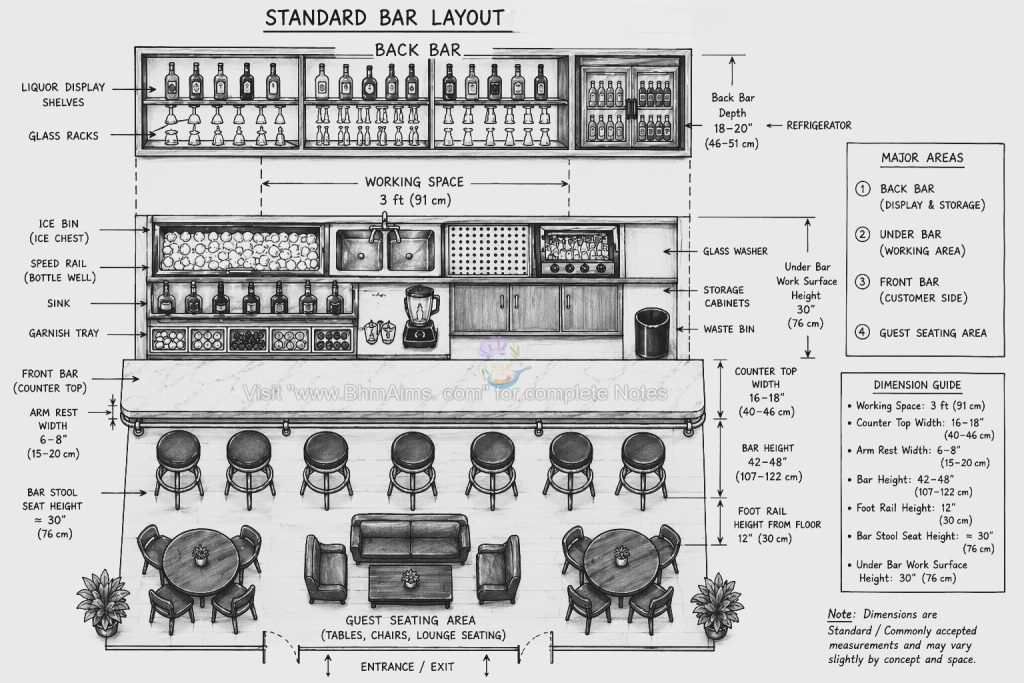
Bar Tasks
Bar tasks refer to the various duties and activities performed in a bar to ensure smooth beverage operations, efficient service, customer satisfaction, and proper control of stocks and equipment. These tasks are carried out before, during, and after service by bartenders and bar staff.
The primary objective of bar tasks is to ensure that beverages are prepared and served efficiently while maintaining cleanliness, hygiene, safety, and profitability.
Classification of Bar Tasks
Bar tasks can generally be divided into three stages:
- Pre-Service Tasks (Mise-en-Place)
- Service Tasks
- Post-Service Tasks (Closing Duties)
Explanation:
- Pre-Service Tasks (Mise-en-Place)
Mise-en-place is a French term meaning “everything in its proper place.” It refers to all preparations made before the bar opens for service.
Proper mise-en-place helps bartenders provide fast and efficient service during busy periods.
Duties Carried Out During Mise-en-Place- a. Cleaning the Bar Area
- Clean bar counter and workstations.
- Wipe shelves and display areas.
- Clean sinks and drains.
- Ensure floors are clean and dry.
- b. Arranging Glassware
- Polish glasses.
- Check for chips and cracks.
- Arrange glassware according to type and usage.
- Stock sufficient quantities for service.
- c. Preparing Ice
- Fill ice bins with fresh ice.
- Check the operation of the ice machine.
- Ensure ice scoops and ice buckets are clean.
- d. Stocking Beverage
- Replenish liquor, beer, wine, mixers, and soft drinks.
- Arrange bottles properly in the back bar and speed rail.
- Check stock levels.
- e. Preparing Garnishes
- Cut lemon wedges, lime wedges, orange slices, and other garnishes.
- Prepare cocktail cherries, olives, mint leaves, etc.
- Store garnishes hygienically.
- f. Checking Equipments
- Inspect blenders, mixers, refrigerators, and glass washers.
- Ensure all equipment is functioning properly.
- g. Arranging Bar Tools
- Prepare jiggers, shakers, strainers, muddlers, bar spoons, bottle openers, and corkscrews.
- Place frequently used tools within easy reach.
- h. Preparing Service Garnishes
- Arrange cocktail napkins.
- Stock straws, stirrers, toothpicks, and coasters.
- Ensure adequate supplies are available.
- i. Cash Float Preparation
- Verify cash float or point-of-sale system.
- Prepare bills and change for transactions.
- a. Cleaning the Bar Area
| Duties Carried Out During Mise-en-Place of Bar • Clean and sanitize the bar area. • Polish and arrange glassware. • Fill ice bins with fresh ice. • Replenish beverage stocks. • Prepare garnishes and condiments. • Arrange bar tools and equipment. • Check refrigerators and other machines. • Stock service supplies such as napkins, straws, and stirrers. • Verify cash float and POS system readiness. |
- Service Tasks
These tasks are performed while the bar is open and serving customers.- Welcome and greet guests politely.
- Assist guests in selecting beverages.
- Take beverage orders accurately.
- Recommend drinks, cocktails, and special promotions.
- Prepare drinks according to standard recipes.
- Measure ingredients accurately using appropriate bar tools.
- Garnish and present beverages properly.
- Serve drinks promptly and courteously.
- Use appropriate glassware for each beverage.
- Maintain cleanliness of the bar counter and work area.
- Replenish ice, garnishes, and beverage stocks when required.
- Monitor guest satisfaction and respond to requests.
- Practice Responsible Alcohol Service (RAS).
- Verify the legal drinking age where applicable.
- Refuse service to intoxicated guests when necessary.
- Prepare and present bills.
- Handle cash, card, and digital payments.
- Record sales accurately in the POS system.
- Collect used glassware and maintain cleanliness during service.
- Coordinate with service staff and other departments for smooth operations.
- Post-Service Tasks (Closing Duties)
These tasks are performed after service ends.- a. Cleaning the bar
- Wash and sanitize equipment.
- Clean counters, shelves, and floors.
- Dispose of waste properly.
- b. Storing Equipments
- Return tools to storage.
- Secure glassware and utensils.
- c. Stock Reconciliation
- Count remaining stock.
- Identify shortages or breakages.
- Prepare stock reports.
- d. Cash Reconciliation
- Balance cash received with sales records.
- Prepare cash reports.
- e. Securing the Premises
- Lock beverage storage areas.
- Switch off electrical equipment.
- Ensure security procedures are followed.
- a. Cleaning the bar
- Other Important Bar Tasks
Inventory Control
Inventory control is one of the most important bar tasks. It involves monitoring, recording, and managing the stock of beverages, mixers, garnishes, and other bar supplies. Regular stock checks help prevent shortages, overstocking, wastage, and pilferage. Effective inventory control ensures that sufficient supplies are available for service while helping management control costs and maintain profitability. - Preparation of Bar Consumption Report
A Bar Consumption Report is prepared to determine the quantity of beverages consumed or sold during a specific period. It is generally calculated using the formula:
| Opening Stock + Purchases − Closing Stock = Consumption |
This report helps management monitor beverage usage, identify discrepancies, control inventory, and evaluate the performance of the bar operation.
- Responsible Alcohol Service (RAS)
Responsible Alcohol Service involves serving alcoholic beverages in a safe, legal, and responsible manner. Bar staff should verify the legal drinking age of customers, monitor alcohol consumption, refuse service to intoxicated individuals, and encourage responsible drinking behavior. Proper implementation of RAS helps prevent alcohol-related incidents, protects customers, and ensures compliance with legal requirements. - Maintaining Hygiene and Safety
Maintaining hygiene and safety is essential for the smooth operation of a bar. Bartenders and bar staff should keep the bar area clean and sanitized, use clean glassware and equipment, handle food garnishes hygienically, and dispose of waste properly. Safety measures such as cleaning spills immediately, storing equipment correctly, and following workplace safety procedures help prevent accidents and ensure a safe environment for both guests and employees. - Cash Handling and Revenue Control
Cash handling and revenue control involve accurately processing customer payments, maintaining proper sales records, balancing cash at the end of the shift, and ensuring that all transactions are correctly recorded. Effective revenue control minimizes financial discrepancies, prevents losses, and supports the overall profitability of the establishment. - Customer Service and Guest Relations
Providing excellent customer service is a key responsibility in bar operations. This includes greeting guests warmly, taking orders accurately, responding to customer requests, handling complaints professionally, and creating a welcoming atmosphere. Good guest relations help improve customer satisfaction, encourage repeat business, and enhance the reputation of the establishment. - Equipment Maintenance
Bar equipment such as refrigerators, ice machines, blenders, glass washers, and dispensing systems should be inspected and maintained regularly. Proper maintenance ensures smooth operation, reduces the risk of equipment failure, prolongs equipment lifespan, and contributes to efficient service delivery.
Blood Alcohol Concentration (BAC)
Blood Alcohol Concentration (BAC), sometimes referred to as Blood Alcohol Content, is the measurement of the amount of alcohol (ethanol) present in a person’s bloodstream at a given time. It is expressed as a percentage and indicates the number of grams of alcohol present in every 100 milliliters (mL) of blood.
For example, a BAC of 0.05% means that there are 0.05 grams of pure alcohol in every 100 mL of blood.
BAC is widely used by law enforcement agencies, medical professionals, and hospitality operators to determine the degree of intoxication and a person’s ability to safely perform tasks such as driving.
| Blood Alcohol Concentration (BAC) is the percentage of alcohol present in a person’s bloodstream, expressed as grams of alcohol per 100 milliliters of blood. |
Importance of BAC
BAC is important for several reasons:
- Determination of Intoxication Level
BAC helps measure the extent to which alcohol has affected a person’s physical and mental abilities. - Road Safety and Legal Compliance
Many countries establish legal BAC limits for drivers. Exceeding these limits may result in penalties, suspension of licenses, or criminal charges. - Responsible Alcohol Service
Knowledge of BAC helps bartenders and hospitality professionals monitor alcohol consumption and prevent over-intoxication. - Medical and Legal Purposes
BAC is often used in accident investigations, criminal cases, and medical emergencies involving alcohol consumption. - Public Safety
Monitoring BAC helps reduce alcohol-related accidents, injuries, violence, and fatalities.
How Alcohol Enters the Bloodstream
After consumption, alcohol follows the following process:
- Alcohol enters the stomach.
- A small portion is absorbed directly through the stomach lining.
- Most alcohol is absorbed through the small intestine.
- Alcohol enters the bloodstream.
- Blood carries alcohol throughout the body, including the brain.
- The liver gradually metabolizes and eliminates alcohol.
Because alcohol reaches the brain through the bloodstream, increasing BAC directly affects behavior, judgment, and coordination.
Factors Affetcting BAC
BAC does not depend only on the number of drinks consumed. Several factors influence the level of alcohol in the blood.
- Amount of Alcohol Consumed
The greater the amount of alcohol consumed, the higher the BAC.
| More drinks = Higher BAC |
- Alcohol Strength (ABV)
Beverages with higher alcohol content contribute more alcohol to the bloodstream.
For Example:
• Beer: 4–8% ABV
• Wine: 10–15% ABV
• Spirits: 40% ABV or more - Body Weight
People with lower body weight generally reach a higher BAC than heavier individuals after consuming the same amount of alcohol.
| Lower body weight = Higher BAC |
- Gender
Women often reach a higher BAC than men after consuming the same amount of alcohol because they generally have:- Lower body water content
- Different body composition
- Lower levels of alcohol-metabolizing enzymes
- Food Consumption
Food slows the absorption of alcohol into the bloodstream.
| Drinking on an empty stomach increases BAC more rapidly. |
- Rate of Drinking
Consuming drinks quickly causes BAC to rise faster than drinking slowly over a longer period. - Metabolism
Individuals with faster metabolic rates may eliminate alcohol more quickly, although the effect is limited. - Age and Health Condition
Age, liver function, medications, fatigue, and overall health can influence alcohol absorption and elimination.
Effects of Different BAC Levels
The effects of alcohol become more noticeable as BAC increases.
| BAC Level | Effects on Body and Behavior |
|---|---|
| 0.01 – 0.03% | Slight relaxation, mild euphoria (हल्का उत्साह / खुशी) |
| 0.04 – 0.06% | Lowered inhibitions (आत्मनियन्त्रण कम हुनु), reduced judgment, mild impairment |
| 0.07 – 0.10% | Impaired coordination, slower reaction time, reduced concentration |
| 0.11 – 0.20% | Slurred speech (लरबरिएको बोली), poor judgment, significant impairment |
| 0.21 – 0.30% | Confusion, dizziness (चक्कर), memory loss, possible blackouts |
| Above 0.30% | Severe intoxication, unconsciousness, respiratory depression, coma, possible death |
Physical and Psychological Effects of High BAC
As BAC rises, a person may experience:
Physical Effects:
- Loss of balance (bodyको सन्तुलन stable राख्न कठिन हुनु)
- Poor coordination – शरीरका अंगहरूको चाल र क्रियाकलापमा उचित तालमेल नहुनु।
- Slurred speech (लरबरिएको बोली)
- Blurred vision
- Delayed reaction time
- Drowsiness(धेरै थकान वा निद्रा महसुस हुनु)
- Nausea and vomiting
Psychological Effects:
- Reduced judgment
- Increased confidence
- Poor decision-making
- Aggressive behavior
- Emotional instability
- Memory impairment
BAC and Driving
Alcohol significantly impairs driving ability. Even moderate BAC levels can affect:
- Judgment
- Concentration
- Vision
- Reaction time
- Motor coordination
For this reason, governments establish legal BAC limits for drivers.
Measurement of BAC
BAC can be measured through:
- Breath Test :
A breathalyzer estimates BAC by measuring alcohol in exhaled breath. - Blood Test :
The most accurate method, directly measuring alcohol in the bloodstream. - Urine Test :
Used occasionally but less accurate than blood testing.
Estimating BAC: Widmark Formula
The Widmark Formula is a mathematical formula used to estimate a person’s Blood Alcohol Concentration (BAC) after consuming alcohol. It was developed by the Swedish physician Erik M. P. Widmark in the early 20th century and is widely used in forensic science, medicine, and alcohol-related research.
The Widmark Formula is commonly used to estimate BAC.

For Example
A man weighing 70 kg (70,000 g) consumes 56 g of alcohol.
Solution:
BAC = [ 56 / (70000*0.68) ]* 100
=[56 / 47600] * 100
= 0.00117647 * 100
= 0.11764747059
≈ 0.178
Elimination of Alcohol from the Body
The body eliminates alcohol primarily through the liver.
On average:
- The liver metabolizes approximately one standard drink per hour.
- Coffee, cold showers, exercise, or energy drinks do not significantly reduce BAC.
- Only time lowers BAC effectively.
Importance of BAC in Hospitality Industry
For hospitality professionals, understanding BAC is important because it helps:
- Monitor guest alcohol consumption.
- Prevent over-service of alcohol.
- Support Responsible Alcohol Service (RAS).
- Identify intoxicated customers.
- Reduce alcohol-related incidents.
- Comply with legal requirements.
- Protect guests and the establishment.
Responsible Alcohol Service (RAS)
Responsible Alcohol Service (RAS) is the practice of serving alcoholic beverages in a safe, responsible, and legal manner. It involves following laws, policies, and ethical standards to prevent alcohol-related harm while ensuring the safety and well-being of customers, staff, and the community.
In the hospitality industry, bartenders, servers, and managers have a legal and moral responsibility to monitor alcohol consumption, prevent over-intoxication, refuse service when necessary, and discourage underage drinking. Proper implementation of RAS promotes a safe drinking environment, reduces legal risks, and enhances the reputation of the establishment.
| Definition: Responsible Alcohol Service (RAS) is the practice of serving alcoholic beverages responsibly by following legal requirements and ensuring that alcohol is not served to underage or intoxicated persons, thereby promoting the safety of customers and the community. |
Objectives of Responsible Alcohol Service
The main objectives of RAS are to:
- Serve alcohol safely and responsibly.
- Prevent underage drinking.
- Prevent over-intoxication of customers.
- Ensure compliance with alcohol laws and regulations.
- Reduce alcohol-related accidents and violence.
- Protect customers, employees, and the community.
- Protect the establishment from legal liability.
- Promote responsible drinking habits.
Principles of Responsible Alcohol Service
- Legal Compliance
Bar staff must comply with all laws related to the sale and service of alcohol. They should verify the legal drinking age, check identification (ID) when necessary, and avoid serving alcohol in prohibited situations. - Preventing Over-Consumption
Bartenders should monitor the amount of alcohol consumed by guests and avoid serving excessive quantities. Serving alcohol at a controlled pace and encouraging food and water intake can help reduce intoxication. - Identifying Signs of Intoxication
Staff should continuously observe customers for signs of intoxication such as slurred speech, poor coordination, aggressive behavior, and impaired judgment. Early identification helps prevent further alcohol-related harm. - Refusing Service When Necessary
If a guest is intoxicated, underage, or behaving dangerously, staff should politely refuse further alcohol service while remaining calm and professional. - Promoting Guest Safety
Hospitality staff should encourage guests to drink responsibly and assist intoxicated customers in arranging safe transportation, such as a taxi, rideshare, or designated driver. - Staff Training
Regular training helps bartenders and servers understand alcohol laws, recognize intoxication, manage difficult situations, and provide responsible service.
Techniques of Responsible Alcohol Service
- Verify Customer’s Age
Always check valid identification if there is any doubt about a customer’s age. Never serve alcohol to underage individuals. - Observe Customer Behaviour
Continuously monitor guests for changes in speech, coordination, mood, and behaviour that may indicate intoxication. - Serve One Drink at a Time
Avoid serving multiple alcoholic drinks to one customer at the same time, as this may encourage excessive drinking. - Encourage Food Consumption
Offer meals or snacks along with alcoholic beverages because food slows the absorption of alcohol. - Offer Non-Alcoholic Alternatives
Encourage customers to drink water, soft drinks, mocktails, or other non-alcoholic beverages between alcoholic drinks. - Avoid Rapid Service
Do not encourage drinking games, large rounds of drinks, or promotions that promote excessive alcohol consumption. - Politely Refuse Further Service
If a customer becomes intoxicated, politely stop serving alcohol while maintaining professionalism and respect. - Arrange Safe Transportation
Assist intoxicated guests by arranging taxis, rideshare services, or contacting family or friends to ensure they return home safely.
Responsibilities of Bar Staff Under RAS
Bar staff should:
- Check the customer’s age before serving alcohol.
- Monitor alcohol consumption throughout service.
- Recognize signs of intoxication.
- Refuse service to intoxicated or underage persons.
- Offer food and non-alcoholic beverages.
- Maintain accurate records when required.
- Handle difficult situations calmly and professionally.
- Arrange safe transport for intoxicated guests.
- Follow all legal and organizational policies.
Importance of Responsible Alcohol Service
Responsible Alcohol Service is important because it:
- Protects Guests
It reduces the risk of alcohol poisoning, accidents, injuries, and violence. - Ensures Legal Compliance
Following RAS helps businesses comply with alcohol laws and avoid legal penalties. - Protects the Establishment
Responsible service reduces the risk of lawsuits, fines, license suspension, and reputational damage. - Improves Customer Experience
Guests feel safer and are more likely to return to an establishment that provides responsible and professional service. - Promotes Community Safety
RAS helps reduce drink driving, public disturbances, and other alcohol-related incidents.
Relationship Between BAC and RAS
Blood Alcohol Concentration (BAC) and Responsible Alcohol Service (RAS) are closely connected.
- BAC measures the amount of alcohol present in a person’s bloodstream.
- RAS focuses on preventing customers from reaching unsafe BAC levels.
By understanding BAC and recognizing signs of intoxication, bartenders can decide when to slow down service, offer food or water, refuse further alcohol service, or arrange safe transportation. Therefore, knowledge of BAC helps hospitality professionals to implement Responsible Alcohol Service effectively.
Difference Between Blood Alcohol Concentration (BAC) and Responsible Alcohol Service (RAS)
| Basis | Blood Alcohol Concentration (BAC) | Responsible Alcohol Service (RAS) |
|---|---|---|
| Definition | BAC is the measurement of the amount of alcohol present in a person’s bloodstream. | RAS is the practice of serving alcoholic beverages safely, legally, and responsibly. |
| Purpose | Measures a person’s level of intoxication. | Prevents alcohol-related harm by promoting responsible alcohol service. |
| Measurement | It is expressed as a percentage (e.g., 0.05%). | It is not measured numerically; it is based on policies, procedures, and legal requirements. |
| Used By | Police, medical persons, courts, and hospitality staff. | Bartenders, servers, managers, and hospitality establishments during service. |
| Focus | Focuses on the drinker’s physical condition. | Focuses on the responsibilities of bartenders, servers, and hospitality staff. |
| Importance | It helps to determine whether a person is legally or physically impaired by alcohol. | It helps to prevent underage drinking, over-intoxication, and alcohol-related incidents. |