
Past Board Questions
- Why is Japanese Cuisine considered a healthy cuisine? Elaborate focusing on the features. (10 Marks, 2025)
Introduction
Japanese cuisine, known as washoku, is a food culture that values simplicity, balance, and harmony with nature. Instead of using heavy spices or complex mixtures, Japanese cooking focuses on preserving the natural flavor, texture, and freshness of ingredients. Each item in a meal is usually prepared separately, allowing its individual taste and appearance to stand out. Presentation is given great importance, and dishes are carefully arranged to reflect season, color, and visual balance.
Geography has played a major role in shaping Japanese food habits. Japan is an island nation surrounded by rich fishing waters where warm and cold ocean currents meet, making seafood a natural and essential part of the diet. Rice has been cultivated for over 2,000 years and forms the backbone of Japanese meals. In Japan, people even use the same word, gohan, for rice and for a meal. This shows how important rice is in everyday Japanese life.
Historical and Cultural Influences:
Religion and history also strongly influenced Japanese cuisine. Shinto and Buddhist beliefs encouraged respect for nature and discouraged the killing of animals for many centuries. As a result, the traditional diet developed around rice, fish, vegetables, seaweed, and soy-based foods such as tofu and miso. Meat consumption remained limited until the Meiji era (from 1868), when Japan opened to the Western world and gradually accepted meat and dairy products. Even after this change, traditional food practices continued to emphasize light cooking methods and seasonal ingredients.
Features of Japenese Cuisine:
- Emphasis on seasonality and fresh, natural ingredients
- Simple cooking methods such as steaming, grilling, simmering, and serving raw
- Small portions served in variety to achieve nutritional balance
- Strong focus on presentation, color harmony, and texture
- Meals designed to be light, healthy, and well-balanced
Overall, Japanese cuisine is not just about nourishment but about mindfulness, respect for ingredients, and appreciation of nature. This philosophy has helped Japanese food gain worldwide recognition for its health benefits, elegance, and refined taste.
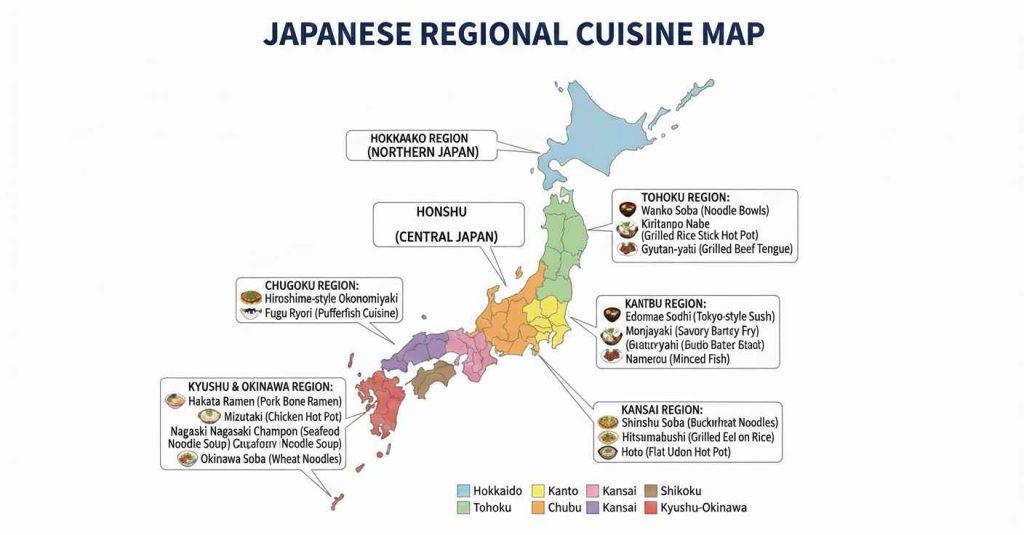
Features of Regional Cuisine of Japan
Japanese cuisine varies across the country due to differences in climate, geography, available ingredients, and local culture. Each region has developed its own unique dishes, flavors, and cooking styles.
- Hokkaido (Northern Japan)
Hokkaido, the northernmost major island of Japan, has a cold climate with heavy snowfall, which strongly influences its cuisine. The region is known for rich, hearty meals that suit the long winters. Its coastal waters and cold rivers provide an abundance of fresh seafood, making fish and shellfish central to the local diet.
Key Features and Ingredients:
- Seafood: crab, salmon, sea urchin, scallops, squid
- Dairy products: milk, cheese, butter (more common than in other regions)
- Vegetables: potatoes, corn, onions, root vegetables that grow well in cold climate
- Grains: rice, wheat for noodles and bread
Seasonings and Flavorings:
- Miso: fermented soybean paste, used in soups, ramen, and hot pots
- Soy sauce (shoyu): widely used for seasoning seafood and grilled dishes
- Sake: rice wine, often added to broths and simmered dishes to enhance flavor
- Mirin: sweet rice wine, used to balance salty and savory flavors
- Salt: used to enhance the natural taste of seafood, especially grilled or boiled dishes
- Dashi stock: made from kombu (kelp) and dried bonito flakes, forms the base for many soups and hot pots
Famous Dishes:
- Miso Ramen: thick, hearty noodle soup with miso-based broth
- Seafood Donburi: rice bowls topped with fresh seafood like salmon, crab, or uni
- Soup Curry: a spicy, vegetable-filled curry soup unique to Hokkaido
- Ishikari-nabe: salmon hot pot with vegetables and miso-based broth
Cooking Techniques:
- Grilling: commonly used for fish and seafood
- Simmering: for hot pots like Ishikari-nabe
- Steaming: to preserve natural flavors and nutrients
- Boiling: used in soups, ramen broths, and vegetables
Hokkaido’s cuisine features warm and filling dishes that suit its cold winters. The region makes heavy use of fresh seafood from its surrounding waters and is also well known for dairy products like butter, cheese, and milk, which add richness to its food.
- Honshu (Central Japan)
Honshu is the largest and most populous island of Japan, home to major cities such as Tokyo, Kyoto, and Osaka. The cuisine here is diverse, reflecting differences in climate, local produce, and cultural traditions. Both traditional and modern Japanese dishes are prominent, ranging from formal multi-course meals to street foods.
Key Ingredients:
- Seafood: tuna, mackerel, sardines, shellfish
- Vegetables: daikon (white radish), mushrooms, bamboo shoots, seasonal greens
- Rice: short-grain rice for daily meals, sushi, and rice cakes
- Noodles: soba (buckwheat) and udon (wheat)
Seasonings:
- Soy sauce (shoyu)
- Miso
- Mirin
- Sake
- Salt
- Dashi stock (kombu + bonito flakes)
Cooking Techniques:
- Grilling: yakimono style for fish and meats
- Simmering: nimono dishes with vegetables and proteins
- Steaming: for dishes like chawanmushi (savory egg custard)
- Deep-frying: for tempura and fried snacks
- Raw preparation: sashimi and sushi
Famous Dishes:
- Kaiseki Ryori – traditional multi-course meals, seasonal and artistic
- Shojin Ryori – Buddhist vegetarian cuisine
- Sushi & Sashimi – raw fish dishes, especially popular in Tokyo and coastal areas
- Okonomiyaki – savory pancakes, popular in Osaka
- Takoyaki – octopus-filled fried dough balls, Osaka specialty
- Unagi Kabayaki – grilled eel glazed with sweet soy-based sauce
- Chawanmushi – savory steamed egg custard
- Nimono – simmered vegetables, fish, or meat in soy-based broth
- Yakimono – grilled fish or meats
- Udon & Soba – wheat and buckwheat noodles served in soups or cold with dipping sauces
- Oden – winter stew with fish cakes, eggs, daikon, and tofu
- Tempura – deep-fried seafood and vegetables
- Shabu-shabu & Sukiyaki – hot pot dishes with meat, vegetables, and broth
- Kyushu (Southern Japan)
Kyushu is the southernmost of Japan’s four main islands. Its subtropical climate allows a wide variety of ingredients, including fruits, seafood, and tropical vegetables. The cuisine emphasizes fresh local produce and seafood, often combined with rice or noodles.
Key Ingredients:
- Seafood: clams, sweetfish, squid, shellfish
- Meat: pork (butaniku), occasionally chicken
- Vegetables & fruits: loquats, bitter melon (goya), winter melon (nabera), tropical greens
- Grains: rice, wheat for noodles like ramen and udon
Cooking Techniques:
- Simmering
- Grilling
- Boiling
- Deep-frying
Famous Dishes:
- Tonkotsu Ramen: pork-bone broth noodle soup, famous in Fukuoka
- Basashi: horse meat sashimi, regional specialty
- Champon: noodle dish with pork, seafood, and vegetables
- Motsunabe: hot pot with beef or pork offal and vegetables
- Karashi Renkon: lotus root stuffed with mustard, typical in Kumamoto
Kyushu’s cuisine is flavorful and hearty, reflecting its warm climate and rich coastal waters. Fresh seafood, tropical vegetables, and regional specialties make it distinct from northern Japanese cuisine, while pork and noodles feature prominently in daily meals.
- Okinawa (Southern Islands, Ryukyu):
Okinawa consists of a chain of islands south of Kyushu. Its tropical climate and historical influences from Southeast Asia and Portugal give its cuisine a distinct flavor compared to the rest of Japan. Dishes are often heavily spiced and incorporate ingredients not commonly found in the northern islands.
Key Ingredients:
- Seafood: fish, squid, seaweed (mozuku), shellfish
- Meat: pork (butaniku), goat (hijaa)
- Vegetables & fruits: beni imo (purple sweet potato), bitter melon (goya), winter melon (nabera), water spinach (unjanaba)
- Rice and wheat: for daily meals and noodles
Seasonings and Flavorings:
- Soy sauce (shoyu)
- Miso
- Mirin
- Sake
- Salt
- Dashi stock (kombu + bonito flakes)
- Tropical spices and chili are used more frequently than in northern Japan
Cooking Techniques:
- Simmering: for stews and hot pots
- Grilling: for pork, seafood, and vegetables
- Boiling: for soups and noodles
- Deep-frying: for tempura and local snacks
- Pickling and fermenting: to preserve vegetables in the tropical climate
Famous Dishes:
- Goya Champuru: stir-fried bitter melon with tofu, pork, and vegetables
- Okinawa Soba: wheat noodles in a pork-based broth
- Rafute: braised pork belly
- Taco Rice: fusion dish with taco-seasoned beef over rice
- Beni Imo Desserts: sweets made from purple sweet potato
- Seaweed and Mozuku Dishes: often served in soups or salads
Okinawa’s cuisine is unique and tropical, with heavier spices and tropical vegetables than northern Japan. Pork, seafood, and local fruits and vegetables dominate daily meals, reflecting the islands’ climate and historical foreign influences.
Seasoning and Flavorings used in Japanese cuisine
Japanese cuisine is known for its subtle, balanced flavors that highlight the natural taste of fresh ingredients rather than overwhelming them with heavy spices. Seasonings are used thoughtfully to create harmony, depth, and the signature umami taste that defines Japanese food.
Core Seasonings: The “Sa-Shi-Su-Se-So” Basics
A traditional mnemonic in Japanese cooking, Sa-Shi-Su-Se-So, represents the five foundational seasonings:
- Sa (Sugar / Satou):
Adds sweetness and balances salty or acidic flavors, commonly used in sauces, marinades, and soups. - Shi (Salt / Shio):
Essential for basic seasoning; Japanese salt is mostly derived from the sea, with some regions producing unique varieties. - Su (Rice Vinegar / Kome-su):
Mild, tangy, and essential for sushi rice, pickles, and salad dressings. - Se (Soy Sauce / Shoyu):
A fermented soy product rich in umami, used in cooking, marinating, and as a dipping sauce. Light and dark varieties exist depending on region and purpose. - So (Miso):
Fermented soybean paste with a deep, savory flavor, used in soups, glazes, marinades, and simmered dishes.
These five seasonings form the backbone of Japanese flavor and are used across almost all types of traditional dishes.
Essential Liquids and Stocks
Japanese cuisine relies heavily on liquids that carry umami and enhance natural flavors:
- Dashi: A stock made from kombu (kelp) and katsuobushi (dried bonito flakes), forming the base for miso soup, simmered dishes, and sauces.
- Mirin: Sweet rice wine that adds subtle sweetness, shine, and balances salty flavors in sauces and glazes.
- Sake (Cooking): Used to tenderize meat, remove odors, and enrich flavor in soups and simmered dishes.
- Ponzu: A citrus-infused soy sauce, tangy and light, often served with hot pot, sashimi, or salads.
- Tsuyu: Soy sauce-based seasoning used for noodle soups (udon, soba) or tempura dipping; often contains mirin, dashi, and sugar.
Common Condiments and Spices
Japanese dishes also incorporate spices and condiments to enhance or accentuate flavors without overpowering the dish:
- Shichimi Togarashi: “Seven-spice blend” containing chili, sesame seeds, dried orange peel, ginger, hemp seeds, and seaweed; used on noodles, rice, and soups.
- Ichimi: Ground chili pepper, offering heat without extra fragrance.
- Wasabi: Pungent horseradish paste, primarily with sushi or sashimi.
- Karashi: Japanese mustard, slightly spicy, often paired with oden or tonkatsu.
- Rayu: Chili oil used as a dipping sauce or for flavoring dumplings.
- Furikake: Dry rice seasoning made with sesame, seaweed, bonito flakes, and sometimes dried vegetables or egg.
- Katsuobushi (Bonito Flakes): Adds smoky umami; used in dashi, sprinkled on tofu, noodles, or okonomiyaki.
- Goma (Sesame Seeds / Oil): Provides nutty flavor for salads, sauces, and stir-fries.
- Aonori: Dried green seaweed flakes, commonly used on okonomiyaki and takoyaki.
- Shiso: Perilla leaves with a minty-basil aroma, used fresh or dried as garnish.
- Sansho: Aromatic, slightly spicy Japanese pepper, often used with grilled eel.
Specialty Sauces and Pastes
In addition to core seasonings, several sauces and pastes give Japanese cuisine distinct flavors:
- Tonkatsu Sauce: Thick, sweet-savory sauce for fried dishes like tonkatsu or kushikatsu.
- Okonomiyaki Sauce: Sticky, sweet-savory sauce used on savory pancakes (okonomiyaki) and takoyaki.
- Yakiniku Sauce: Sweet-savory glaze for grilled meats.
- Japanese Mayonnaise: Tangy and slightly sweet, richer in umami than Western mayo, used in salads, okonomiyaki, and takoyaki.
- Curry Powder: A blend of aromatic spices used in Japanese-style curry dishes.
Equipment used in Japanese Cuisine
Knives & Cutting Tools
Japanese knives are highly specialized and often single-beveled for clean, precise cuts:
- Santoku: All-purpose chef’s knife for general cutting.
- Yanagiba: Long, thin knife for slicing sashimi and raw fish.
- Deba (Deba bocho): Heavy knife for filleting fish and cutting poultry bones.
- Nakkiri bocho: Vegetable knife for cleanly cutting greens and root vegetables.
- Urokotori: Fish scaler for removing scales.
- Katsuobushi Kezuriki: Shaver for dried bonito flakes (katsuobushi).
- Bunka bocho / Burka bocho: All-purpose knives for various cutting tasks.
Japanese knives are usually thin-bladed and delicate, ideal for fish and vegetables but not for hard items like squash or bones (except deba).
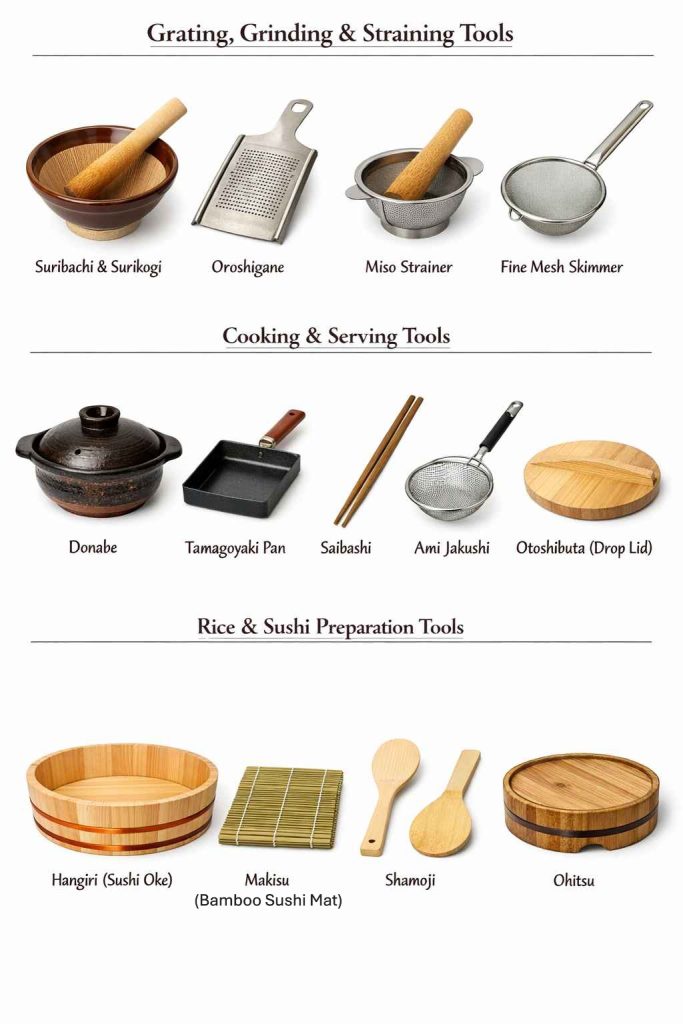
Rice & Sushi Preparation Tools
Rice and sushi preparation is a central part of Japanese cuisine, and requires special tools:
- Hangiri / Sushi Oke: Wooden tub (usually cypress) used to mix sushi rice with vinegar and sugar; absorbs excess moisture and cools rice quickly.
- Shamoji: Wooden rice paddle for mixing rice without crushing grains.
- Makisu: Bamboo rolling mat for making sushi rolls.
- Ohitsu: Wooden rice keeper for storing cooked rice.
- Fukin / Daifukin: Cotton cloth for shaping rice, straining stock, or squeezing tofu.
Cooking & Serving Tools
Japanese cooking uses both traditional and modern tools for stovetop, tabletop, and presentation:
- Donabe: Earthenware/clay pot for hot pots, stews, sukiyaki, shabu-shabu; used on stovetop or at the table.
- Yukihira Nabe: Lightweight pot for soups, boiling, and simmering.
- Tamagoyaki Pan: Rectangular pan for rolled omelets.
- Rice Cooker: Essential for perfectly cooked rice.
- Saibashi: Long cooking chopsticks used for flipping, stirring, and precise handling of ingredients.
- Ami Jakushi: Net ladle for skimming or retrieving ingredients from hot pot.
- Otoshibuta / Drop Lid: Helps ingredients cook evenly in simmered dishes.
- Tetsubin: Cast iron teapot for heating water.
- Bowls: Deep ramen bowls, small dipping bowls (kozara) for sauces.
Grating, Grinding & Straining Tools
Japanese cuisine often uses freshly ground or grated ingredients for flavor and texture:
- Suribachi & Surikogi: Ceramic mortar and pestle for grinding sesame seeds, spices, or miso.
- Oroshigane: Metal or ceramic graters for daikon, ginger, or wasabi.
- Miso Strainer & Miso Mudler: Tools for preparing smooth miso paste.
- Fine Mesh Skimmer: For removing impurities or foam from broths.
- Zaru: Bamboo draining basket for noodles or vegetables
Specialty & Presentation Tools
Some tools are designed for traditional presentation, pickling, or formal meals:
- Jubako: Lacquered tiered boxes for formal bento or ceremonial dishes.
- Tsukemonoki: Pickle press for making tsukemono (Japanese pickles).
- Bamboo Skewers: For yakitori or grilling small items.