
Important Questions
- List regional cuisine of China. Explain any three with features (5 Marks, 2016)
- List regional cuisines of China. Explain them with examples of dishes. (10 Marks, 2017)
- Explain the Cantonese styles of Chinese cuisine with its cooking seasoning and flavouring. (10 Marks, 2018)
- Define Century egg. (1 Mark, 2019)
A century egg is a preserved Chinese delicacy made by curing duck, chicken, or quail eggs in an alkaline mixture until the whites turn jelly-like and the yolk becomes creamy and dark. - Explain in detail the Southern region of Chinese Cuisine. (10 Marks, 2019)
- Why Chinese cuisine is popular worldwide? Explain its with regional cuisine. (10 Marks, 2021)
- Enlist five seasonings and flavouring of Chinese cuisine. (1 Mark, 2022)
Introduction to Chinese Cuisine
Chinese cuisine is one of the oldest and most influential culinary traditions in the world. It has been developed through hundreds of regional traditions, imperial influences, religious practices, and seasonal availability.
The cuisine is known for its emphasis on balance in taste, texture, color, and aroma.
Staple foods such as rice, wheat (noodles, dumplings, buns), soy products, vegetables, poultry, pork, and seafood form the foundation of most meals. Chinese cuisine also gives importance to proper cutting techniques, controlled heat application, and the use of natural seasonings. Traditional practices such as tea drinking, communal eating, and the concept of Yin and Yang in food also contributed to the evolution of Chinese food culture.
Features of regional cuisine
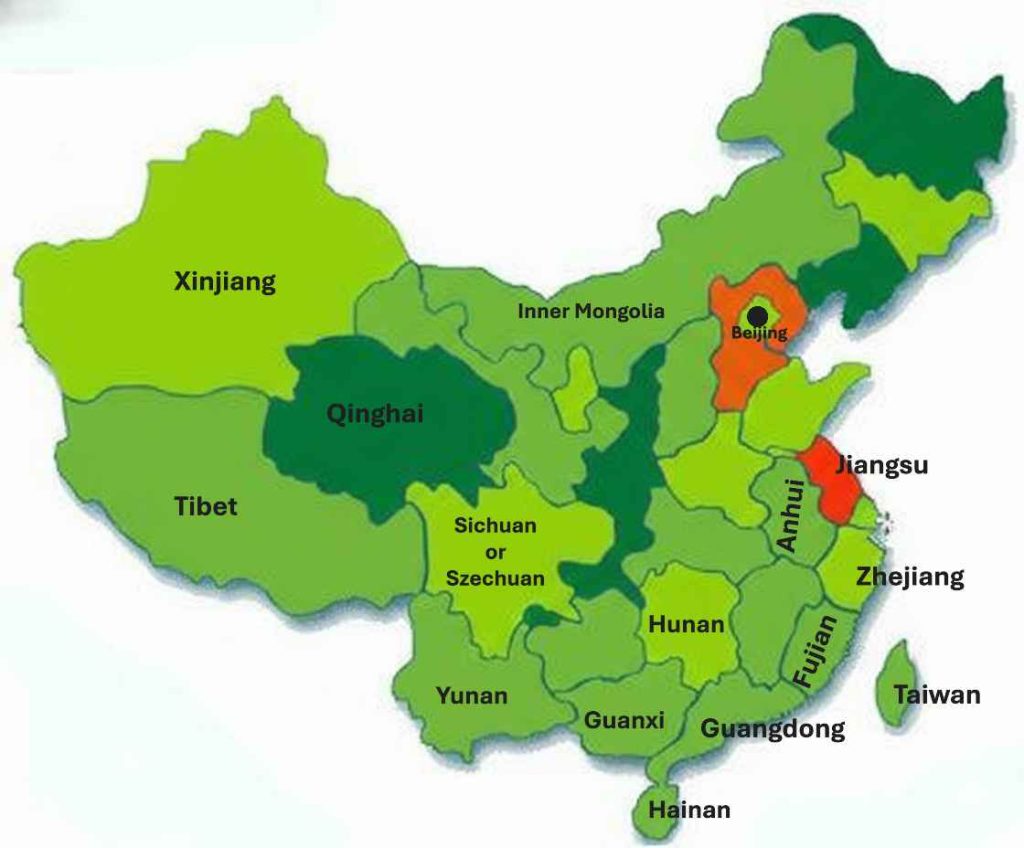
Chinese cuisine is divided into several regional styles formed by local geography, climate, agricultural products, and cultural preferences. Although the number of regions varies in different classifications, the most widely accepted division is the “Eight Culinary Traditions of China.” These represent the major regional flavors and cooking practices.
Eight Culinary Traditions of China
- Shandong Cuisine (Lu Cuisine) – Known for seafood, soups, and use of vinegar.
- Sichuan Cuisine (Chuan Cuisine) – Famous for bold, spicy, and numbing flavors (chili and Sichuan pepper).
- Guangdong Cuisine (Yue Cuisine / Cantonese Cuisine) – Emphasizes freshness, mild flavors, and steaming.
- Fujian Cuisine (Min Cuisine) – Focuses on soups, seafood, and umami-rich broths.
- Jiangsu Cuisine (Su Cuisine) – Known for delicate presentation, sweetness, and freshwater fish.
- Zhejiang Cuisine (Zhe Cuisine) – Light, fresh, and slightly sweet; seafood-focused.
- Hunan Cuisine (Xiang Cuisine) – Spicy, aromatic, and oil-rich with chili and smoked flavors.
- Anhui Cuisine (Hui Cuisine) – Uses wild herbs, slow cooking, and hearty mountain ingredients.
Northern Chinese Cuisine
Northern China has covered provinces:
- Tianjin
- Hebei
- Inner Mongolia
- Shanxi
- Beijing
- Shandong
Northern China experiences cold, dry winters and hot & humid summers, which affects agricultural practices and dietary preferences. Due to the climate and terrain, rice grows poorly, but the fertile lands along the Yellow River support the cultivation of wheat, millet, and barley, which became the staples of northern cuisine.
Staple Foods
- Wheat-based products dominate, including noodles, dumplings (jiaozi), steamed buns (mantou), stuffed buns (baozi), and pancakes.
- Steamed buns and stuffed buns are commonly filled with vegetables, meat, or red bean paste, often eaten for breakfast.
- Pancakes are frequently eaten with porridge (zhou).
- Jiaozi, meat- or vegetable-filled dumplings, are served with black vinegar dipping sauce.
- Rice and grains are secondary compared to wheat.
Popular Dishes:
Dishes are typically oily and high in calories to provide warmth and energy against the cold.
- Peking Duck (Beijing) – most famous dish of northern cuisine
- Dezhou Stewed Chicken
- Chicken Ball in Milk Soup
- Braised Sea Cucumber with Onions
- Braised Prawns
- Shandong-style dishes represent the northern culinary tradition
- Large stuffed cakes with scallions or minced meat
Flavors and Seasoning:
- Common seasonings include: soy sauce, vinegar, garlic, ginger, scallions (leeks), star anise, sweet bean sauce, chili peppers, sesame oil.
- Garlic, scallions (spring onions), leeks, and chilies are highly used.
- Salt and calorie-rich foods are important due to harsh winters.
Meat:
- Mutton and pork are staple meats; poultry is consumed mostly during special occasions.
- Fish and seafood are abundant in coastal areas like Shandong, while Inner Mongolia emphasizes dairy products such as cheese, butter, and yogurt.
Vegetables:
- Due to cold weather, fresh vegetables are limited, prompting preservation methods like drying, pickling, and fermenting.
- Common vegetables include cabbage, Chinese cabbage, radish, carrot, tomatoes, cucumber, eggplant, and chives.
- Northern people generally makes pickled vegetables
- Fruits are mostly seasonal, such as apples, while the northwest region is known for dried fruits and wine.
Cooking Methods:
- Stewing is the most common technique, followed by roasting, stir-frying, and deep-frying.
- Hot pot is popular during winter months, reflecting Mongolian influence.
Regional Influences
- Northern cuisine shows strong Mongolian influence, especially in dairy products and lamb dishes.
- Historic migrations have introduced little Korean and Russian culinary elements in some northern regions.
- Shandong, a coastal province, is known for its abundant seafood.
- Inner Mongolia focuses mainly on dairy and mutton-based dishes.
- Being the capital, Beijing’s cuisine blends regional styles from across China, combining flavors and techniques from different provinces.
| a. Shandong Cuisine (Lu Cuisine) |
It is one of the Eight Culinary Traditions of China and one of the earliest cultural centers of Chinese civilization.
Shandong cuisine is famous for its fresh, salty, crisp, and tender flavors. With its long coastline, seafood plays a central role, but wheat-based foods like bread, pancakes, and noodles are also staples, often preferred over rice. The cuisine is hearty and flavorful, yet natural taste of ingredients is preserved during cooking.
Key Features:
- Staple foods: Bread, noodles, and other wheat-based products; rice is secondary.
- Flavors: Salty, savory, slightly garlicky, and crisp.
- Seasonings: Soy sauce, vinegar, garlic, shallots, chili peppers.
- Main Items:
- Common Seafood like Scallops, prawns, clams, sea cucumbers, squid
- Grains: Millet, wheat, oats, barley—used in breads and noodles
- Vegetables: Potatoes, cabbage, tomatoes, mushrooms, onions, garlic, eggplants
- Others: Roasted or salted peanuts for crunch and flavor
Cooking Technique:
- Bao (quick frying)
- Liu (quick frying with corn flour)
- Pa (stewing)
- Kao (roasting)
- Zhu (boiling)
Seafood is often braised or lightly seasoned to maintain its original taste, while meat and vegetable dishes are stir-fried, deep-fried, or boiled depending on the recipe. They also often use coat fruits with honey to give sweetness and shine.
Special Ingredients:
- Corn grown in Shandong is famous for its chewy texture, starchy bite, and grassy aroma.
- Peanuts are fragrant and naturally sweet, often added for texture and flavor.
- Onions and garlic are commonly used for seasoning, giving dishes a distinct northern taste.
Popular Dishes:
- Sea cucumber with meatballs
- Braised shark’s fins with shredded chicken and bamboo shoots
- Sweet and sour crab fish
- Sweet potato in caramelized sugar
- Peking Duck (Beijing style): The duck is roasted after air is blown between its skin and flesh, creating a crispy outer layer. It’s served in thin slices with pancakes, sweet bean sauce, and cucumber.
b. Beijing Cuisine (Jing Cuisine / Peking Cuisine)
Beijing cuisine developed over many centuries as the capital city attracted people from all over China. Beijing cuisine is a mix of multiple culinary traditions, including: Shandong cuisine, Imperial court cuisine, Chinese Islamic (Halal) cuisine and Huaiyang cuisine.
Key Characteristics:
- Beijing cuisine has a strong influence from Shandong cuisine, especially in its salty flavors, hearty soups, skilled frying methods, and preference for wheat-based foods.
- It also reflects its imperial background, with many refined dishes originating from the Emperor’s Kitchen in the Forbidden City.
- The cuisine includes clear Halal influences, particularly in lamb and beef dishes introduced by Muslim communities during the Yuan dynasty.
- Due to Beijing’s dry climate, people rely more on wheat products such as noodles, buns, and pancakes instead of rice.
- The overall flavor profile of Beijing food is bold, featuring fermented bean pastes, sesame paste, sesame oil, and aromatic ingredients like scallions.
Flavor & Seasonings:
Beijing cuisine uses robust, dark, and aromatic flavors, such as:
- Dark soy paste
- Sesame paste
- Sesame oil
- Scallions
- Fermented bean curd (served as a condiment)
- Garlic, vinegar, chili
Cooking Techniques:
- Bao – i.e. quick frying with soup or sauce
- Pa – i.e. cooking semi-cooked ingredients again in a soup or sauce
These two above methods were adopted directly from Shandong cuisine. There are also other common techniques like:
- Brewing
- Barbecuing
- Roasting
- Boiling
- Stewing
Popular Dishes of Beijing Cuisine:
- Peking Duck
It is signature dish of Beijing. The duck is air-pumped to separate skin and flesh, roasted until crisp, then sliced thinly. It is served with pancakes, sweet bean sauce, scallions, and cucumber. Locals traditionally dip the crispy skin in sugar first. - Zhajiangmian
Wheat noodles topped with fermented soybean paste stir-fried with diced pork and vegetables. - Instant-Boiled Mutton
A simple northern-style hot pot featuring thin mutton slices cooked in plain boiling water, eaten with dipping sauce. - Beijing Barbecue
Marinated lamb or beef grilled or pan-fried. - Sweet and Savory Snacks
Beijing is famous for its traditional street snacks, such as:- Douzhi (fermented mung bean drink) – tangy and beloved by locals
- Lüdagun (glutinous rice rolls)
- Luzhu Huoshao (offal stew)
- Jiaoquan (crispy dough rings)
- Chaogan (stir-fried liver and lungs)
- Tanghulu (sugar-coated hawthorn fruit)
- Pea cake (wandouhuang)
- Sugar twists (tangerdou)
Seafood and Meat Dishes:
While Beijing is not coastal, it inherited many Shandong-style fish dishes. Lamb and beef are widely used due to strong Halal influence.
- Braised fish
- Soft-fried fish
- Fish with vinegar and pepper
- Sea cucumber with quail egg
- Hot and sour soup
- Meatballs
- Quick-fried tripe
3. Inner Mongolia Cuisine
It is heavily dairy- and meat-based, with a focus on lamb and mutton, and is influenced by northern Han Chinese culinary traditions, making it a unique blend of flavors.
- Dairy products dominate: Milk, yogurt, and cheese are used extensively in cooking and beverages. The traditional Mongolian milk tea is a regional specialty.
- Meat-focused: Lamb and mutton form the bulk of meals, often roasted, stewed, or boiled. Animal fats are commonly used for cooking.
- Hotpot style: Mongolian hotpot is popular, usually with a well-flavored broth but without the strong chili spices common in central China.
- Northern Chinese influence: Dumplings, noodles, buns, and wheat-based pancakes are commonly eaten, though rice dishes also exist.
- Simple, hearty flavors: Emphasis is on natural taste of meats and dairy, rather than heavy seasoning or spices.
Popular Dishes
- Mongolian Hotpot – simmered meats and vegetables in a flavorful broth.
- Hand-torn mutton – traditional shredded mutton dish.
- Succulent roast leg of lamb – often served at feasts and banquets.
- Shaomal – steamed or baked bread from wheat or millet flour.
- Buuz – steamed meat-filled dumplings, especially popular in urban areas.
- Other lamb/mutton dishes – a wide variety of slow-cooked, grilled, or fried preparations.
- Shaomai
- Youmian
- Khuushuur
Vegetable & Mixed Dishes
- Huicai – Boiled vegetables, sometimes with braised meat; may include potatoes, string beans, carrots, pickled vegetables, and toasted bread.
- Bameng Tieguo Huicai – Iron pan stir-fried variation with toasted bread
- Suan Huicai – Huicai version with more sour, pickled vegetables.
- Men Mian – Noodles slow-cooked with ingredients like pork ribs (Paigu Menmian).
- Liang Cai – Cold appetizers, often with pickled vegetables, peanuts, and tofu skin.
Beverage
- Manaijiu – Traditional Mongolian liquor made from fermented mare’s milk.
- Baijiu – Chinese white liquor popular in Inner Mongolia
Southern Chinese Cuisine
Southern Chinese cuisine is celebrated for its fresh ingredients, delicate flavors, and diverse cooking techniques. Southern China has covered following provinces:
- Guangdong
- Fujian
- Jiangxi
- Hunan
- Zhejiang
- Guangxi
- Sichuan
- Yunnan and areas south of the Yangtze River
- Seafood emphasis: Fish, shrimp, clams, and other shellfish are staples, often steamed or lightly stir-fried, and featured in congee (rice porridge) and glutinous rice desserts.
- Fresh ingredients: The cuisine prioritizes the natural flavors of ingredients, with careful preparation and light seasoning.
- Rice as staple: Being a fertile, it is rice-growing region, rice is common, often served with almost every meal; rice-based dishes such as noodles, cakes, and dumplings are also common.
- Delicate flavors: Cooking techniques preserve the subtle taste and texture of food. Sweet, salty, and umami flavors are layered rather than overpowering.
- Variety of techniques: Steaming and stir-frying are most common technique, while roasting, braising, and glazes (sugar, wine, soy sauce) are used for pork, duck, and poultry.
- Exotic and preserved ingredients: Southern cuisine often makes extensive use of preserved, pickled, sun-dried, or smoked foods to maximize flavor and minimize waste.
| a. Cantonese Cuisine |
Cantonese cuisine, also known as Guangdong or Yue cuisine, originates from Guangdong province and Hong Kong and is one of the Eight Culinary Traditions of China. It is widely recognized globally due to the migration of Cantonese people. The cuisine gives importance to fresh, high-quality ingredients, subtle and natural flavors, and a wide variety of cooking techniques.
- Soups: Making a variety of soups is a hallmark of Cantonese cuisine. Soups are often sweet, mildly flavored, and simmered or braised for hours to extract natural flavors. Popular methods include:
- Bou Tong: Ingredients heated together in a single pot.
- Dun Tong: Ingredients placed in a small stew pot, then heated in a larger pot for better flavor retention.
- Dim Sum: Bite-sized dishes like dumplings, buns, small cakes, and deep-fried snacks are a major feature, especially in Hong Kong. Dim sum is traditionally enjoyed for breakfast, brunch, or afternoon tea.
- Seafood: Being a coastal cuisine, seafood is central. Fish, shellfish, and other seafood are preferred fresh and lightly seasoned, often displayed live in restaurants. Steaming and stir-frying preserve natural flavor.
- Meat: Besides pork, chicken, and beef, Cantonese cuisine includes almost all edible meats, including offal, chicken feet, duck tongue, snakes, and snails. Lamb and goat are rarely used.
- Flavor: Dishes are lightly seasoned, often slightly sweet, to focus the natural taste of fresh ingredients. Condiments and sauces such as sugar, salt, soy sauce, rice wine, sesame oil, corn starch, vinegar, oyster sauce, hoisin sauce, and plum sauce are commonly used. Strong spices like garlic, ginger, chili, star anise, and five-spice powder are used sparingly.
- Cooking methods: Cantonese cuisine uses stir-frying, steaming, boiling, braising, baking, roasting, sautéing, shallow frying, and deep frying, with stir-frying and steaming being the most common. Cooking techniques aim to preserve the natural flavor, texture, and appearance of ingredients.
- Dried and preserved foods: Influenced by Hakka and other traditions, Cantonese cuisine uses preserved ingredients like century eggs, dried scallops, Laap Cheong (roast pork sausage), pickled vegetables, salted duck, and tofu skin to enhance flavors.
- Natural flavor emphasis: The cuisine values ingredient quality, peak freshness, and careful seasoning, ensuring that no single ingredient overpowers another.
Notable Dishes
- Soups: Old Fire Soup (Lou Fo Tong), simmered herbal broths, Birds nest soup, Shark fin soup
- Dim Sum: Wontons, buns, dumplings, spring rolls, small pan rice, egg tarts.
- Seafood: Steamed fish, clams, shrimp, seafood stir-fries.
- Meat dishes: Brine-soaked duck, roast pork, stir-fried chicken or beef, chicken feet.
- Desserts: Tong Sui (sweet soup desserts), custard tarts, black sesame soup, coconut pudding, mung bean soup, red bean soup, sago soup, steamed egg custard, tortoise jelly, tofu flower pudding
- Deep fried dishes: Youtiao, Zhaliang
Other points:
- Cantonese cuisine is the birthplace of oyster sauce and hoisin sauce, both commonly used to glaze Cantonese barbecue dishes.
- Cantonese barbecue is known for being slightly sweet because the meat is glazed with sugar or honey and often air-dried before roasting, which gives it a shiny, caramelized finish.
| b. Hunan Cuisine |
Hunan cuisine (Xiang cuisine) is one of China’s Eight Great Traditions and is recognized for its pure chili heat (gan la)—spicy but without the numbing effect of Sichuan peppercorns. It is generally hotter than Sichuan cuisine, with a strong hot-and-sour character created by fresh chilies, pickled chilies, and fermented chili pastes. The region’s high agricultural output allows the cuisine to use a wide range of fresh vegetables and herbs giving dishes bold flavors, deep colors, and fresh aromas.
A notable feature of Hunan cuisine is its frequent use of smoked and cured meats, which sets it apart from Sichuan food. Common cooking methods include stir-frying, stewing, braising, smoking, pickling, and pot-roasting, with stewing being especially representative. Seasoning is simple but powerful, depending on chilies, garlic, ginger, shallots, and fermented soybeans. Overall, Hunan cuisine is defined by its spiciness, aroma, hearty texture, and strong regional variations.
Hunan cuisine is also divided into three main regional styles: Xiang River Style, Dongting Lake Style, and Western Hunan Style.
- Spicy heat without the numbing effect found in Sichuan dishes.
- Hotter than other regional cuisines because it uses multiple forms of chili.
- Known for clean hot-and-sour flavors.
- Bold, colorful dishes with strong aroma.
- Uses plenty of fresh local ingredients.
- Depends heavily on smoked and cured meats for extra depth.
Cooking Techniques:
- Stewing is considered the signature method.
- Stir-frying is common for quick, high-heat dishes.
- Braising, smoking, curing, steaming, frying, and pickling are commonly used.
- Preparations generally fall into hot-cooked, cold-made, and sweet-mixed styles
Seasonings:
- Chilies are used in all forms: fresh, dried, powdered, pickled, and fermented.
- Garlic, ginger, and shallots give the dishes a strong aromatic base.
- Fermented soybeans bring subtle bitterness and umami.
- Fermented chilies add natural sourness along with heat.
Popular Dishes:
- Dong’an Chicken
- Steamed Fish Head with Chopped Chili
- Farmer-Style Stir-Fried Pork
- Orange Beef
- Spicy Frog Legs
- Crispy Duck
- Mala Chicken
- Spicy Crawfish
- Changsha Stinky Tofu
- Yongfeng Chili Sauce
- Hunan Smoked Meats
- Lotus Seeds in Rock Sugar Syrup
| c. Fujian Cuisine |
Fujian cuisine is one of China’s Eight Great Traditions, also known as Min Cuisine. It draws heavily from the province’s mountain and coastal ingredients, using various seafood, wild vegetables, mushrooms, bamboo shoots, and other local delicacies. Fujian cooking focuses on maintaining the natural taste of ingredients while enhancing them with aromatic broths, mild seasonings, and red yeast rice.
General Characterictics:
- known for light, mildly sweet–sour, and umami-flavor profile.
- Strong importance on soups, broths, and stews—“a meal without soup is unacceptable” is a common saying.
- Famous for delicate knife work to enhance aroma, texture, and presentation.
- Focus on natural flavors rather than heavy seasoning.
- Uses many wild mountain ingredients and a wide variety of fresh seafood.
- Known for “scintillating” spices—aromatic but not tongue-numbing.
Common Ingredients:
- Seafood: mussels, shrimp, fish, clams, crab, turtles.
- Meats: pork, duck, chicken, beef.
- Add-ons: peanuts, sugar, preserved apricot, red yeast rice.
- Seasonings: fish sauce (shrimp oil), shrimp paste, shacha sauce, wine lees, fermented sauces.
Cooking Technique:
This cuisine mainly uses braising, stewing, steaming, and boiling. It also often includes pan-frying, deep-frying, simmering, and quick frying. A unique method is red vinasse pickling, used in dishes like fish in red vinasse. Many ingredients are finely chopped and then added to soups or quick stir-fries.
Categories of Fujian Cuisine:
- Fuzhou Style – Light sweet–sour taste; known for soups, red yeast rice, and fermented fish sauce.
- Putian (Henghwa) Style – Seafood-focused, especially clams and lor mee.
- Southern Fujian (Minnan) Style – Stronger flavors with Southeast Asian influence; uses sugar, spices, shacha sauce, and slow-cooked soups.
- Western Fujian (Minxi) Style – Slightly spicy, saltier, oilier, and more meat-based.
- Overseas Penang/Singapore Fujian Style – Thick, spicy dishes influenced by Malaysian and Indian cuisine; includes char kway teow, bak kut teh, and tau hu goreng.
Popular Dishes of Fujian Cuisine:
- Buddha Jumps Over the Wall
- Fish in Red Vinasse
- Oyster Omelette
- Fuzhou Fish Balls
- Gua Bao (Pork Belly Bun)
- Red Wine Chicken
- Ngo Hiang (Five-spice rolls)
- Stuffed Fish Balls
- Banmian noodles
- Clams in chicken soup
Western Chinese Cuisine
The western region includes following regions :
- Tibet
- Shaanxi
- Gansu
- Qinghai
- Ningxia
- Xinjiang
- Yunnan
- Guizhou
- Sichuan
This region is known for bold, heavily spiced cooking using cassia bark, cumin, cinnamon, star anise, peppercorns, and chili peppers.
| a. Sichuan (Szechuan) Cuisine |
Sichuan cuisine originates from Sichuan Province and Chongqing. It is famous for hot, spicy, and numbing flavors created by chili, garlic, ginger, broad-bean chili paste, and Sichuan peppercorns.
Features:
- Spicy, bold, and numbing flavors (málà).
- Heavy use of chili, garlic, ginger, star anise, Sichuan pepper, and doubanjiang (broad bean chili paste).
- Known for strong, layered seasonings and fragrant oils.
- Uses freshwater fish, local chicken, duck, pork, and sometimes specialty meats.
- Frequent use of preserved foods: pickled, salted, dried ingredients.
Common ingredients:
- Sichuan peppercorn – citrusy, creates numbing effect.
- Broad bean chili paste (doubanjiang) – core seasoning in many signature dishes.
- Garlic, chili peppers, ginger, star anise.
- Soy sauce, fish sauce, vinegar, ginger juice, mashed garlic.
Common Cooking Techniques:
Sichuan cuisine mainly uses techniques like stir-frying, quick frying, braising, steaming, and baking to prepare its dishes. Other methods such as pickling, dry-frying, pot-stewing, and cooking with chili oil are also common. These techniques help build the bold, layered flavors that the cuisine is known for.
Sichuan cuisine is famous for its distinctive flavor profiles, especially málà (numbing spicy), yúxiāng (fish-fragrant), and guàiwèi (complex “strange” flavor). It also uses combinations like hot-and-sour, five-spice, garlic-chili, sweet-spicy, spiced salt, and dried orange peel. Together, these blends give Sichuan food its deep, layered taste.
Classification of Sichuan Cuisine:
- Shanghebang : Uses rich seasoning but has a lighter overall taste, often balancing spicy bean paste with a touch of sugar.
- Xiaohebang : Strong, bold flavors; famous for Yanbang dishes that are salty, spicy, and slightly sweet–sour.
- Xiahebang : Hotter, oilier dishes with a strong málà (numbing-spicy) profile.
- Buddhist Vegetarian Style: Simple, aromatic dishes made with tofu, mushrooms, and plant-based seasonings.
Popular Dishes from Sichuan Cuisine:
- Kung Pao Chicken
- Mapo Tofu
- Dan Dan Noodles
- Sichuan Hotpot
- Twice-cooked Pork (Huíguōròu)
- Fish with Pickled Mustard Greens
- Dry-fried Green Beans
- Tea-smoked Duck
- Ants Climbing a Tree
- Bo-bo Chicken
- Yuxiang Eggplant
- Water-cooked Meat (Shuǐzhǔ ròu)
- Sichuan-style Barbecue
- Leng Chi Tu (Cold Spicy Rabbit)
| b. Yunan Cuisine |
Yunnan cuisine, also known as Dian cuisine, is shaped by both Han cooking traditions and the food culture of many ethnic groups in the province. It focuses on fresh ingredients, bright sour–spicy flavors, wild mushrooms, herbs, and unique cooking tools like bamboo tubes and clay pots. Because of Yunnan’s varied climate and ingredients, its dishes are diverse, aromatic, and naturally flavorful.
Features:
- Mix of Han and minority cooking traditions
- Fresh, aromatic dishes with sour, spicy, and rich flavors
- Heavy use of wild mushrooms (over 250 types), flowers, herbs
- Preference for fresh meat to keep tenderness
- Use of bamboo, clay, banana leaf, and wood in cooking
- Diverse dishes due to Yunnan’s climate and ethnic groups
Famoush Dishes:
- Crossing-the-Bridge Noodles
- Steam Pot Chicken (qiguo ji)
- Wild Mushroom Hotpot
- Fried Rice-Flour Cake
- Lijiang Baba
- Flower Cake
- Pineapple Rice
- Deep-Fried Jianshui Tofu
Cooking Techniques:
Yunnan cuisine uses a wide range of cooking methods, combining everyday techniques with unique ethnic traditions. Steaming, frying, stewing, boiling, and deep-frying are commonly used, while dishes like hot pots and quick-boiled preparations are also popular. The region is known for its special methods such as bamboo-tube cooking, hot-stone grilling, roasting over fire, and curing or pickling meats. Clay pots, banana leaves, and local herbs are often used to add natural aroma and earthy flavor, giving Yunnan food its distinct character.
Eastern Chinese Cuisine
Eastern China includes five major culinary provinces—Jiangsu, Zhejiang, Fujian, Anhui, and Jiangxi—making it the region with the largest number of major Chinese cuisines. The area has a warm monsoon climate and the fertile Yangtze River basin, which support an abundance of fish, shellfish, vegetables, fruits, and grains. Because of this rich agricultural environment, Eastern cuisine is known for its fresh ingredients, light seasoning, balanced sweetness, and refined cooking methods. The use of sugar, vinegar, rice wine, and delicate soups is common, giving dishes a naturally sweet–savory depth. Historically, cities like Hangzhou and Suzhou developed sophisticated food cultures that were even noted by travelers like Marco Polo.
Features:
- Uses plenty of seafood and river fish due to the Yangtze basin.
- Flavors tend to be fresh, mild, slightly sweet, and aromatic.
- Common seasonings: sugar, vinegar, rice wine, fermented sauces.
- Presentation is delicate, often focusing color and shape.
- Cooking styles include braising, steaming, simmering, and stir-frying.
- Home to 5 major cuisines: Jiangsu, Zhejiang, Fujian, Anhui, Jiangxi.
| a. Jiangsu Cuisine (Su / Huaiyang Cuisine) |
Jiangsu cuisine is known for its fresh, mild, naturally sweet, and umami-forward flavors with very precise cooking techniques. It emphasizes fresh seasonal ingredients, beautiful presentation, and the use of soups to enhance taste. Textures are kept soft but not mushy, and seafood is especially common because most Jiangsu regions lie along the lower Yangtze River. Shanghai cuisine, influenced by Jiangsu, shares many similarities such as refined dishes, light sweetness, and delicate seasoning.
Classfications of Jiangsu Cuisine:
- Suzhou–Wuxi Style – sweeter, delicate, artistic presentation.
- Zhenjiang–Yangzhou Style – gentle flavors, strong soup culture.
- Nanjing Style – simple, fresh, often using duck and river fish.
Cooking Technique:
Jiangsu chefs focus on precise control of heat and careful cutting. They are skilled at simmering, braising, and stewing, which help retain the natural flavors and tenderness of ingredients. The chefs also use delicate knife work, making even tofu or vegetables look artistic. Other common methods include stir-frying, steaming, and pickling to create a variety of textures and flavors in dishes.
Signature Dishes:
- Fish and seafood (shad, silverfish, crab, knife fish).
- Lotus root, bamboo shoots, water chestnut, winter shoots.
- Fresh river produce like eel and freshwater prawns.
Famous Dishes:
- Jiangling salted dried duck (Nanjing’s famous duck)
- Sweet and sour spare ribs
- Crab shell meatballs (lion’s head with crab powder)
- Yangzhou steamed jerky strips (dried tofu, ham, chicken, pea leaves)
- Farewell My Concubine (soft-shelled turtle)
- Xiao Long Bao (Shanghai soup dumplings)
| b. Zhejiang cuisine |
Zhejiang cuisine is known for its fresh, light, and natural flavors, focusing on ingredients that keep their original taste. Seafood, river fish, bamboo shoots, and seasonal vegetables are used widely. The dishes are usually not greasy, have a soft, smooth texture, and a gentle, mellow aroma. Spices are kept light so the natural flavor stands out.
Ningbo style—famous for its salty seafood preparations—is the best-known substyle, but Zhejiang also includes Hangzhou, Shaoxing, and Wenzhou (Ou) styles.
Features:
- Fresh, light, and delicate flavors
- Uses seafood, river fish, bamboo shoots, and seasonal vegetables
- Less oil, mild seasoning
- Balanced use of soy sauce, Shaoxing wine, vinegar, and sugar
- Focus on tenderness and natural taste
- Ingredients are strictly selected for freshness and seasonality
Categories:
- Hangzhou – elegant dishes, bamboo shoots, river fish
- Ningbo – salty, seafood-heavy, emphasis on freshness
- Shaoxing – poultry, freshwater fish, strong use of rice wine
- Wenzhou (Ou Cuisine) – bold, zesty flavors with more seafood and poultry
Cooking Technique:
Zhejiang cuisine uses fresh ingredients and relies on cooking methods that keep food light, tender, and naturally flavored. The most common techniques are stir-frying, quick-frying, steaming, braising, and deep-frying, all done with careful control of heat and timing to maintain softness and aroma. Stir-frying and quick-frying are used to cook ingredients fast with minimal oil, keeping them crisp and fresh. Steaming helps preserve the original taste of seafood and vegetables, while braising creates soft, flavorful dishes with a mellow finish. Deep-fried items are often shaped into rolls so they stay crisp outside and tender inside. Overall, Zhejiang cooking focuses on precision, delicate handling, and preserving the natural taste of ingredients.
Popular Dishes:
- Dongpo Pork – pork belly slowly braised with soy sauce and Shaoxing wine
- West Lake Fish in Vinegar Gravy – sweet-sour fish served in vinegar syrup
- Longjing Shrimp – shrimp stir-fried with Longjing (Dragon Well) tea
- Beggar’s Chicken – chicken wrapped in leaves and baked
- Braised Bamboo Shoots
- Stir-Fried Beancurd Rolls with Minced Tenderloin
- West Lake Water Shield Soup
- Ningbo Glutinous Rice Balls
- Jiaxing Zongzi
| c. Anhui Cuisine |
Anhui cuisine is green, mountainous inland province rich in wildlife, wild herbs, bamboo, mushrooms, and natural produce.
- The cuisine uses an range of wild plants, herbs, mountain vegetables, berries, fungi, and game meats.
- Chefs focus on preserving natural, original flavors, paying careful attention to heat control, cooking time, color, and texture.
- Braising, stewing, simmering, steaming, and slow cooking are the core techniques; frying and flash-frying are used less often than in other Chinese cuisines.
- Anhui dishes generally use more oil, often colza oil.
- Ham (especially Anhui-style cured ham) is widely used as a seasoning ingredient, giving dishes a smoky, savory fragrance unique to this cuisine.
- Many dishes incorporate mountain herbs, tea leaves, bamboo shoots, local mushrooms, wild birds, and freshwater fish, especially from the Huangshan region.
- Some preparations use added sugar, giving certain dishes a mild sweetness.
- Anhui cuisine is known for its nutritious combinations, where ingredients are matched scientifically to enhance health benefits.
- Compared to other southern cuisines, Anhui cuisine is less refined, more rustic, and far less internationally known, partly due to the region’s historical poverty.
- It features three regional styles: Yangtze River style, Huai River style, and Southern Anhui (Huangshan) mountain style.
- Anhui is famously associated with tofu culture, believed to be the birthplace of tofu, and home to hairy tofu and regional stinky tofu.
Popular Dishes:
- Hairy Tofu – Fermented tofu with a mold-covered surface, crispy outside and soft inside.
- Stinky Mandarin Fish – Strong aroma but tender, flavorful flesh with a reddish finish.
- Huainan Stinky Tofu – Famous variant known as “four seasons tofu.”
- Li Hongzhang Chop Suey – A stew with sea cucumber, ham, squid, tofu skin, bamboo, and vegetables.
- Steamed Stone Frog – Nutritious delicacy using wild mountain frogs.
- Wushan Imperial Goose – A historic dish from the Tang dynasty, lightly seasoned and fragrant.
- Sanhe Shrimp Paste – Small white shrimp cooked with rice flour into a soft, salty paste.
- Luzhou Roast Duck – fragrant regional roast duck.
- Zhonghe Soup – Traditional soup with mixed greens and local ingredients.
- Yiping Guo Hotpot – A layered mountain hotpot with bamboo shoots, chicken, duck, abalone, mushrooms, and vermicelli.
Equipment’s Used in Chinese Cuisine

- Cleaver
A Chinese cleaver has a large rectangular blade and usually comes with a wooden, plastic, or stainless-steel handle. Although it looks like a heavy butcher’s knife, it is actually an all-purpose tool in Chinese kitchens.
It is used for almost everything — slicing boned or boneless meat, dicing and mincing vegetables, making decorative cuts, and crushing garlic or ginger. The blade is normally 8–9 inches long and 3–4 inches wide.
Chinese cleavers can be made from stainless steel or high-carbon steel. Some professional cleavers, known as choppers, are very heavy (up to 2 kg) and are ideal for cutting bones like drumsticks or spare ribs.
Chinese cooks also use different parts of the cleaver for various tasks:- the back of the blade for pounding and tenderizing,
- the flat side for crushing and lifting ingredients,
- and the end of the handle like a pestle for grinding spices.
- Wok
The wok is one of the most important and widely used utensils in Chinese cooking. It is a multi-functional pan that can be used for stir-frying, deep or shallow frying, braising, steaming, boiling, and even smoking.
Traditionally, woks have a rounded bottom to fit over a Chinese stove, which allows heat to concentrate at the center. This makes it perfect for stir-frying, as the food naturally moves back to the hottest spot for even cooking.
Wok Brush: A hard bamboo brush is often used to clean the wok without damaging its surface. - Bamboo Steamer
A bamboo steamer has a slightly dome-shaped lid that absorbs condensation, preventing water from dripping onto the food. While it doesn’t last as long as aluminum steamers, it is affordable, easy to clean, and simple to store.
It can be used to steam or reheat food, and no dim sum experience is complete without this classic tool. - Spider Strainer
The spider strainer is a strainer shaped like a spider web, usually made of metal or wire, with a long bamboo or metal handle. It is perfect for lifting hot food out of boiling water, stock, or oil. Chinese chefs often use it to remove noodles, dumplings, or fried foods without breaking them. It can also be used for skimming impurities or fat from soups and stocks, and for deep-frying items like fish or meat pieces. Its wide, flat surface helps lift food safely and efficiently. - Chopping Board / Chopping Block:
A chopping board protects the countertop when cutting vegetables, meat, or other ingredients. Traditional Chinese chopping blocks are made from a thick cross-section of hardwood and can be quite heavy, sometimes over 20 inches wide. Modern chopping boards are made from wood, bamboo, or acrylic. Wooden and acrylic boards are preferred because they are durable, easy to clean, and gentle on knives. They provide a stable surface for chopping, dicing, slicing, and mincing ingredients. - Ladle:
A ladle is a deep, spoon-like tool with a long handle, used for serving soups, stews, or sauces from a pot or wok. In Chinese cooking, it is sometimes called a “scoop strainer” because it can also strain or skim ingredients. It is very convenient for lifting dumplings, noodles, wontons, or pieces of meat from hot liquids. Lades are usually made from stainless steel or iron, often with a wooden tip on the handle for easy handling. - Spatula:
The Chinese spatula has a flat base with a long handle and is mainly used in stir-frying. It allows chefs to toss, flip, and move ingredients quickly in a wok. It is also useful for scraping food from the sides of the wok, spreading sauces, or gently pressing ingredients while cooking. Spatulas are usually made of stainless steel or iron, with a handle that keeps hands away from heat. - Mortar and Pestle:
The mortar and pestle is a traditional tool used to crush, grind, and mix ingredients. In Chinese cooking, it is commonly used for making pastes, crushing spices, and releasing the full aroma and flavor of herbs, garlic, ginger, or chili. Mortars are usually made from stone, ceramic, or wood, and the pestle is shaped to fit comfortably in the hand, making it easy to grind ingredients finely. - Rice Cooker:
A rice cooker is an electric kitchen appliance used to cook rice by boiling or steaming it. In China, especially in the southern regions, rice is a staple food, so rice cookers are used almost every day. Modern rice cookers are versatile—they often have settings not just for cooking rice, but also for making porridge, stewing meat, steaming eggs, or even warming milk. They are convenient, save time, and ensure rice is cooked evenly every time. - Long or Cooking Chopsticks
Cooking chopsticks are longer than the regular chopsticks used for eating. They are designed to handle hot foods in a wok or pot, especially items that are hard to scoop, like noodles or individual pieces of meat and vegetables. They are commonly used for stir-frying, beating eggs, mixing ingredients, and turning or lifting food during cooking. Their length keeps hands safely away from the heat while giving precise control over the food. - Cleaver Stand / Knife Holder:
Used to safely store cleavers and other knives. Keeps blades organized and accessible in busy kitchens. - Chinese Clay Pot (Sand Pot / Shāguō):
Used for slow-cooking soups, stews, and braised dishes. Retains heat well, distributes it evenly, and enhances flavors. - Tea Kettle / Gaiwan:
Used for preparing traditional Chinese teas. A Gaiwan is a lidded bowl used for steeping and pouring tea. - Oil Dispenser / Pourer:
A narrow-spouted container used to control the amount of oil added during stir-frying or deep-frying.
Cooking Methods in Chinese Cuisine
- Stir-Frying (Chǎo)
Stir-frying is the most commonly used cooking method in Chinese cuisine. It involves cooking ingredients quickly over high heat for a short period of time, which helps retain their natural flavors, textures, and nutritional value. Edible oil is used as a heat conductor, and a wok is the preferred cooking vessel because its shape allows food to move continuously and ensures even cooking.
In this method, the oil is heated first, followed by the ingredients and seasonings. The high heat cooks meat quickly, keeping it juicy and flavorful, while vegetables remain tender and slightly crisp. Because of the short cooking time, the freshness and color of the vegetables are preserved, making stir-fried dishes visually appealing as well.
The stir-frying technique requires constant movement of the ingredients in the wok, which ensures that they cook evenly and absorb the flavors of the seasonings. This method is quick, versatile, and ideal for preserving the taste, aroma, and nutritional value of food.
Popular Stir Fried Dishes:- Chow Mein – stir-fried noodles with vegetables and meat
- Chop Suey – mixed vegetables with meat or seafood
- Quick-Fried Mutton with Onion
- Fried Pork with Shredded Ginger
- Fried Bean Curd with Minced Meat
- Deep Frying (Zhà)
Deep-frying uses a large amount of oil to fully immerse ingredients, producing a crisp exterior while keeping the inside tender. Ingredients are usually cut into medium pieces, marinated, optionally coated with cornstarch or batter, and fried in hot oil over medium heat. The coating thickness affects crispness and texture.
A wok or a deep fryer can be used for deep-frying. Woks are preferred in traditional Chinese kitchens because their shape allows even oil heat distribution and easy handling of ingredients.
Common Dishes:- Sweet and Sour Pork
- Deep-Fried Spring Rolls
- Fried Bean Curd with Minced Meat
- Crispy Fried Chicken or Duck
- Boiling (zhǔ)
Boiling is one of the simplest Chinese cooking methods. It involves placing food in boiling water along with seasonings. This method is mainly used for small or soft ingredients, such as vegetables, tofu, or delicate proteins. Soups like Tomato Soup, Egg Soup, and Tofu Soup are commonly prepared this way. Because the cooking time is short, boiled dishes retain a fresh and clear taste. The food is usually cooked in a wok or pot, and the water is kept at a rolling boil to ensure even cooking.
Common Dishes:- Hot pot
- Suan Cai Yu (Sour Vegetable Fish)
- Qing Tang Yu
- Beef Noodle Soup
- Shui Zhu Yu
- Sautéing (Chǎo)
Sautéing is a special Chinese cooking technique that often involves two stages. First, ingredients are partially cooked by deep-frying, boiling, steaming, or quick-cooking, and then they are combined with seasonings or sauces to finish the dish.
In practice, sautéing in Chinese cuisine usually takes the form of stir-frying, a rapid, high-heat method using a wok with a small amount of oil. Small, evenly cut ingredients—such as meat, vegetables, or aromatics like garlic and ginger—are quickly cooked while constantly tossing or stirring. This preserves the texture, color, and nutrients of the food.
Variations:- Dry Stir-Fry (Biānchǎo): Ingredients cooked with little or no liquid.
- Moist Stir-Fry (Huáchǎo): Ingredients cooked with a gravy-like sauce.
- Dry-Fry (Gānbiān): Ingredients lightly scorched in oil before stir-frying.
- Braising
Braising is a Chinese cooking technique that combines dry heat and wet heat. First, the ingredients are seared at high heat to brown them and develop a flavorful crust. Then, a small amount of liquid is added, and the heat is lowered to cook the ingredients slowly over a longer period.
This method is ideal for large or tough ingredients, making them tender and flavorful. Ingredients, especially meat, are usually cut into cubes or diamond shapes. Before braising, animal ingredients are often blanched in boiling water to remove any unpleasant odors and rinsed in clean water.
The dish is cooked in a wok or saucepan with seasonings and water, simmered for one hour or more. The final sauce is thickened either by reduction or by adding cornstarch.
Braising is commonly used for dishes that require melt-in-the-mouth textures and rich, concentrated flavors, such as Red-Cooked Pork or Braised Chicken with Mushrooms. - Steaming (zhēng)
is a traditional Chinese cooking method, especially popular in northern China for wheat-based foods like buns and dumplings. The food is placed in a bamboo or metal steamer basket over boiling water, allowing it to cook gently with steam. Steaming preserves more nutrients compared to boiling, since nothing is lost in water, and it uses very little oil or seasoning, keeping the natural flavors intact.
This method is especially valued for delicate foods like fish, eggs, buns, and dim sum, as it keeps textures soft and flavors pure.
In Chinese cuisine, steaming is also used for:- Partially cooking ingredients before other cooking methods (like stir-frying or braising)
- Reheating cooked dishes without drying them out
- Maintaining the warmth of dishes until serving
- Red cooking (shāo)
It is a popular Chinese method, especially in eastern and southern China. It is a popular Chinese method, especially in eastern and southern China.
It involves braising meat, poultry, or tofu in a mixture of soy sauce, sugar, and sometimes rice wine. This gives the food a rich reddish-brown color and a sweet-savory flavor. Usually, the food is seared first, then simmered slowly in the sauce until tender and fully flavored.
Examples of red-cooked dishes:
- Red-cooked pork belly – soft and flavorful pork in a sweet-savory sauce
- Red-cooked chicken
- Braised tofu in soy sauce