
- Short Important Questions
- Long Important Questions
- Introduction to Balanced Diet
- Importance of a Balanced Diet
- Recommended Dietary Allowance (RDA)
- Introduction to Malnutrition
- Types of Malnutrition
- Causes of Malnutrition
- Effects of Malnutrition
- Protein Energy Malnutrition (PEM)
- Marasmus
- Kwashiorkor
- Difference Between Marasmus and Kwashiorkor
- Iodine Deficiency Disorders (IDD)
- Vitamin A Deficiency (VAD)
- Iron Deficiency Anaemia (IDA)
Short Important Questions
- What is Beriberi? (1 Mark, 2017)
- What is Pellagra? (1 Mark, 2018)
- What is Scurvy? (1 Mark, 2019)
- What are the signs and symptoms of VAD? (1 Mark, 2017)
- List down the signs and symptoms of VAD. (1 Mark, 2025)
- What is IDD? (1 Mark, 2022)
Long Important Questions
- What is malnutrition? Give an account on the causes, signs and symptoms, prevention and treatment of IDD. (10 Marks, 2018)
- What is Anaemia? List the various causes, signs and symptoms, prevention and treatment of IDA. (10 Marks, 2019)
- What are the functions of Vitamin A? What is VAD? List down its signs, symptoms, prevention and treatment. (10 Marks, 2022)
- What is malnutrition? Differentiate between Marasmus and Kwashiorkor. (5 Marks, 2023)
- Define malnutrition. How does Protein Energy Malnutrition differ from Iron Deficiency Anaemia? (10 Marks, 2025)
- What is PEM? Explain its types, signs and symptoms and prevention. (5 Marks, 2026)
Introduction to Balanced Diet
A balanced diet is the foundation of good health and proper nutrition. It provides all the essential nutrients required by the body in the correct amounts to support normal growth, development, energy production, tissue repair, and the maintenance of overall health. A balanced diet should include a variety of foods from different food groups to ensure that the body’s nutritional needs are met.
The nutritional requirements of individuals vary depending on factors such as age, sex, body size, physical activity, physiological condition (such as pregnancy and lactation), and health status. Therefore, a balanced diet should be planned according to an individual’s specific nutritional needs. Consuming a balanced diet helps maintain a healthy body weight, strengthens the immune system, reduces the risk of nutrient deficiencies, and lowers the risk of chronic diseases.
| Simple Definition: A balanced diet is a diet that provides all the essential nutrients in the right amounts to meet the body’s nutritional needs and maintain good health. Detailed Definition: A balanced diet is a diet that contains all the essential nutrients, including carbohydrates, proteins, fats, vitamins, minerals, water, and dietary fibre, in the correct proportions and adequate amounts to support normal growth, energy production, body maintenance, and overall health. |
Components of a Balanced Diet
A balanced diet should include the following nutrients:
- Carbohydrates
- Proteins
- Fats (Lipids)
- Vitamins
- Minerals
- Water
- Dietary fibre (Roughage)
Characteristics of a Balanced Diet
A balanced diet should possess the following characteristics:
- Provides All Essential Nutrients
A balanced diet should contain all the essential nutrients, including carbohydrates, proteins, fats, vitamins, minerals, water, and dietary fibre, in adequate amounts. - Supplies Adequate Energy
The diet should provide sufficient energy to meet the body’s daily requirements for basal metabolism, physical activity, growth, and other physiological functions. - Contains Nutrients in the Correct Proportion
All nutrients should be present in appropriate proportions. Excess or deficiency of any nutrient may lead to nutritional imbalance and health problems. - Includes a Variety of Foods
A balanced diet should include foods from different food groups, such as cereals, pulses, fruits, vegetables, milk, meat, eggs, nuts, and healthy fats, to ensure an adequate supply of all nutrients. - Meets Individual Nutritional Needs
The diet should be planned according to an individual’s age, sex, body size, level of physical activity, physiological condition (such as pregnancy and lactation), and health status. - Is Safe and Hygienic
Food should be clean, fresh, properly prepared, and free from harmful microorganisms and contaminants to prevent food-borne illnesses. - Is Easily Digestible
A balanced diet should consist of foods that are easily digested, absorbed, and utilized by the body. - Is Palatable and Acceptable
The diet should be tasty, appealing, and culturally acceptable so that it is enjoyed and consumed regularly. - Contains Adequate Fibre and Water
A balanced diet should provide sufficient dietary fibre and water to support healthy digestion, prevent constipation, and maintain normal body functions. - Promotes Good Health
A balanced diet should support normal growth and development, strengthen immunity, maintain a healthy body weight, and reduce the risk of nutritional deficiencies and chronic diseases.
Importance of a Balanced Diet
A balanced diet is essential for maintaining good health and ensuring the proper functioning of the body. It supplies all the nutrients required for growth, energy production, tissue repair, and the regulation of various physiological processes. The following are the major importance of a balanced diet:
- Promotes Normal Growth and Development
A balanced diet provides the nutrients needed for proper physical and mental growth, especially during infancy, childhood, adolescence, pregnancy, and lactation. - Provides Energy
It supplies adequate energy for daily activities, work, exercise, and normal body functions through carbohydrates, fats, and proteins. - Supports Tissue Growth and Repair
Proteins, vitamins, and minerals help in the formation of new tissues and the repair of damaged body cells. - Strengthens the Immune System
Adequate intake of vitamins, minerals, and proteins enhances the body’s immune system, helping to protect against infections and diseases. - Prevents Nutritional Deficiency Diseases
A balanced diet helps prevent deficiency diseases such as anaemia, goitre, scurvy, rickets, beriberi, pellagra, and vitamin A deficiency by providing sufficient essential nutrients. - Maintains a Healthy Body Weight
Consuming the right amount of nutrients and energy helps maintain an appropriate body weight and reduces the risk of both undernutrition and obesity. - Reduces the Risk of Chronic Diseases
A balanced diet lowers the risk of lifestyle-related diseases such as heart disease, hypertension, type 2 diabetes, and certain types of cancer. - Supports Proper Body Functions
It ensures the normal functioning of body systems, including the digestive, nervous, muscular, circulatory, and endocrine systems. - Improves Physical and Mental Performance
Adequate nutrition enhances concentration, memory, learning ability, work efficiency, and physical endurance. - Improves Overall Health and Well-being
A balanced diet contributes to a healthy lifestyle, improves quality of life, and promotes longevity.
Recommended Dietary Allowance (RDA)
The nutritional needs of every individual are different and vary according to age, sex, body size, level of physical activity, and physiological condition. To ensure adequate nutrient intake and maintain good health, nutrition experts have established the concept of the Recommended Dietary Allowance (RDA).
The Recommended Dietary Allowance (RDA) is the average daily intake of nutrients that is sufficient to meet the nutritional requirements of nearly all healthy individuals in a specific age and sex group. RDA serves as a guide for planning balanced diets, preventing nutrient deficiencies, and promoting optimal growth and health.
| Simple Definition: Recommended Dietary Allowance (RDA) is the average daily amount of a nutrient required to meet the nutritional needs of nearly all healthy individuals of a specific age and sex group. |
Objectives (Importance) of RDA
The main objectives of RDA are:
- To ensure adequate intake of essential nutrients.
- To promote normal growth and development.
- To maintain good health and body functions.
- To prevent nutrient deficiency diseases.
- To help in planning balanced diets for different population groups.
- To provide a standard guideline for nutrition education and public health programmes.
Uses of RDA
RDA is useful for:
- Planning balanced meals.
- Assessing the adequacy of nutrient intake.
- Preparing diets for hospitals, schools, and institutions.
- Developing national nutrition policies and programmes.
- Educating the public about healthy eating habits.
Factors Affecting Recommended Dietary Allowance (RDA)
The Recommended Dietary Allowance (RDA) is not the same for every individual. It varies according to several factors that influence the body’s nutritional requirements.
- Age
Nutrient requirements vary with age. Infants, children, and adolescents require more nutrients for growth and development, while older adults may need different amounts of certain nutrients. - Sex
Males generally require more energy and nutrients than females because of their larger body size and greater muscle mass. However, females require higher amounts of certain nutrients such as iron during the reproductive years. - Body Size and Composition
Individuals with a larger body size or greater muscle mass require more energy and nutrients than those with a smaller body size. - Physical Activity
People engaged in heavy physical work or regular exercise require more energy and nutrients than those with a sedentary lifestyle. - Physiological Condition
Nutritional requirements increase during special physiological conditions such as pregnancy, lactation (breastfeeding), infancy, and adolescence to support growth and development. - Health Status
Illness, infection, fever, injury, surgery, and recovery from disease increase the body’s nutritional needs for healing and tissue repair. - Climate and Environment
People living in extremely hot or cold climates may require different amounts of energy and water to maintain normal body functions. - Nutrient Bioavailability
The amount of nutrients absorbed and utilized by the body affects nutrient requirements. Poor absorption may increase the need for certain nutrients. - Dietary Habits
The quality and composition of the diet influence nutrient requirements. An unbalanced diet may require greater intake of specific nutrients to prevent deficiencies.
Introduction to Malnutrition
Malnutrition is a condition that occurs when the body does not receive the proper amount of nutrients required for normal growth, development, and maintenance of health. It may result from an inadequate intake of nutrients, excessive intake of certain nutrients, poor absorption, or improper utilization of nutrients by the body.
Malnutrition affects people of all ages but is more common among infants, young children, pregnant women, older adults, and individuals with chronic illnesses. It can lead to impaired growth, weakened immunity, reduced physical and mental performance, increased susceptibility to infections, and various deficiency diseases.
Malnutrition includes both undernutrition (deficiency of nutrients) and overnutrition (excess intake of nutrients).
| Simple Definition: Malnutrition is a condition caused by a deficiency, excess, or imbalance of nutrients that adversely affects normal growth, health, and body functions. Definition: Malnutrition is a condition resulting from the deficiency, excess, or imbalance of energy, protein, or other nutrients, which impairs normal growth, development, body functions, and overall health. |
Types of Malnutrition
Malnutrition is broadly classified into two types:
- Undernutrition
Undernutrition occurs when the body does not receive enough energy, protein, or other essential nutrients to meet its requirements.
Examples:- Protein Energy Malnutrition (PEM)
- Iron Deficiency Anaemia (IDA)
- Vitamin A Deficiency (VAD)
- Iodine Deficiency Disorders (IDD)
- Overnutrition
Overnutrition occurs when nutrients, especially energy, fats, or sugars, are consumed in excess over a prolonged period.
Examples:- Overweight
- Obesity
- Diet-related chronic diseases such as type 2 diabetes and cardiovascular diseases
Causes of Malnutrition
- Inadequate food intake.
- Unbalanced diet.
- Poverty and food insecurity.
- Frequent infections and diseases.
- Poor absorption of nutrients.
- Poor infant and young child feeding practices.
- Lack of nutrition education.
- Poor sanitation and hygiene.
Effects of Malnutrition
- Stunted growth and delayed development.
- Weight loss and muscle wasting.
- Weak immune system.
- Frequent infections.
- Reduced physical and mental performance.
- Increased risk of deficiency diseases.
- Increased morbidity and mortality
Protein Energy Malnutrition (PEM)
Protein Energy Malnutrition (PEM) is a form of undernutrition caused by an inadequate intake of protein, energy (calories), or both over a prolonged period. It mainly affects infants and young children, especially in developing countries, due to poor dietary intake, frequent infections, poverty, and lack of proper nutrition. PEM impairs physical growth, mental development, immunity, and overall health. If left untreated, it can lead to serious complications and even death.
| Simple Definition: Protein Energy Malnutrition (PEM) is a nutritional disorder caused by a deficiency of protein, energy, or both in the diet. Detailed Definition: Protein Energy Malnutrition (PEM) is a form of undernutrition resulting from an inadequate intake or poor utilization of protein, energy, or both, leading to impaired growth, weight loss, weakened immunity, and poor physical and mental development. |
Types of Protein Energy Malnutrition (PEM)
PEM is mainly classified into two types:
- Marasmus
Marasmus is caused by a severe deficiency of both energy (calories) and protein. It usually occurs in infants under one year of age and is characterized by severe wasting of muscles and body fat. - Kwashiorkor
Kwashiorkor is caused mainly by a severe deficiency of protein, while energy intake may be adequate or only slightly deficient. It commonly affects children between 1 and 5 years of age, especially after weaning.
Marasmus

Marasmus is a severe form of Protein Energy Malnutrition caused by a deficiency of both energy (calories) and protein, leading to extreme weight loss, muscle wasting, loss of body fat, and failure of normal growth and development.
Causes of Marasmus
- Inadequate intake of energy and protein.
- Early weaning or improper complementary feeding.
- Poverty and food insecurity.
- Recurrent infections such as diarrhoea and measles.
- Poor maternal nutrition and low birth weight.
- Lack of nutrition education.
Signs and Symptoms of Marasmus
- Severe weight loss.
- Extreme muscle wasting.
- Loss of body fat.
- Thin, dry, and wrinkled skin.
- Prominent ribs and bones.
- Stunted growth.
- Weakness and fatigue.
- Irritability and reduced activity.
- Sunken eyes.
- Increased susceptibility to infections.
Prevention of Marasmus
- Provide an adequate diet rich in energy and protein.
- Promote exclusive breastfeeding for the first six months.
- Introduce nutritious complementary foods after six months.
- Ensure proper immunization and prompt treatment of infections.
- Improve maternal nutrition during pregnancy and lactation.
- Promote nutrition education and food security.
Kwashiorkor
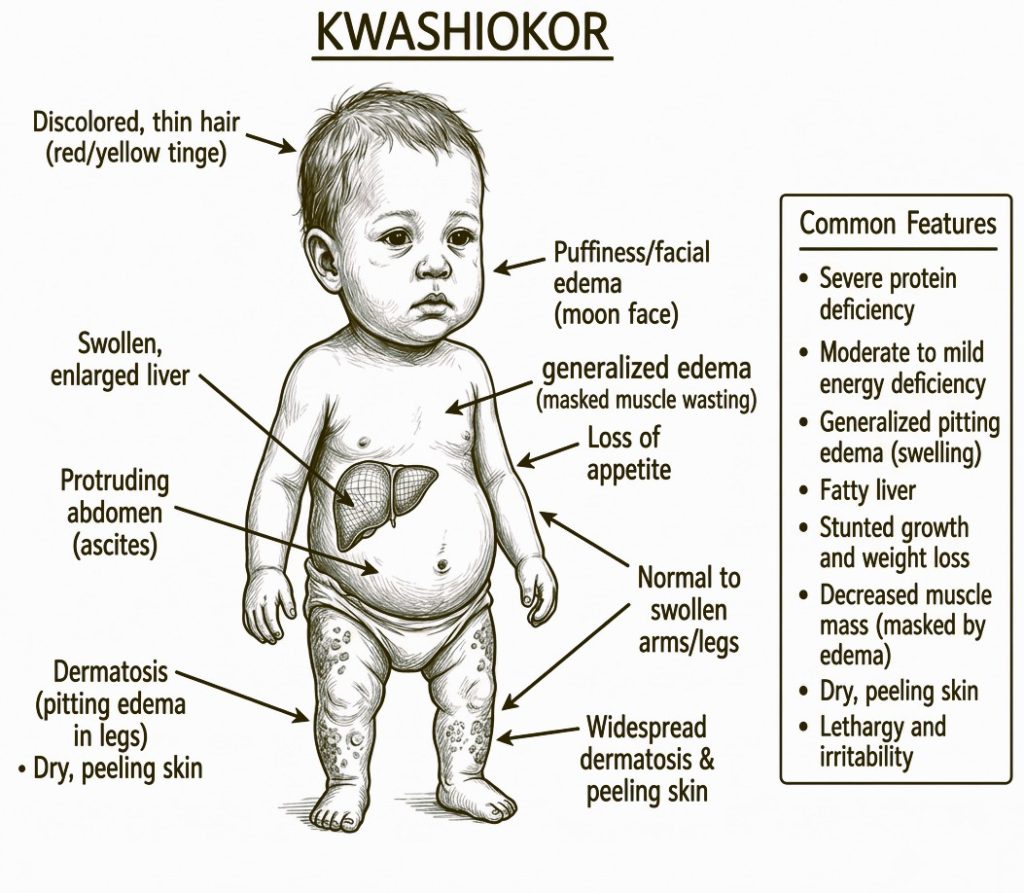
Kwashiorkor is a severe form of Protein Energy Malnutrition (PEM) caused primarily by a deficiency of protein, while energy (calorie) intake may be adequate or only slightly deficient. It commonly affects children between 1 and 5 years of age, especially after weaning when they are fed diets rich in carbohydrates but poor in protein. The condition is characterized by oedema (swelling), poor growth, muscle wasting, and changes in the skin and hair.
| Simple Definition: Kwashiorkor is a severe form of Protein Energy Malnutrition caused mainly by a deficiency of protein in the diet. Definition: Kwashiorkor is a nutritional disorder resulting from a prolonged deficiency of dietary protein despite adequate or near-adequate energy intake, leading to oedema, muscle wasting, growth failure, and impaired physical and mental development. |
Causes of Kwashiorkor
- Inadequate intake of protein-rich foods.
- Early weaning and replacement of breast milk with carbohydrate-rich foods.
- Poverty and food insecurity.
- Recurrent infections such as diarrhoea and measles.
- Lack of nutrition education.
- Poor feeding practices.
Signs and Symptoms of Kwashiorkor
- Oedema (swelling) of the feet, legs, and face.
- Moon face (puffy face) due to fluid retention.
- Enlarged or swollen abdomen (pot belly).
- Muscle wasting (often hidden by oedema).
- Stunted growth.
- Dry, flaky, or peeling skin.
- Thin, sparse, discoloured hair that is easily pulled out.
- Loss of appetite.
- Irritability and apathy.
- Frequent infections due to weakened immunity.
Prevention of Kwashiorkor
- Provide a balanced diet containing adequate protein.
- Encourage exclusive breastfeeding for the first six months.
- Introduce protein-rich complementary foods after six months.
- Treat infections promptly.
- Improve nutrition education for parents and caregivers.
- Reduce poverty and improve food security.
Difference Between Marasmus and Kwashiorkor
| Marasmus | Kwashiorkor |
|---|---|
| Caused by deficiency of both energy (calories) and protein. | Caused mainly by protein deficiency, while energy intake may be adequate or only slightly deficient. |
| Commonly affects infants below 1 year of age. | Commonly affects children 1–5 years of age. |
| Child appears extremely thin (“skin and bones”). | Child appears swollen due to oedema. |
| No oedema is present. | Oedema (swelling) is the characteristic feature. |
| Severe loss of body fat and muscle mass. | Muscle wasting is present but may be masked by oedema. |
| Body weight is markedly reduced. | Body weight may appear normal or slightly increased because of fluid retention. |
| Face appears old and sunken (“monkey face”). | Face appears round and puffy (“moon face”). |
| Abdomen is usually flat or sunken. | Abdomen is swollen or protruding (pot belly). |
| Skin is dry, thin, and wrinkled. | Skin becomes dry, flaky, cracked, and may show “flaky paint” dermatosis. |
| Hair is thin but usually shows fewer colour changes. | Hair becomes thin, sparse, brittle, and may lose its normal colour. |
| Child usually has a good or normal appetite. | Child often has a poor appetite. |
| More alert but weak and irritable. | More apathetic, lethargic, and inactive. |
| Recovery is generally faster with proper nutrition. | Recovery may take longer because protein deficiency affects many body functions. |
Iodine Deficiency Disorders (IDD)
| Iodine Deficiency Disorders (IDD) are a group of health problems caused by an insufficient intake of iodine in the diet. |
Iodine is an essential trace mineral required for the production of thyroid hormones, which regulate growth, brain development, metabolism, and many other body functions. When the body does not receive enough iodine, the thyroid gland cannot produce adequate thyroid hormones, leading to various disorders collectively known as IDD.
IDD is a major public health problem, especially in mountainous regions where the soil and water are low in iodine. The most common disorder is goitre, but iodine deficiency can also impair physical growth, mental development, and intellectual ability.
| Simple Definition: Iodine Deficiency Disorders (IDD) are health problems caused by a deficiency of iodine in the diet. Definition: Iodine Deficiency Disorders (IDD) are a group of disorders resulting from inadequate intake of iodine, leading to reduced production of thyroid hormones and causing abnormalities such as goitre, impaired growth, and mental developmental disorders. |
Causes of IDD
- Inadequate intake of iodine-rich foods.
- Consumption of non-iodized salt.
- Living in iodine-deficient areas (especially mountainous regions).
- Increased iodine requirements during pregnancy and lactation.
- Poor nutrition and lack of awareness.
Signs and Symptoms of IDD
- Goitre (enlargement of the thyroid gland).
- Swelling in the front of the neck.
- Fatigue and weakness.
- Slow physical growth.
- Poor mental development and reduced learning ability in children.
- Weight gain due to reduced metabolism.
- Dry skin and intolerance to cold.
- In severe cases, cretinism in infants (severe physical and mental retardation).
Prevention of IDD
- Use iodized salt regularly.
- Consume iodine-rich foods such as fish, seafood, milk, eggs, and dairy products.
- Nutrition education and public awareness.
- Regular monitoring of iodized salt quality.
- Adequate iodine intake during pregnancy and lactation.
Treatment of IDD
- Use iodized salt as the main source of iodine.
- Increase intake of iodine-rich foods.
- Iodine supplementation where recommended.
- Medical treatment with thyroid hormone replacement in severe cases under medical supervision.
| Goitre is the abnormal enlargement of the thyroid gland caused mainly by iodine deficiency. |
Vitamin A Deficiency (VAD)
Vitamin A Deficiency (VAD) is a nutritional disorder caused by an inadequate intake, poor absorption, or increased requirement of vitamin A. Vitamin A is essential for normal vision, healthy skin, growth, immunity, and the maintenance of epithelial tissues. A deficiency of vitamin A mainly affects children and pregnant women and is one of the leading causes of preventable blindness in children.
| Simple Definition: Vitamin A Deficiency (VAD) is a nutritional disorder caused by an insufficient intake or deficiency of vitamin A in the body. Detailed Defintion: Vitamin A Deficiency (VAD) is a condition resulting from inadequate intake, poor absorption, or increased requirement of vitamin A, leading to impaired vision, weakened immunity, poor growth, and damage to epithelial tissues. |
Causes of VAD
- Inadequate intake of vitamin A-rich foods.
- Poor absorption of vitamin A due to intestinal disorders.
- Protein-energy malnutrition (PEM).
- Frequent infections such as diarrhoea and measles.
- Increased requirements during pregnancy, lactation, and childhood
Signs and Symptoms of VAD
- Night blindness (difficulty seeing in dim light) – earliest symptom.
- Dryness of the eyes (xerophthalmia).
- Dryness of the conjunctiva (conjunctival xerosis).
- Bitot’s spots (foamy white patches on the conjunctiva).
- Softening of the cornea (keratomalacia).
- Corneal ulcers and blindness in severe cases.
- Dry, rough skin.
- Frequent infections due to reduced immunity.
- Poor growth and delayed development in children.
Prevention of VAD
- Consume vitamin A-rich foods regularly.
- Eat green leafy vegetables, carrots, pumpkin, mangoes, papaya, milk, eggs, liver, and fish.
- Promote exclusive breastfeeding during the first six months.
- Provide vitamin A supplementation to children according to national health programmes.
- Improve nutrition education and prevent childhood infections.
Treatment of VAD
- Administer vitamin A supplements as recommended by health authorities.
- Increase the intake of vitamin A-rich foods.
- Treat associated infections and underlying diseases.
- Ensure a balanced diet with adequate protein and fat to improve vitamin A absorption.
Iron Deficiency Anaemia (IDA)
Iron Deficiency Anaemia (IDA) is the most common nutritional deficiency disorder worldwide. It occurs when the body does not have enough iron to produce adequate amounts of haemoglobin, the oxygen-carrying protein in red blood cells. As a result, the body’s tissues receive less oxygen, leading to fatigue, weakness, and poor physical and mental performance.
IDA is common among infants, children, adolescents, pregnant women, and women of reproductive age due to their increased iron requirements.
| Simple Definition: Iron Deficiency Anaemia (IDA) is a condition caused by a deficiency of iron, resulting in decreased haemoglobin levels in the blood. Definition: Iron Deficiency Anaemia (IDA) is a nutritional disorder caused by inadequate iron intake, poor iron absorption, excessive iron loss, or increased iron requirements, resulting in reduced haemoglobin production and decreased oxygen-carrying capacity of the blood. |
Causes of IDA
- Inadequate intake of iron-rich foods.
- Poor absorption of iron from the intestine.
- Excessive blood loss (e.g., heavy menstruation, bleeding disorders, ulcers).
- Increased iron requirements during pregnancy, lactation, infancy, and adolescence.
- Parasitic infections such as hookworm.
- Chronic illnesses and repeated infections
Signs and Symptoms of IDA
- Fatigue and weakness.
- Pale skin, lips, and nail beds.
- Dizziness and headache.
- Shortness of breath.
- Rapid heartbeat (palpitations).
- Poor concentration and reduced work capacity.
- Brittle or spoon-shaped nails (koilonychia).
- Loss of appetite.
- Delayed growth and development in children.
Prevention of IDA
- Consume iron-rich foods regularly.
- Eat foods rich in Vitamin C to improve iron absorption.
- Use iron-fortified foods where available.
- Prevent and treat parasitic infections.
- Provide iron and folic acid supplements to pregnant women as recommended.
- Maintain a balanced diet.
Treatment of IDA
- Increase the intake of iron-rich foods.
- Take iron supplements as prescribed by a healthcare professional.
- Treat the underlying cause of iron deficiency (e.g., bleeding or parasitic infection).
- Include Vitamin C-rich foods with meals to enhance iron absorption.
- In severe cases, blood transfusion may be required under medical supervision.
Sources of Iron
| Animal Source (Haem Iron) | Plant Sources (Non-Haem Iron) |
|---|---|
| Liver Red meat Fish Poultry Egg yolk | Green leafy vegetables (spinach) Beans and lentils Soybeans Peas Whole grains Nuts and seeds Dried fruits (raisins, dates) |
Note:
Haem iron is the form of iron found in animal-based foods and is easily absorbed by the human body.
Non-haem iron is the form of iron found mainly in plant-based foods and is absorbed less efficiently by the body.