
- Short Important Question
- Long Important Question
- Introduction of Nutrients
- Macronutrients and Micronutrients
- Difference Between Macronutrients and Micronutrients
- Introduction of Carbohydrates
- Sources of Carbohydrates
- Classification of Carbohydrates
- Functions of Carbohydrates
- Dietary Fibers (DF)
- Classification of Dietary Fiber
- Functions of Dietary Fiber
Contents:
Introduction: Definition of Nutrients, Micronutrients and Macronutrients.
Introduction of Carbohydrates: Monosaccharide, Oligosaccharides, Polysaccharides,
Dietary Fibers and its functions, functions of carbohydrates.
Short Important Question
- What are the functions of dietary fiber? (1 Mark, 2017)
- List the three important polysaccharides in diet. (1 Mark, 2019)
- List down the name of two homopolysaccharides. (1 Mark, 2022)
Long Important Question
- Differentiate between macronutrients and micronutrients. Classify carbohydrates with examples and write any five functions of carbohydrates. (10 Marks, 2023)
- List down the general functions of carbohydrate. (5 Marks, 2018)
- What are polysaccharides? How are they classified? Provide examples of each type. (5 Marks, 2025)
- List and explain the types of carbohydrate. Discuss the importance of carbohydrate in humans. (10 Marks, 2026)
- Differentiate between macronutrients and micronutrients. Classify carbohydrates with examples and write any five functions of carbohydrates. (10 Marks, 2023)
Introduction of Nutrients
The human body requires a variety of substances from food to grow, remain healthy, and perform its daily functions. These substances are known as nutrients. They are the chemical components of food that nourish the body and are essential for sustaining life. Every nutrient has a specific role, such as supplying energy, building and repairing body tissues, regulating body processes, or protecting the body from disease.
A healthy diet must provide all the nutrients in the right amounts because no single food contains every nutrient required by the body. The absence or deficiency of any essential nutrient may impair normal body functions and lead to nutritional disorders. Therefore, consuming a balanced diet that includes a variety of foods is essential for maintaining good health.
| Simple Definition: A nutrient is a chemical substance present in food that is required for the growth, repair, maintenance, and proper functioning of the body. Detailed Definition: A nutrient is a naturally occurring chemical substance found in food that the body requires for energy production, growth and development, repair of tissues, regulation of body processes, and maintenance of overall health. |
Characteristics of Nutrients
- Nutrients are naturally present in foods.
- Each nutrient performs one or more specific functions in the body.
- They are essential for normal growth, development, and maintenance of health.
- The body requires different nutrients in different amounts.
- Both deficiency and excessive intake of nutrients can affect health
Major Nutrients
The human body requires six major nutrients, namely:
- Carbohydrates
- Proteins
- Fats (Lipids)
- Vitamins
- Minerals
- Water
These nutrients work together to support normal growth, provide energy, regulate body functions, and maintain overall health.
Functions of Nutrients
The major functions of nutrients are:
- Provide energy for body activities and metabolic processes.
- Support growth and development by forming new body tissues.
- Repair and maintain tissues that are damaged or worn out.
- Regulate body functions, including metabolism, hormone production, and enzyme activity.
- Protect the body against diseases by supporting the immune system.
- Maintain the normal functioning of organs, muscles, nerves, and other body systems.
Macronutrients and Micronutrients
All nutrients required by the human body are not needed in the same quantity. Based on the amount required each day, nutrients are classified into macronutrients and micronutrients. Both are essential for maintaining health, but they differ in the quantity required and the functions they perform.
Macronutrients are needed in relatively large amounts because they provide energy and form the structural components of the body. Micronutrients, on the other hand, are required only in small quantities but are equally important as they regulate various physiological and metabolic processes. A healthy and balanced diet must provide an adequate amount of both macronutrients and micronutrients.
MacroNutrients
| Macronutrients are nutrients that are required by the body in large amounts to provide energy, support growth, and maintain normal body functions. |
The term macro means large. These nutrients make up the major portion of the daily diet and are essential for supplying energy and building body tissues.
Major Macronutrients includes:
- Carbohydrates
- Proteins
- Fats (Lipids)
Note: Water is also required in large amounts and is often considered a macronutrient because of the quantity needed, although it does not provide energy.
Functions of Macronutrients
- Provide energy for daily activities.
- Support growth and repair of body tissues.
- Build muscles, organs, and other body structures.
- Maintain normal physiological functions.
- Help regulate metabolism and body processes.
MicroNutrients
| Micronutrients are nutrients that are required by the body in small amounts for normal growth, metabolism, and the regulation of body functions. |
Although needed in minute quantities, micronutrients are indispensable because they help the body utilize macronutrients efficiently and maintain overall health.
Major Micronutrients includes:
- Vitamins
- Minerals
Functions of Micronutrients
- Regulate metabolic activities.
- Support the immune system.
- Maintain healthy bones, teeth, skin, and blood.
- Help enzymes and hormones function properly.
- Prevent nutritional deficiency diseases.
Difference Between Macronutrients and Micronutrients
| Basis | Macronutrients | Micronutrients |
|---|---|---|
| Definition | Nutrients required in large amounts by the body. | Nutrients required in small amounts by the body. |
| Daily Requirements | Required in grams (g). | Required in milligrams (mg) or micrograms (µg). |
| Main Function | Provide energy and build body tissues. | Regulate body functions and support metabolism. |
| Energy Value | Most provide energy (except water). | Do not provide energy. |
| Types | Carbohydrates, proteins, fats, and water. | Vitamins and minerals. |
| Amount in Diet | Form the major portion of the daily diet. | Needed only in small quantities. |
| Deficiency | May lead to protein-energy malnutrition and poor growth. | May cause vitamin or mineral deficiency diseases such as anaemia, goitre, or scurvy. |
Introduction of Carbohydrates
Carbohydrates are one of the three major macronutrients required by the human body and serve as its primary source of energy. They are organic compounds composed mainly of carbon (C), hydrogen (H), and oxygen (O), usually with hydrogen and oxygen present in the ratio of 2:1, similar to that of water. For this reason, carbohydrates were traditionally referred to as hydrates of carbon, and are commonly represented by the general formula Cₙ(H₂O)ₙ.
Carbohydrates are synthesized naturally in green plants through the process of photosynthesis. During this process, plants use carbon dioxide and water in the presence of sunlight and chlorophyll to produce glucose, which serves as a source of stored chemical energy. The oxygen released during photosynthesis is essential for the survival of most living organisms.
| 6CO2 + 6H20 + LIGHT ENERGY → C6H12O6 + 6O2 This is an illustration of the complete photosynthesis process that takes place in plant cells. |
In the human body, carbohydrates are broken down during digestion into simple sugars, mainly glucose, which is absorbed into the bloodstream and used by cells to produce energy. Besides supplying energy, carbohydrates also help spare proteins from being used as fuel, support the normal metabolism of fats, and provide dietary fibre that promotes healthy digestion.
Nutritionists recommend that carbohydrates should contribute approximately 45–65% of the total daily energy intake, making them the largest source of energy in a balanced diet.
| Simple Definition: Carbohydrates are organic compounds composed of carbon, hydrogen, and oxygen that serve as the body’s primary source of energy. Detailed Definition: Carbohydrates are organic compounds composed mainly of carbon, hydrogen, and oxygen that are synthesized by plants through photosynthesis and serve as the principal source of energy for the human body while also supporting normal metabolism and digestive health. |
Characteristics of Carbohydrates
- They are one of the three major macronutrients.
- They are composed mainly of carbon, hydrogen, and oxygen.
- They are the primary source of energy for the body.
- One gram of carbohydrate provides approximately 4 kcal of energy.
- They are mainly found in cereals, grains, fruits, vegetables, legumes, and sugars.
- Excess carbohydrates are stored as glycogen in the liver and muscles, while surplus intake may be converted into body fat.
Sources of Carbohydrates
The major sources of carbohydrates are:
- Fruits : Fruits are an excellent source of natural carbohydrates, mainly fructose. Apples, bananas, oranges, berries, and grapes are a few examples.
- Grains : A great source of complex carbs are whole grains. Brown rice, maize, quinoa, oats, barley, and whole wheat are a few examples.
- Dairy Products : A natural sugar found in dairy products is called lactose. Dairy products such as milk, yogurt, and cheese are sources of carbs.
- Starchy Vegetables : Carbs can be found in vegetables in a variety of forms, mostly as sugars and dietary fiber. Carrots, peas, potatoes, and sweet potatoes are a few examples. Also, root vegetables like beets, carrots, and sweet potatoes are very rich sources of carbohydrates.
Carbs are one of the major essential nutrients which include components like sugars, fibers and starches.
When any food is consumed by the body, digestive system breaks down the food into glucose or blood sugar during the process of digestion.
Sources of carbohydrates can also be segregated as “healthier also known as good carbohydrates” and “Unhealthier also known as bad Carbohydrates” based on their nutritional value and impact on health.
Healthier Source of Carbohydrates:
- Unprocessed or minimally processed whole grains
- Vegetables
- Fruits
- Beans
- Nuts
Unhealthier source of Carbohydrates
- White bread
- Pastries
- Highly processed or refined foods
- Sugary Sodas
- Cookies
- White pasta
- Candies
- Refined grains
These unhealthier carbs food sources include quickly absorbed carbohydrates, which may hinder weight loss, cause weight gain, and increase the risk of heart disease and diabetes.
Classification of Carbohydrates
Based on the chemical structure and degree of polymerization, the carbohydrates are further classified into two types:
- Simple Carbohydrates
- Complex Carbohydrates
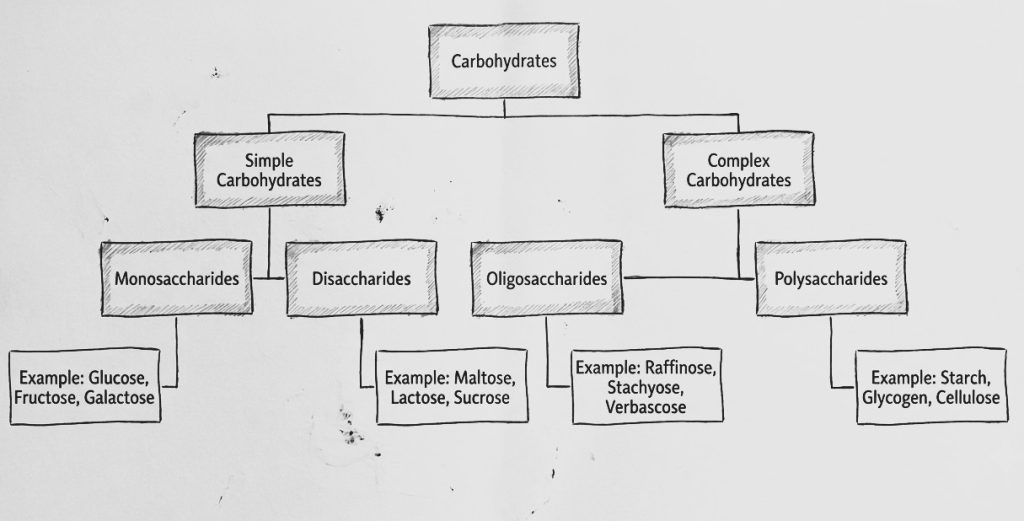
- Simple Carbohydrates
It is also known as “Simple Sugars”. Simple carbohydrates are composed of one or two sugar units. They are easily digested, rapidly absorbed, and quickly raise blood glucose levels. They are naturally present in fruits, milk, and honey, while refined forms are found in table sugar, sweets, soft drinks, and other sugary foods.
These are abundantly found in milk products, beer, fruits, refined sugars, candies, etc. These carbohydrates are also “Empty calories”, as they don’t posses fiber, vitamins and minerals. Simple Carbs can be segregated on two types:
- Monosaccharides – contain one sugar unit.
- Disaccharides – contain two sugar units.
- Monosaccharides
Monosaccharides are the simplest form of carbohydrates and are commonly known as simple sugars. They consist of a single sugar unit and cannot be broken down into simpler carbohydrates by hydrolysis. Because of their simple structure, monosaccharides are rapidly digested and absorbed into the bloodstream, making them the quickest source of energy for the body.
Monosaccharides occur naturally in fruits, vegetables, and honey. They also serve as the basic building blocks of more complex carbohydrates such as disaccharides, oligosaccharides, and polysaccharides.
| Simple Definition: Monosaccharides are the simplest carbohydrates consisting of a single sugar unit that cannot be hydrolysed into simpler carbohydrates. Detailed Definition: Monosaccharides are simple carbohydrates composed of a single sugar molecule. They are the basic structural units of all carbohydrates and are readily absorbed by the body to provide immediate energy. |
Characteristics of Monosaccharides
- Consist of a single sugar unit.
- Cannot be broken down into simpler carbohydrates by hydrolysis.
- Usually sweet in taste and readily soluble in water.
- Rapidly digested and absorbed into the bloodstream.
- Provide an immediate source of energy.
- Form the building blocks of disaccharides, oligosaccharides, and polysaccharides.
Classification of Monosaccharides
Monosaccharides are classified according to the number of carbon atoms present in their molecules.
| Type | Carbon Atoms | General Formula | Example |
|---|---|---|---|
| Triose | 3 | C₃H₆O₃ | Glyceraldehyde |
| Tetrose | 4 | C₄H₈O₄ | Erythrose, Threose |
| Pentose | 5 | C₅H₁₀O₅ | Ribose, Deoxyribose |
| Hexose | 6 | C₆H₁₂O₆ | Glucose, Fructose, Galactose |
| Heptose | 7 | C₇H₁₄O₇ | Sedoheptulose |
Among these, hexoses are the most important in human nutrition because they are the principal sugars used by the body for energy. Pentoses, such as ribose and deoxyribose, are essential components of RNA and DNA.
Major Monosaccharides
- Glucose
Glucose is the most important monosaccharide and the body’s primary source of energy. It is commonly known as blood sugar because it circulates in the bloodstream and supplies energy to body cells. It is naturally present in fruits, honey, and some vegetables. - Fructose
Fructose, also known as fruit sugar, is the sweetest naturally occurring sugar. It is found mainly in fruits, honey, and some vegetables. After absorption, fructose is converted into glucose in the liver before being utilized by the body. - Galactose
Galactose is seldom found in its free form in nature. It combines with glucose to form lactose, the sugar present in milk and dairy products. During digestion, lactose is broken down into glucose and galactose.
Functions of Monosachharides
- Provide a rapid source of energy.
- Supply glucose for cellular respiration.
- Serve as the building blocks of larger carbohydrates.
- Ribose and deoxyribose are essential for the formation of RNA and DNA.
- Participate in various metabolic processes within the body.
- Disaccharides
Disaccharides are simple carbohydrates composed of two monosaccharide units joined together by a glycosidic bond. They are formed through a condensation reaction in which a molecule of water is removed. During digestion, disaccharides are hydrolysed by digestive enzymes into their individual monosaccharides before being absorbed into the bloodstream.
Disaccharides occur naturally in many foods and are an important source of dietary energy. Like other carbohydrates, they provide approximately 4 kcal of energy per gram.
Characteristics of Disaccharides- Consist of two monosaccharide units.
- Formed by a glycosidic bond.
- Sweet in taste and soluble in water.
- Hydrolysed into monosaccharides before absorption.
- Provide 4 kcal of energy per gram.
Common Disaccharides
- Sucrose (Table Sugar)
Sucrose is composed of glucose and fructose. It is commonly known as table sugar and is naturally found in sugarcane, sugar beet, fruits, and some vegetables.
| Sucrose = Glucose + Fructose |
- Lactose (Milk Sugar)
Lactose consists of glucose and galactose. It is the principal sugar found in milk and dairy products and is commonly known as milk sugar.
| Lactose = Glucose + Galactose |
- Maltose (Malt Sugar)
Maltose is composed of two glucose molecules. It is produced during the digestion of starch and is naturally present in germinating cereals and malted grains.
| Maltose = Glucose + Glucose |
Functions of Disaccharides
- Provide energy to the body.
- Supply monosaccharides after digestion.
- Improve the sweetness and palatability of foods.
- Serve as an important source of dietary carbohydrates.
- Complex Carbohydrates
Complex carbohydrates are composed of three or more sugar units joined together. They take longer to digest than simple carbohydrates and provide a more sustained supply of energy. In addition, many complex carbohydrates contain dietary fibre, which supports healthy digestion.
Complex carbohydrates are mainly found in cereals, whole grains, legumes, beans, potatoes, peas, maize, oats, and other starchy foods. Complex carbohydrates are classified into:
- Oligosaccharides
| Oligosaccharides are carbohydrates composed of three to ten monosaccharide units linked together by glycosidic bonds. |
They are more complex than monosaccharides and disaccharides but simpler than polysaccharides. Oligosaccharides occur naturally in many plant foods and play an important role in human nutrition, particularly in maintaining digestive health.
Unlike simple sugars, many oligosaccharides are not completely digested in the small intestine. Instead, they pass into the large intestine, where they are fermented by beneficial intestinal bacteria. For this reason, they are considered prebiotics, as they promote the growth of beneficial gut microorganisms and support a healthy digestive system.
Characteristics of Oligosaccharides
- Consist of 3–10 monosaccharide units.
- Formed by glycosidic bonds.
- Less sweet than simple sugars.
- Partially or completely resist digestion in the small intestine.
- Serve as prebiotics by promoting beneficial gut bacteria.
Common Oligosaccharides Example
- Raffinose
- Stachyose
- Verbascose
These oligosaccharides are commonly found in legumes, beans, soybeans, peas, onions, garlic, wheat, and some whole grains.
Sources of Oligosaccharides
- Legumes (beans, lentils, peas)
- Soybeans
- Onions and garlic
- Wheat and barley
- Asparagus
- Bananas
Functions of Oligosaccharides
- Promote the growth of beneficial intestinal bacteria.
- Improve digestive health.
- Enhance mineral absorption, particularly calcium and magnesium.
- Support immune function.
- Help maintain a healthy intestinal environment.
- Polysaccharides
| Polysaccharides are the most complex carbohydrates, consisting of more than ten monosaccharide units linked together by glycosidic bonds. |
They are formed by the condensation of a large number of identical or different monosaccharides, resulting in long-chain carbohydrate molecules. Unlike simple carbohydrates, polysaccharides are generally not sweet in taste and are insoluble in water.
Polysaccharides serve important biological functions. Some act as energy storage carbohydrates, while others provide structural support in plants and animals. They are widely distributed in cereals, grains, potatoes, legumes, and vegetables, making them an important part of the human diet.
Characteristics of Polysaccharides
- Consist of more than ten monosaccharide units.
- Form long-chain carbohydrate molecules.
- Generally tasteless and non-sweet.
- Insoluble or only slightly soluble in water.
- Digested more slowly than simple carbohydrates.
- Serve as storage or structural carbohydrates.
Classification of Polysaccharides
Polysaccharides are broadly classified into storage polysaccharides and structural polysaccharides.
- Storage Polysaccharides
Storage polysaccharides store energy for future use.
Examples- Starch – The main storage carbohydrate in plants. It is found in rice, wheat, maize, potatoes, and other cereals and tubers. Starch is the principal source of carbohydrate in the human diet.
- Glycogen – The storage carbohydrate of animals. It is stored mainly in the liver and muscles and serves as a reserve source of glucose when the body requires energy.
- Structural Polysaccharides
Structural polysaccharides provide strength and support to cells and tissues.
Examples- Cellulose – The main structural component of plant cell walls. Although humans cannot digest cellulose, it functions as dietary fibre, promoting healthy digestion and regular bowel movements.
- Chitin – A structural polysaccharide found in the exoskeleton of insects, crabs, shrimps, and other crustaceans, as well as in the cell walls of fungi.
Sources of Polysaccharides
Polysaccharides are commonly found in:
- Cereals (rice, wheat, maize)
- Potatoes and sweet potatoes
- Legumes and beans
- Whole grains
- Vegetables
- Fruits (small amounts of fibre)
Funtions of Polysaccharides
- Provide a sustained source of energy.
- Store energy in plants and animals.
- Form structural components of plant and animal tissues.
- Supply dietary fibre that supports digestive health.
- Help maintain normal blood glucose levels by releasing energy gradually.
Functions of Carbohydrates
Carbohydrates are the primary source of energy for the human body and perform several important physiological and metabolic functions. They are essential for maintaining normal body functions, supporting growth, and promoting overall health.
- Provide Energy
The main function of carbohydrates is to supply energy to the body. During digestion, carbohydrates are broken down into glucose, which is used by body cells to produce energy. One gram of carbohydrate provides approximately 4 kcal of energy. - Regulate Blood Glucose Level
Carbohydrates help maintain a normal blood glucose level, ensuring a continuous supply of energy to the brain, nervous system, and other body tissues. - Spare Proteins
When sufficient carbohydrates are available, proteins are used for growth, tissue repair, and other vital functions rather than being broken down to produce energy. This is known as the protein-sparing effect. - Aid Fat Metabolism and Prevent Ketosis
Carbohydrates are necessary for the complete oxidation of fats. When carbohydrate intake is inadequate, fats are incompletely metabolized, leading to the production of ketone bodies and causing ketosis. - Store Energy
Excess glucose is converted into glycogen and stored mainly in the liver and muscles. When the body needs energy, glycogen is broken down into glucose and released into the bloodstream. - Help Build Important Body Compounds
Carbohydrates provide the carbon skeleton required for the synthesis of certain non-essential amino acids and other important biological molecules. They also contribute to the formation of glycoproteins and glycolipids, which are essential for normal cell structure and function. - Form Structural Components
Certain carbohydrates, such as ribose and deoxyribose, are structural components of RNA and DNA, the genetic materials responsible for storing and transmitting hereditary information. - Provide Dietary Fibre
Some carbohydrates, such as cellulose, are not digested by the body but function as dietary fibre. Fibre promotes healthy digestion, prevents constipation, and supports the health of the digestive system. - Improve the Taste of Foods
Carbohydrates add sweetness, flavour, and texture to foods, making them more palatable and enjoyable to eat. - Support the Immune System
Certain carbohydrates present on the surface of cells play an important role in cell recognition and immune responses, helping the body defend itself against infections. - Glycaemic Function
After consuming carbohydrate-rich foods, blood glucose levels rise and then gradually return to normal with the help of insulin. This process is known as the glycaemic response, which reflects how quickly carbohydrates are digested, absorbed, and utilized by the body.
Dietary Fibers (DF)
Dietary fibre, also known as roughage or bulk, is the indigestible portion of plant foods. It consists mainly of complex carbohydrates that cannot be broken down by the digestive enzymes of the human body. Although dietary fibre does not provide energy, it plays an essential role in maintaining digestive health and supporting the normal functioning of the gastrointestinal tract.
Unlike other carbohydrates, dietary fibre passes through the stomach and intestines largely unchanged. Some fibres dissolve in water to form a gel-like substance, while others remain insoluble and add bulk to the stool. Both types are important for maintaining good health.
| Simple Definition: Dietary fibre is the indigestible portion of plant foods that promotes healthy digestion and bowel function. Detailed Definition: Dietary fibre is the portion of plant foods, mainly composed of complex carbohydrates, that cannot be digested by human digestive enzymes and helps maintain digestive health by promoting normal bowel function. |
Sources of Dietary Fiber:
- Beans
- Whole grains
- Brown rice
- Popcorn
- Nuts (Almonds, Walnuts)
- Baked potato
- Oatmeal
- Lentils
- Berries
Sources of Dietary Fiber
Dietary fiber is mainly found in:
- Whole grains and cereals
- Beans and lentils
- Fruits and vegetables
- Brown rice
- Oatmeal
- Nuts and seeds
- Potatoes with skin
- Popcorn
Classification of Dietary Fiber
Dietary fibre is classified into two main types based on its solubility in water.
- Soluble Fiber
Soluble fibre dissolves in water to form a gel-like substance. It slows the digestion and absorption of nutrients, helping regulate blood sugar levels and lower blood cholesterol. It also promotes a feeling of fullness, which may help in weight management.
Sources of soluble fiber: Oats, barley, beans, lentils, apples, citrus fruits, berries, and peas. - Insoluble Fiber
Insoluble fibre does not dissolve in water. It adds bulk to the stool, promotes regular bowel movements, and helps prevent constipation. It also supports the health of the large intestine.
Sources of insoluble fiber: Whole wheat products, brown rice, vegetables, nuts, seeds, fruit skins, and cauliflower.
Functions of Dietary Fiber
- Promotes regular bowel movements and prevents constipation.
- Adds bulk to the diet and increases satiety, helping control body weight.
- Lowers blood cholesterol levels and reduces the risk of heart disease.
- Helps regulate blood glucose levels by slowing the absorption of sugar.
- Supports the growth of beneficial intestinal bacteria and maintains a healthy gut environment.
- Speeds the passage of food through the digestive tract.
- May reduce the risk of colorectal cancer and other digestive disorders.
| For 1 Marks in exam, remember this functions of dietary fiber: a. Prevents constipation. b. Lowers blood cholesterol. c. Regulates blood sugar levels. d. Promotes healthy digestion. |
This discussion feels approachable and nicely arranged, making the content easier to understand while still encouraging respectful interaction from readers.
best online casinos